The best siding for a tiny house on wheels balances three things at once: low weight to protect your trailer’s payload, a cost that fits a tight build budget, and enough durability to survive highway vibration. No single material wins every category, so the right pick depends on your priorities.
Getting this choice wrong costs real money and real safety margin. Overload a trailer axle, and I have seen builds fail inspection or shed panels on the interstate.
This guide walks you through how trailer weight limits shape the decision, the weight and cost data for every common material, a material-by-material breakdown from vinyl to steel, road durability and Florida climate factors, and how to match the final choice to your own build goals.
What Makes Siding Right for a Tiny House on Wheels
Siding for a tiny house on wheels is the exterior cladding that protects the structure while adding as little weight and cost as possible, because the build travels on a trailer with a fixed carrying capacity. That mobility is what separates it from standard home siding.
On a foundation home, weight barely matters. On a trailer, every pound of siding is a pound you cannot spend on framing, water tanks, furniture, or a second person.
Why weight changes everything on a trailer
I treat the trailer like a strict budget account, and siding is one of the larger withdrawals. A heavy cladding choice on all four walls adds up fast across a 20-foot build.
The three forces: weight, cost, durability
Every siding decision pulls against these three forces. Cheap and light often means less durable. Tough and light often means expensive. Understanding the trade-off upfront saves regret later.
How Trailer Weight Limits Shape Your Siding Choice
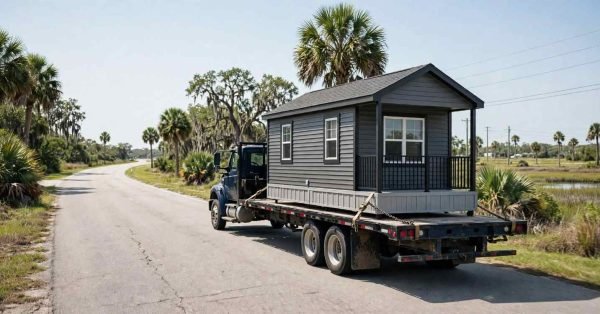
Your trailer’s Gross Vehicle Weight Rating (GVWR) sets a hard ceiling on total weight, and siding competes with everything else for that remaining capacity. A typical tiny house trailer runs a GVWR between 10,000 and 14,000 pounds, and finished builds often land uncomfortably close to that line.
GVWR is the maximum loaded weight a trailer is rated to carry safely, including the structure, contents, and tongue load. Exceed it, and you risk axle failure, blown tires, and legal towing problems.
GVWR, axle ratings, and payload basics
Payload is simply GVWR minus the empty weight of your build. Heavy siding shrinks that payload before you have added a single appliance.
How siding weight eats into your build budget
I think of weight and dollars as one combined budget. A dense material like fiber cement can add hundreds of pounds that then force a bigger trailer or lighter finishes elsewhere.
Siding Weight Compared: Pounds Per Square Foot
Siding weight varies enormously by material, from under half a pound per square foot for vinyl to roughly four pounds for fiber cement. The table below shows typical installed weights so you can estimate the total load on your trailer.
| Siding Material | Weight (lbs/sq ft) | Relative Load |
| Vinyl | 0.4 – 0.5 | Very light |
| Aluminum | 0.5 – 0.7 | Very light |
| Engineered wood | 1.0 – 1.5 | Light |
| PVC / composite | 1.0 – 1.5 | Light |
| Cedar / wood | 1.5 – 2.5 | Moderate |
| Steel | 1.5 – 3.0 | Moderate–heavy |
| Fiber cement | 2.5 – 4.0 | Heavy |
Weight comparison table by material
For a tiny house with roughly 400 square feet of wall area, swapping fiber cement for vinyl can save well over 1,000 pounds. That is often the difference between staying under GVWR and needing a heavier trailer.
Siding Cost Compared: Material and Install Pricing
Tiny house siding costs range from about $2 per square foot for basic vinyl to $13 or more for installed fiber cement or quality cedar. The table below pairs material price with realistic installed pricing for a small build.
| Siding Material | Material ($/sq ft) | Installed ($/sq ft) |
| Vinyl | $2 – $4 | $4 – $7 |
| Aluminum | $3 – $6 | $5 – $9 |
| Engineered wood | $3 – $6 | $6 – $10 |
| Steel | $4 – $8 | $7 – $12 |
| Composite / PVC | $5 – $9 | $8 – $13 |
| Cedar / wood | $5 – $10 | $8 – $14 |
| Fiber cement | $3 – $6 | $9 – $13 |
Cost-per-square-foot comparison table
I always price by installed cost, not material alone. Fiber cement looks cheap by the board, but its labor and specialized tools push the installed figure near the top of the range.
Vinyl Siding for Tiny Houses on Wheels
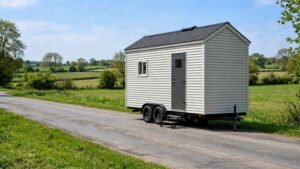
Vinyl siding is a lightweight PVC-based cladding that is the cheapest and lightest mainstream option for a tiny house on wheels. At roughly half a pound per square foot, it barely touches your payload.
Vinyl shines on budget and weight, and it never needs painting. The trade-off is a plastic look some builders dislike, and it can crack in extreme cold or warp under intense direct heat.
For a weight-first, cost-first build, vinyl is hard to beat. I steer first-time builders here when their trailer capacity is tight and the budget is tighter.
Fiber Cement Siding (and the Weight Problem)
Fiber cement siding is a dense cladding made from cement, sand, and cellulose fibers that offers excellent durability and fire resistance but weighs the most of any common option. At 2.5 to 4 pounds per square foot, it is the heavyweight of the group.
Fiber cement resists rot, insects, fire, and impact beautifully, which makes it tempting. The problem is pure physics: on a trailer, that density can add over a thousand pounds across all four walls.
I rarely recommend fiber cement for a mobile build unless the trailer is oversized and payload is genuinely abundant. On a foundation home it is a favorite, but the weight problem usually disqualifies it here.
Wood and Cedar Siding on a Mobile Build

Cedar siding is a natural wood cladding prized for its warm appearance and natural resistance to rot and insects, at a moderate weight of 1.5 to 2.5 pounds per square foot. It gives a tiny house real character that synthetic materials struggle to match.
Cedar earns its place on looks and a reasonable weight, but it demands ongoing maintenance. Real wood needs sealing or staining every few years, and road grime and sun accelerate wear.
Pick cedar when appearance matters most and you accept the upkeep. Avoid it if you want to install once and forget it.
Metal and Steel Siding for Road-Ready Tiny Homes
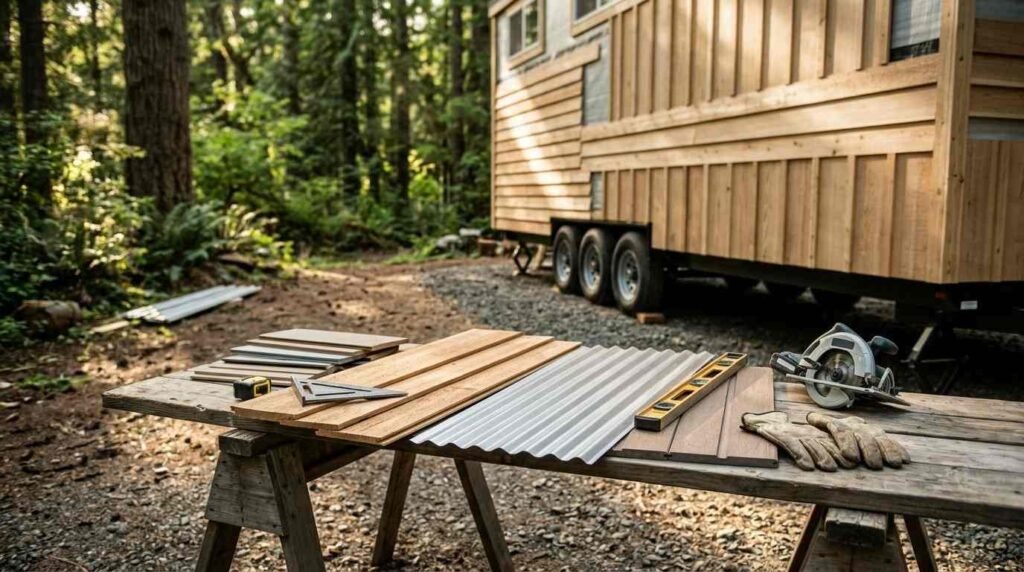
Metal siding is a cladding of steel or aluminum panels valued for its toughness, fire resistance, and long service life on homes that travel. Aluminum stays very light at well under a pound per square foot, while steel runs heavier and tougher.
Metal siding handles highway vibration and impact better than almost anything, which matters on a build that moves. Aluminum gives you the weight advantage; steel gives you dent resistance at a weight penalty.
The trade-offs are denting on aluminum and potential corrosion on steel without proper coating. In coastal Florida, I lean toward well-coated aluminum or treated steel to fight salt air.
Engineered Wood Siding as a Middle-Ground Option
Engineered wood siding is a manufactured cladding made from wood fibers and resins that mimics real wood at about half the weight of cedar. At roughly 1 to 1.5 pounds per square foot, it threads the needle between looks, cost, and load.
Engineered wood gives you the warmth of wood grain with better consistency and lower weight than solid cedar. It still needs paint or sealing, but it resists warping better than natural boards.
This is my go-to recommendation for builders who want the wood look without the cedar weight or price. It is a genuine middle-ground choice.
Composite and PVC Siding for Low Maintenance

PVC siding is a cellular plastic cladding that resists moisture completely and needs almost no maintenance, at a light 1 to 1.5 pounds per square foot. Composite siding blends polymers and wood fibers for a similar low-upkeep result.
These materials never rot, never need painting, and shrug off humidity, which suits a mobile home exposed to constant weather changes. The main drawback is higher material cost than vinyl.
For a builder who travels often and wants a wash-and-go exterior, composite or PVC pays back its premium in saved maintenance. I rate it highly for Florida’s moisture load.
Lightweight Siding Options for Strict Weight Budgets
The lightest siding options for a tiny house on wheels are vinyl and aluminum, both under 0.7 pounds per square foot, followed by engineered wood and PVC near 1 to 1.5 pounds. When payload is critically tight, these are the materials I reach for first.
- Vinyl when cost and weight both dominate the decision
- Aluminum when you want metal toughness at minimum weight
- Engineered wood when you need a wood look but cannot spend the pounds
- PVC when low maintenance matters as much as low weight
Choosing a light cladding frees up payload for things that make the home livable, like water storage and solid furniture.
Siding Durability on the Road: Vibration & Impact
Siding on a tiny house on wheels must survive constant vibration, flexing, and road debris that a foundation home never faces. Towing stresses fasteners and seams in ways standard installation does not anticipate.
- Vibration loosens fasteners over months of travel
- Chassis flex puts shear stress on rigid panels and seams
- Road debris chips and dents exposed cladding
- Temperature swings during transit expand and contract materials
Flexible or well-fastened materials like vinyl, aluminum, and engineered wood tolerate this movement best. Brittle or very rigid claddings crack at seams if the build flexes hard, which is another mark against heavy fiber cement here.
Weather and Climate Factors for Florida Tiny Homes

The best siding for Florida must resist high humidity, UV intensity, wind-driven rain, and salt air near the coast. Florida’s climate punishes materials that absorb moisture or degrade under relentless sun.
- Humidity resistance favors PVC, composite, vinyl, and coated metal
- UV stability favors fade-resistant vinyl, composite, and metal finishes
- Wind and rain favor tightly interlocking panel systems
- Salt air near the coast favors well-coated aluminum and treated steel
Moisture-absorbing materials like untreated wood struggle in Florida’s humidity without diligent sealing. I weight humidity and UV resistance heavily for any build staying in the state.
Installation, Fasteners, and Movement Allowance
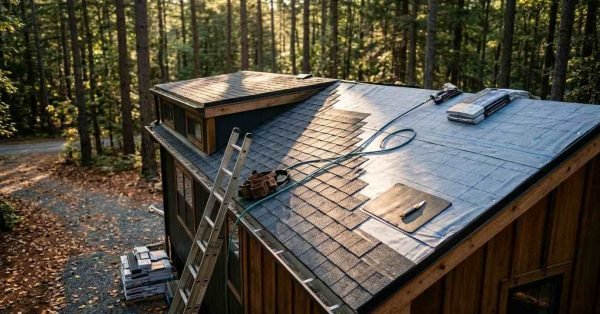
Siding installation on a tiny house on wheels requires fasteners and spacing that allow for movement, because a traveling structure expands, contracts, and flexes more than a fixed home. Skipping that allowance is how panels buckle or pop loose on the road.
- Use corrosion-resistant fasteners rated for the climate
- Leave proper expansion gaps at panel ends
- Nail into solid framing or furring, not just sheathing
- Seal penetrations against wind-driven rain
Proper siding installation matters as much as the material itself. A premium cladding fastened wrong fails faster than a budget material installed correctly.
How to Match Siding to Your Build Goals
The right siding comes down to ranking weight, cost, durability, maintenance, and appearance for your specific build, then choosing the material that leads on your top priorities. There is no universal best, only the best fit for your situation.
- Weight is tightest → vinyl or aluminum
- Budget is tightest → vinyl
- Low maintenance matters most → PVC or composite
- Wood look matters most → engineered wood, then cedar
- Maximum road toughness → steel or coated aluminum
- Florida humidity is the main worry → PVC, composite, or coated metal
I walk every client through this ranking before we spec a single panel. Once your priorities are clear, the material usually picks itself.
Common Siding Mistakes on Tiny Houses on Wheels
The most common siding mistake on a tiny house on wheels is choosing a heavy material that overloads the trailer, followed by ignoring movement allowance during installation. Both errors are expensive to fix after the fact.
- Picking fiber cement or masonry without checking payload
- Installing rigid panels with no expansion gaps
- Using interior-grade fasteners that corrode in Florida air
- Chasing looks over weight and blowing the GVWR
- Skipping proper flashing at windows and penetrations
I see payload mistakes most often, because builders fall for a material’s looks before they do the weight math. Run the numbers first, then fall in love with a finish.
Conclusion
You now understand how trailer weight limits, per-square-foot cost, road durability, and Florida’s climate together shape the best siding for a tiny house on wheels. No single material wins everything.
These factors connect to the larger craft of building a mobile home that lasts, where every pound and dollar is a deliberate trade-off toward lasting value and performance.
We build tiny homes that respect the trailer and the budget. Talk to Tiny Home Builders Florida to spec siding that fits your weight, cost, and climate goals.
Frequently Asked Questions
What is the best lightweight siding for a tiny house on wheels?
Vinyl and aluminum are the best lightweight options, both under 0.7 pounds per square foot. They protect payload while keeping costs low, making them ideal for tight trailer weight budgets.
How much does siding add to a tiny house trailer’s weight?
Siding adds roughly 150 to 1,600 pounds depending on the material. Vinyl adds the least across 400 square feet of wall, while fiber cement can add well over a thousand pounds.
Is vinyl siding good for a tiny house on wheels?
Yes, vinyl is excellent for weight and cost and never needs painting. The trade-off is a plastic appearance and some risk of cracking in extreme cold or warping in intense heat.
Can you use fiber cement siding on a tiny house on wheels?
You can, but it is rarely wise. Fiber cement weighs the most of any common siding and can overload a trailer, so it suits only oversized trailers with abundant payload.
What is the cheapest siding for a tiny house on wheels?
Vinyl is the cheapest siding, starting around $2 per square foot for material and $4 to $7 installed. It also happens to be the lightest mainstream option available.
Does siding crack when a tiny house is towed?
Rigid or brittle siding can crack from towing vibration and chassis flex. Flexible materials like vinyl, aluminum, and engineered wood tolerate road movement far better than heavy fiber cement.
What siding works best in Florida’s humidity and heat?
PVC, composite, vinyl, and coated metal perform best in Florida. They resist moisture, UV, and salt air, while untreated wood struggles without diligent sealing in the humidity.