Financing a tiny house on wheels requires a fundamentally different strategy than buying a conventional home, because most traditional mortgage programs do not apply. The loan type you qualify for depends on how your tiny house is classified as an RV, personal property, or a structure on owned land and understanding that distinction before you apply saves both time and money.
Getting this wrong costs real money. Borrowers who apply for the wrong loan product face rejections, wasted credit inquiries, and delays that push their move-in dates back by months.
This guide covers the full landscape of tiny house on wheels financing: how RV loans work and when they are the right fit, what personal loans, HELOCs, chattel loans, and builder financing offer, how credit and income requirements vary by loan type, what Florida buyers specifically need to know about zoning and lender access, and how to calculate the true cost of ownership before you sign anything.
What Is a Tiny House on Wheels and Why Does Financing It Differ?
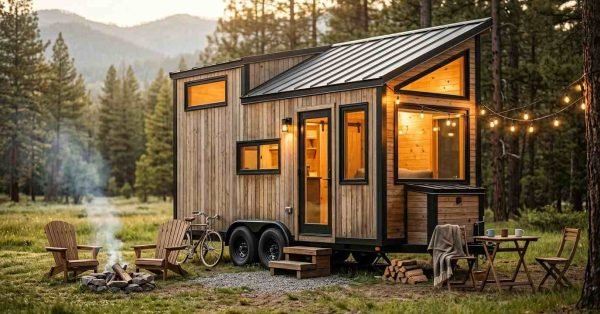
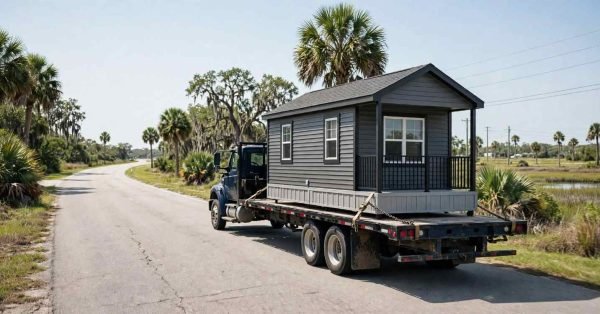
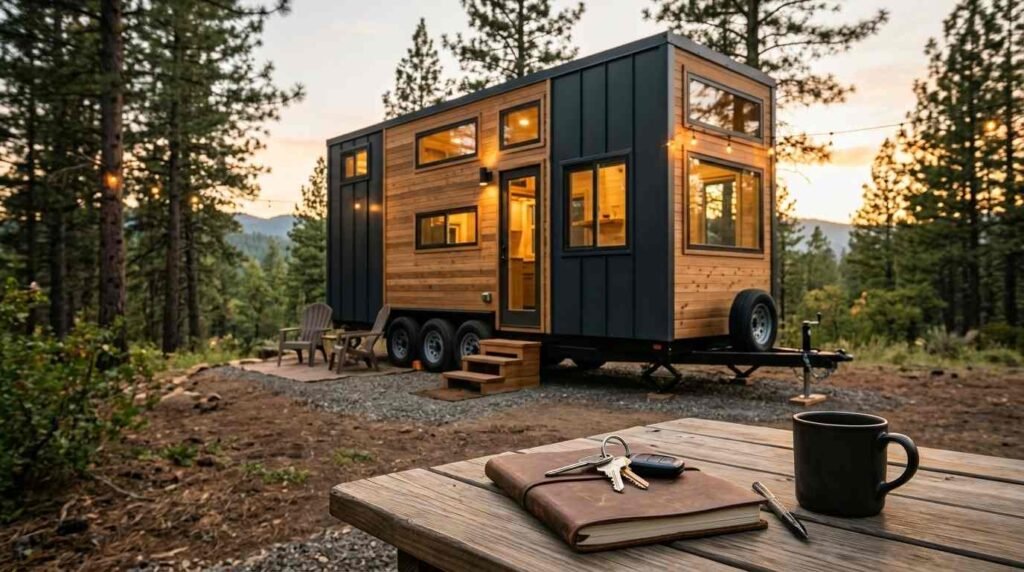
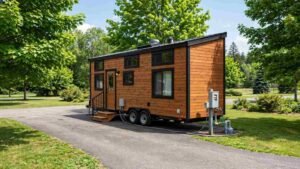
A tiny house on wheels (THOW) is a small, self-contained residential dwelling built on a trailer chassis that allows it to be moved from one location to another, distinguishing it legally and financially from both traditional real estate and site-built homes. Because it sits on a wheeled chassis rather than a permanent foundation, most mortgage programs which require real property as collateral simply do not apply.
This classification gap is the root of every financing challenge THOW buyers face. Lenders need collateral they can assess, title, and recover if a borrower defaults. A tiny home on wheels can be moved, resold as a vehicle, or depreciated like personal property, which makes standard real-property underwriting difficult to apply.
How Classification Affects Your Loan Options
How your THOW is classified determines which loan products are available to you. If it carries a Recreation Vehicle Industry Association (RVIA) certification and is titled as an RV, you can access RV loan programs. If it is not certified and sits on private land you own, a chattel loan or personal loan may be your primary path. If you already own a home with equity, a home equity loan or HELOC can fund the purchase regardless of classification.
Understanding your unit’s classification before approaching lenders eliminates wasted applications and protects your credit score from unnecessary hard inquiries.
Why Traditional Mortgages Usually Do Not Apply
Traditional mortgages are secured by real property land and a permanently attached structure. A tiny house on wheels does not meet that definition because it retains its trailer chassis and can be relocated. Federal programs such as FHA, VA, and USDA loans are similarly unavailable for most THOWs, though in rare cases where a tiny home has been placed on a permanent foundation and titled as real property, conventional financing may become possible. That scenario is the exception, not the rule.
RV Loans The Most Common Path for THOW Financing
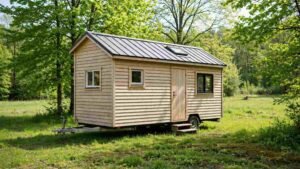
RV loans are the most widely available and most commonly used financing product for tiny houses on wheels, provided the unit carries RVIA certification. The qualification process for an RV loan typically follows this sequence:
- Confirm your THOW is RVIA-certified and titled as a recreational vehicle
- Check your credit score (most lenders require a minimum of 660–700)
- Calculate your debt-to-income ratio (lenders typically want this below 43%)
- Gather income documentation, including pay stubs, tax returns, and bank statements
- Apply with an RV-specialist lender, credit union, or bank offering RV loan products
- Receive a loan-to-value assessment based on the THOW’s purchase price or appraised value
RV loans are secured loans, meaning the tiny home itself serves as collateral. Loan amounts typically range from $10,000 to $300,000 or more, and terms commonly run from 10 to 20 years depending on the lender and loan amount.
RVIA Certification and Why Lenders Require It
RVIA certification is a third-party safety and construction compliance designation issued by the Recreation Vehicle Industry Association. It signals to lenders that the unit was built to a recognized standard, can be insured as an RV, and has an established resale market all of which protect the lender’s collateral position. Without RVIA certification, most RV loan programs are unavailable, and buyers are redirected to personal loans, chattel loans, or other unsecured products that typically carry higher interest rates and shorter terms.
Many THOW builders offer RVIA-certified builds specifically to preserve their buyers’ access to RV financing. Confirming certification before purchasing a unit is one of the most important steps a buyer can take.
Interest Rates, Terms, and What to Expect from RV Lenders
RV loan interest rates fluctuate with broader market conditions. As of recent lending data, rates for well-qualified borrowers have ranged from approximately 7% to 14% annually, depending on credit score, loan term, and lender. Longer terms reduce monthly payments but increase total interest paid over the life of the loan. Some lenders cap loan terms at 12 years for units under a certain purchase price, so the loan amount directly affects the repayment schedule a buyer can access.
Credit unions, including those affiliated with RV industry associations, often offer more competitive rates than traditional banks. Comparing at least three lenders before committing to a loan is a straightforward way to reduce the total cost of financing.
Personal Loans for Tiny Houses on Wheels
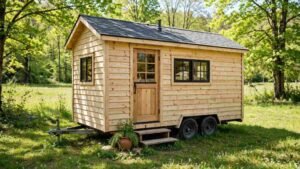
A personal loan is an unsecured loan product meaning no collateral is required that can be used to purchase a tiny house on wheels regardless of its certification status. Personal loans are one of the most flexible financing tools available for THOW buyers who cannot access RV loan programs, but that flexibility comes at a cost: interest rates are typically higher, and loan amounts are often lower than what RV lenders will extend.
Personal loan amounts for tiny home purchases generally range from $5,000 to $100,000, though some lenders extend higher limits for well-qualified borrowers. Repayment terms are typically shorter than RV loans, running from two to seven years, which results in higher monthly payments for the same borrowed amount.
When a Personal Loan Makes Sense Over an RV Loan
A personal loan is the stronger choice when your THOW lacks RVIA certification, when the purchase price falls below the minimum threshold most RV lenders will finance, or when you need funding quickly and cannot wait for the longer underwriting process some RV lenders require. It is also useful for buyers who plan to purchase a used or custom-built unit from a private seller where no lender-recognized certification exists.
The tradeoff is cost. A personal loan on a $60,000 THOW at 15% APR over five years results in meaningfully higher total interest than an RV loan on the same amount at 9% over 15 years. Running both scenarios with a loan calculator before deciding is worth the 10 minutes it takes.
Credit Score Requirements and Loan Amount Limits
Most personal loan lenders require a minimum credit score of 580 to 640 for approval, though the most competitive rates are reserved for borrowers above 720. Loan amount limits vary significantly by lender — some online lenders cap at $50,000 while others extend to $100,000 or beyond. Borrowers with strong credit and income documentation have the widest access to higher amounts and lower rates across both personal loan and RV loan products.
Manufacturer and Builder Financing Options
Some tiny home manufacturers and builders offer in-house financing programs directly to buyers, either through their own lending arm or through a partnered financial institution. These programs are designed to simplify the buying process by bundling the build and the loan into one relationship, which can reduce paperwork and approval timelines for buyers who qualify.
Builder financing programs vary widely in structure. Some operate as standard RV loans administered through a credit union partner. Others are proprietary installment agreements with terms set by the builder rather than a regulated lender. Understanding which type you are being offered and what consumer protections apply is essential before signing.
What to Watch for in In-House Financing Terms
In-house financing is convenient, but it is not always the most competitive option. Interest rates offered through builder programs can run higher than what a buyer would qualify for independently, and prepayment penalties or balloon payment structures are more common in proprietary agreements than in standard bank or credit union loans. Always compare the builder’s offer against at least one independent lender before accepting in-house terms.
Home Equity Loans and HELOCs for Tiny House Buyers

Home equity loans and home equity lines of credit (HELOCs) allow existing homeowners to borrow against the equity they have built in a primary residence to fund a tiny house on wheels purchase. Home equity loan is a fixed-sum, fixed-rate product where a lender advances a lump sum secured by the borrower’s home equity, repaid over a set term. A HELOC is a revolving credit line secured by the same equity, with a draw period and a repayment period, functioning similarly to a credit card with a much lower interest rate.
According to Federal Reserve data, average HELOC rates have historically run 1–3 percentage points below unsecured personal loan rates for borrowers with comparable credit profiles, making them a cost-effective path for THOW buyers who already own a home with meaningful equity.
Using Existing Home Equity to Fund a THOW Purchase
The primary advantage of using home equity financing for a tiny house on wheels is that the loan product is well-understood, widely available, and typically lower-cost than personal loans or some RV loan products. Lenders are comfortable with the collateral your primary home regardless of how the THOW is classified.
The risk is equally straightforward: your primary home secures the debt. A default puts your existing residence at risk, not just the tiny home. Buyers should only use home equity financing when their income and financial position comfortably support the additional payment.
Chattel Loans Financing a Tiny Home as Personal Property
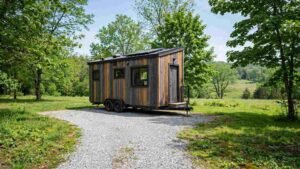
A chattel loan is a secured loan product in which the financed item the tiny house on wheels serves as collateral in the same way a vehicle does in an auto loan, with the lender holding a lien on the home until the debt is repaid. Chattel loans are one of the primary financing tools used for manufactured homes, and they are increasingly being applied to THOWs that are not RV-certified and are parked on private land.
Chattel loans typically carry higher interest rates than traditional mortgages and shorter terms than RV loans, but they are accessible to buyers who do not own land and whose THOWs do not meet RV certification requirements.
Chattel vs. RV Loans Key Differences for THOW Buyers
The core difference between a chattel loan and an RV loan for a tiny house on wheels comes down to certification requirements and how the lender treats the collateral. RV loans require RVIA certification and treat the THOW as a recreational vehicle. Chattel loans treat the THOW as personal property similar to how manufactured homes are financed and do not require RV certification. Chattel loan terms tend to be shorter (10–20 years), rates tend to be higher, and lender availability is more limited, but they fill a real gap for buyers whose units fall outside RV loan eligibility.
Land Purchase Considerations and Their Impact on Financing
Where your tiny house on wheels will be parked significantly affects your financing options, and in some cases, owning or controlling the land unlocks loan products that are otherwise unavailable. A THOW buyer who owns the land where the unit will be placed and who converts it to a permanent foundation may be able to access conventional mortgage financing but that transition effectively ends the “on wheels” classification and involves a separate set of costs and regulatory steps.
Without land ownership, buyers are generally limited to RV loans, personal loans, or chattel loans, and many lenders will ask for documentation of an approved parking location before finalizing a loan — particularly for larger loan amounts.
How Owning or Leasing Land Changes Your Borrowing Options
Owning land outright gives lenders additional collateral comfort, even when the THOW itself is the primary security. Some lenders will extend better terms lower rates or longer repayment periods when they can see that the unit has a stable, approved parking location on land the borrower controls. A long-term land lease from an established RV park or tiny home community can serve a similar signaling function, though it does not provide the same collateral benefit as outright ownership.
Credit Score, DTI, and Other Lender Requirements
Lender requirements for tiny house on wheels financing vary by loan type, but credit score and debt-to-income ratio (DTI) are the two variables that most consistently determine approval and rate across every product. The following table summarizes typical benchmarks by loan type:
| Loan Type | Minimum Credit Score (Typical) | Preferred Credit Score | Max DTI (Typical) | Typical Loan Term |
| RV Loan | 660–680 | 720+ | 43–45% | 10–20 years |
| Personal Loan | 580–640 | 700+ | 40–50% | 2–7 years |
| Home Equity Loan / HELOC | 620–660 | 700+ | 43–50% | 5–30 years |
| Chattel Loan | 580–620 | 660+ | 43–50% | 10–20 years |
| Builder / Manufacturer Financing | Varies by partner lender | 680+ | Varies | Varies |
These benchmarks reflect common lender requirements across the market. Individual lenders may set stricter or more flexible standards depending on loan size, property type, and borrower profile.
Minimum Credit Score Benchmarks by Loan Type
Credit score benchmarks are directional, not absolute. A borrower with a 650 score may be declined by one RV lender and approved by another at a higher rate. What credit score thresholds tell you is where your strongest options are concentrated. Borrowers above 720 access the widest range of products at the most competitive rates. Borrowers between 580 and 660 can still find financing, but rate and term tradeoffs are meaningful a 4-percentage-point difference in APR on a $80,000 loan over 15 years represents tens of thousands of dollars in additional interest.
Debt-to-Income Ratio Targets and Income Documentation
Debt-to-income ratio is calculated by dividing your total monthly debt obligations by your gross monthly income. Most lenders for THOW financing prefer a DTI at or below 43%, though some will consider borrowers up to 50% for well-secured loan types. Income documentation typically includes two years of tax returns, recent pay stubs, bank statements covering 60–90 days, and proof of any additional income sources such as rental income or self-employment revenue.
Down Payment Requirements and How to Reduce Them

Down payment requirements for tiny house on wheels financing typically range from 10% to 20% of the purchase price, depending on loan type, lender, and borrower credit profile. RV loans from credit unions sometimes allow as little as 10% down for well-qualified borrowers, while personal loans and chattel loans are often unsecured or loosely secured and may not require a formal down payment though larger deposits reduce the loan amount and monthly payment.
On a $90,000 THOW, a 10% down payment is $9,000 and a 20% down payment is $18,000. Understanding where that capital is coming from before approaching lenders is a basic step that many buyers skip, and it is one of the most common reasons pre-qualification falls apart.
Grants, Down Payment Assistance, and THOW-Friendly Programs
Dedicated down payment assistance programs for tiny houses on wheels are limited compared to what exists for traditional homebuyers, but several pathways are worth exploring. Some state housing finance agencies offer down payment assistance for alternative housing forms, and rural housing programs through the USDA occasionally apply to non-traditional structures in eligible geographic areas. Community Development Financial Institutions (CDFIs) also work with non-traditional housing buyers and may offer grants or reduced-rate loans in underserved markets. Researching Florida-specific housing programs through the Florida Housing Finance Corporation is a useful starting point for buyers in this state.
Insurance Requirements for Financed Tiny Houses on Wheels
Insurance is a non-negotiable condition of most tiny house on wheels financing. A lender who holds a lien on a THOW requires that the unit be insured for at least its outstanding loan balance, protecting the lender’s collateral position in the event of loss, theft, or damage. For RV-certified units, lenders typically require RV insurance as a condition of the loan agreement. For non-certified units financed through personal loans or chattel loans, specialty tiny home insurance is generally the required form of coverage.
RV Insurance vs. Specialty Tiny Home Insurance
RV insurance covers the tiny house on wheels as a recreational vehicle, typically including collision, comprehensive, liability, and personal property coverage. Specialty tiny home insurance treats the unit more like a small residential structure and may offer broader dwelling coverage, replacement cost valuation, and coverage for permanent fixtures and custom builds that standard RV policies do not fully address. Buyers of custom or high-finish THOWs often find specialty policies provide better coverage alignment for their unit’s actual value, though premiums are higher than standard RV rates.
Tiny House Financing in Florida State-Specific Considerations
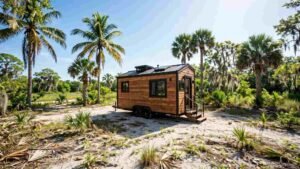
Financing a tiny house on wheels in Florida involves navigating a regulatory and lending environment shaped by the state’s unique zoning history, its large RV park and land-lease community infrastructure, and its growing but still-developing tiny home policy framework. Florida buyers should work through these key considerations before applying for financing:
- Confirm whether the county or municipality where you plan to park the THOW permits tiny homes on wheels as a primary or secondary residence zoning rules vary sharply between counties
- Verify whether the intended site is in a designated RV park, a tiny home community, or private land, as this affects lender willingness to extend financing
- Check whether the THOW will be classified as an RV or a manufactured home under Florida law, as this determines which licensing and title requirements apply
- Identify Florida-based credit unions that offer RV loan products with competitive rates for in-state buyers
- Research Florida Housing Finance Corporation programs and USDA Rural Development loans for buyers in eligible rural areas
- Confirm that the builder or manufacturer of your THOW has delivered units to Florida buyers before, as logistics, permitting familiarity, and lender relationships vary by builder
Florida Zoning, Land Use, and Parking Regulations for THOWs
Florida does not have a single statewide zoning framework for tiny houses on wheels. Individual counties and municipalities set their own rules, and those rules vary from permissive (some counties allow THOWs as full-time residences in designated areas) to restrictive (some jurisdictions prohibit them as primary dwellings entirely). Before purchasing a unit, Florida buyers should confirm in writing with the local planning department that their intended parking location is compliant lenders will often ask for this documentation as part of the loan file.
Florida Lenders and Credit Unions That Finance Tiny Homes
Several Florida-based credit unions and RV-specialist lenders serve the THOW financing market. Space Coast Credit Union, Suncoast Credit Union, and Achieva Credit Union are among the Florida institutions known to offer RV loan products that may apply to RVIA-certified tiny homes. National online lenders including LightStream, Southeast Financial Credit Union, and Trident Funding also serve Florida buyers and compare favorably on rate and term for well-qualified borrowers. Calling lenders directly to confirm they will finance a tiny house on wheels as opposed to a conventional RV before submitting a formal application protects your credit from unnecessary hard inquiries.
How to Improve Your Approval Odds Before You Apply

Preparing your financial profile before applying for tiny house on wheels financing is one of the highest-return steps you can take. The following sequence produces the strongest application:
- Pull your credit reports from all three bureaus (Equifax, Experian, TransUnion) and dispute any inaccuracies
- Pay down revolving credit balances to below 30% utilization — this is the single fastest way to lift your score before applying
- Calculate your current DTI and identify any debts you can pay off or reduce before application
- Save documentation of your full income picture, including secondary income, rental income, or freelance revenue
- Confirm your THOW’s certification status and gather the unit’s specs, VIN (if applicable), and RVIA certificate
- Get a written parking agreement or proof of land ownership for the unit’s intended location
- Request pre-qualification from two or three lenders using soft credit pulls before submitting formal applications
Pre-qualification gives you a realistic loan range without damaging your credit, and it positions you as a serious, prepared buyer which matters in lender relationships.
Documents You Will Need for a Tiny Home Loan Application
A complete loan application file for a tiny house on wheels typically includes: two years of federal tax returns, two months of recent bank statements, 30 days of pay stubs, a purchase agreement or builder contract for the unit, the RVIA certificate (if applicable), proof of insurance quote, and documentation of the intended parking location. Self-employed applicants should also prepare profit-and-loss statements covering the most recent two years. Having these documents organized before applying shortens the underwriting timeline and reduces back-and-forth with the lender.
Total Cost of Ownership What Financing Does Not Cover
The monthly loan payment is only one component of what a tiny house on wheels actually costs to own. The following table outlines cost categories that buyers commonly underestimate or overlook when building their financial plan:
| Cost Category | Description | Estimated Annual Range |
| Land lease or lot rent | Monthly fee to park in an RV park or tiny home community | $3,600–$12,000 |
| Property taxes | Varies by county and assessed value; applies in many Florida jurisdictions | $200–$1,500 |
| RV or specialty insurance | Required by most lenders; varies by unit value and coverage type | $600–$2,400 |
| Utilities | Water, electric, propane, and sewage hookup fees | $1,200–$4,800 |
| Maintenance and repairs | Roof, mechanical systems, trailer chassis, and appliances | $500–$3,000 |
| Towing and relocation | If the unit is moved periodically | $500–$2,500 per move |
| Registration and titling | Annual vehicle registration if titled as an RV | $50–$300 |
Ongoing Costs to Budget Beyond Your Monthly Payment
The cost categories in the table above are recurring, and several of them land lease in particular can rival or exceed the loan payment itself in high-demand markets. Florida RV park and tiny home community lot rents vary widely by location, with coastal and urban-adjacent communities often running $800 to $1,200 per month or more. Building a total monthly cost model that includes the loan payment, lot rent, insurance, utilities, and a maintenance reserve gives a far more accurate picture of affordability than the loan payment alone.
Conclusion
Financing a tiny house on wheels is manageable when you understand how the loan types work, where your credit and income position you, and which product fits your specific unit and parking situation.
Florida buyers have access to a growing network of lenders, credit unions, and programs but the zoning and classification landscape rewards preparation. The buyers who secure the best terms are the ones who know their numbers, confirm their site’s compliance, and compare multiple lenders before applying.
At Tiny Home Builders Florida, we work with buyers throughout the financing process, helping them understand their options and connect with lenders who understand what we build. Reach out and we will walk through the numbers with you.
Frequently Asked Questions
Can I get a mortgage on a tiny house on wheels?
Traditional mortgages are not available for tiny houses on wheels because they require real property land and a permanently attached structure as collateral. Most THOW buyers finance through RV loans, personal loans, or home equity products instead.
What credit score do I need to finance a tiny house on wheels?
Most RV lenders require a minimum credit score of 660 to 680, while personal loan lenders may approve borrowers from 580. Higher scores above 720 unlock the best rates and the widest range of loan products across all THOW financing types.
Do tiny houses on wheels qualify for RV loans?
Tiny houses on wheels qualify for RV loans when they carry RVIA certification and are titled as recreational vehicles. Without that certification, buyers are typically limited to personal loans, chattel loans, or home equity financing.
What is the average interest rate on a tiny home RV loan?
RV loan rates for well-qualified borrowers have ranged from approximately 7% to 14% annually in recent lending markets, depending on credit score, lender, and loan term. Credit unions often offer lower rates than traditional banks for the same borrower profile.
Can I finance a tiny house on wheels in Florida with bad credit?
Financing is possible with lower credit scores some personal loan and chattel loan lenders work with scores from 580 but rates and terms become significantly less favorable. Building credit to at least 660 before applying meaningfully improves both approval odds and total loan cost.
How much do I need for a down payment on a tiny house on wheels?
Down payment requirements typically range from 10% to 20% of the purchase price for RV loans. Personal loans often require no formal down payment, though a larger upfront payment reduces the borrowed amount and total interest cost.
Is it better to use a personal loan or an RV loan for a tiny house on wheels?
An RV loan is generally the better option when your THOW is RVIA-certified it offers lower rates and longer terms than personal loans. A personal loan makes more sense when the unit lacks certification, when the purchase price is low, or when you need faster funding without RV-specific underwriting.