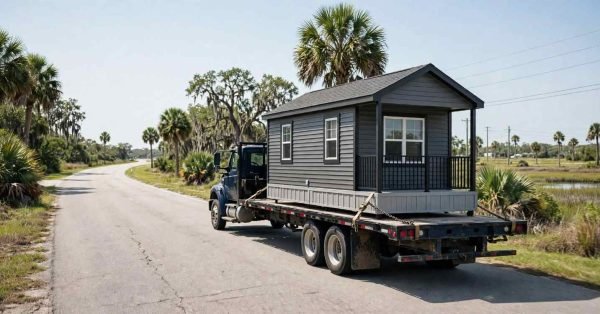
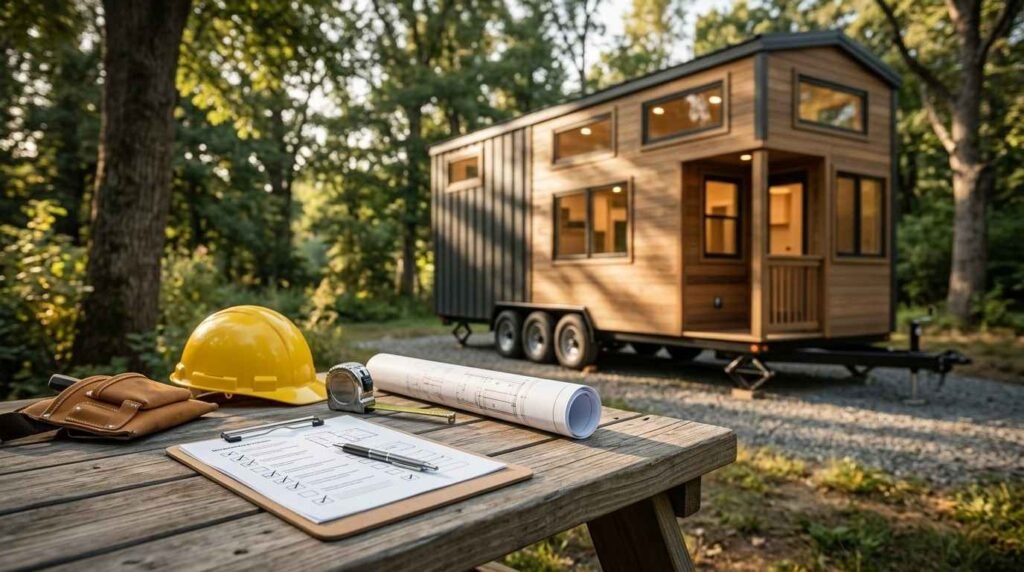
A tiny home on wheels is a dwelling built on a trailer chassis that depends on third-party certification to establish its legal classification for zoning, insurance, and financing purposes. RVIA certification treats the structure as a recreational vehicle under ANSI standards, while NOAH certification classifies it as a park model or alternative dwelling under a separate inspection framework, and the one you choose determines where you can legally place and live in the home. Neither certification is optional if you want a bank to finance it or a county to approve it.
Florida counties, lenders, and insurers all lean on one of these two labels before they’ll touch a THOW. Skip this step and you risk a home you can’t insure, finance, or legally park anywhere.
This guide covers what RVIA and NOAH certification actually mean, how each one shapes your legal standing in Florida, what it means for zoning, insurance, and financing, and how to avoid the certification mistakes that trap new tiny home owners.
What Is a Tiny Home on Wheels Under Florida Law?
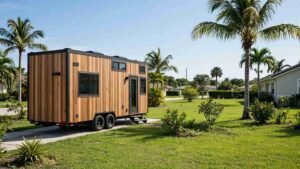
Florida law classifies a tiny home on wheels as a recreational vehicle, a park model, or an uncertified structure, and which bucket it falls into depends entirely on its certification. There’s no separate “tiny home” category in Florida statute. I’ve seen buyers assume otherwise, and it costs them later.
Florida’s building code doesn’t address THOWs directly because they’re built on a trailer chassis, not a permanent foundation. That single fact pushes the entire legal question over to RV classification standards instead of residential building code.
THOW vs. Traditional RV Classification
A traditional RV is manufactured for recreational travel, while a THOW is built for full-time residential use on the same type of trailer platform. Florida inspectors and zoning officials often can’t tell the difference without a certification sticker. That sticker is the only thing separating a legally recognized dwelling from an unrecognized structure in most jurisdictions.
Why Legal Classification Determines Where You Can Live
Your tiny home’s classification decides whether you can park it in a residential backyard, an RV park, or nowhere at all. Counties regulate RVs and park models under completely different ordinances, so classification isn’t a paperwork formality it’s the deciding factor in where you’re allowed to live.
What Is RVIA Certification?

RVIA certification is a third-party inspection seal issued by the Recreational Vehicle Industry Association confirming that a tiny home meets ANSI A119.5 construction standards for electrical, plumbing, and LP-gas systems. It’s the most widely recognized certification among Florida RV parks and insurers.
RVIA doesn’t inspect for livability or craftsmanship. It inspects for safety systems that could cause fire, electrocution, or gas leaks—a narrower scope than most buyers assume.
Who Issues RVIA Certification
Independent, RVIA-trained inspectors conduct the physical inspection during construction, not after the home is finished. This means the certification process has to be built into your builder’s workflow from day one, not bolted on at the end. A builder unfamiliar with mid-build inspection checkpoints can’t retrofit RVIA compliance later.
What RVIA Standards Actually Cover
RVIA standards focus on three systems: 12-volt and 120-volt electrical wiring, LP-gas appliance connections, and plumbing/water systems. They don’t evaluate framing quality, insulation performance, or finish-level craftsmanship, which is why construction quality standards still matter separately from certification.
What Is NOAH Certification?

NOAH certification, issued by the National Organization of Alternative Housing, inspects tiny homes against a standard built specifically for tiny houses rather than adapting RV industry code. It emerged because RVIA’s standards were written for recreational vehicles, not full-time dwellings.
NOAH-certified homes often get treated more favorably by jurisdictions that are warming to tiny homes as a housing solution rather than a recreational product.
NOAH vs. RVIA Core Differences
NOAH certification evaluates structural, electrical, plumbing, and energy systems using a standard drafted around residential-style living, while RVIA certification applies recreational vehicle code to a similar structure. The practical difference shows up at the county desk: some Florida jurisdictions accept NOAH as evidence of residential intent, while RVIA reads as “RV” regardless of how the interior is finished.
Why NOAH Exists as an Alternative Path
NOAH exists because thousands of tiny home buyers wanted year-round living arrangements, not weekend getaways, and RVIA’s seasonal-use framework didn’t fit that reality. It gives builders and buyers a certification path that acknowledges the home is a primary residence.
RVIA vs. NOAH: Which Certification Do You Need?
The certification you need depends on where you intend to place the home and which agencies that jurisdiction recognizes. Florida has no statewide rule requiring one over the other, so local ordinance decides.
| Factor | RVIA | NOAH |
| Governing body | RV Industry Association | National Organization of Alternative Housing |
| Standard basis | ANSI A119.5 (RV code) | Tiny-home-specific standard |
| Typical acceptance | RV parks, most insurers | Varies by county, growing acceptance |
| Inspection timing | During construction | During construction |
| Residential intent recognition | Low | Higher |
Most Florida RV parks will only accept an RVIA seal, which makes it the safer default if short-term placement flexibility matters to you.
How Certification Affects Legal Classification in Florida
Certification status is the first thing a Florida code enforcement officer checks when determining whether your tiny home is a legal structure or an unpermitted one. An uncertified THOW has no standing under either RV or residential code, leaving it in a legal gray zone that counties typically resolve by ordering removal.
Florida DMV also uses certification to register the trailer portion of the home, which matters if you ever plan to transport it on public roads.
Florida Zoning Rules for Certified Tiny Homes on Wheels

Florida zoning treats certified tiny homes on wheels according to their certification type, with RVIA units typically restricted to RV zoning districts and NOAH units sometimes qualifying for accessory dwelling unit allowances. Zoning rules vary significantly by county and even by municipality within the same county.
Some counties, including parts of unincorporated land, still don’t have ordinances addressing THOWs at all, which creates uncertainty regardless of certification.
Insurance Implications of RVIA/NOAH Certification
Insurance carriers almost universally require RVIA or NOAH certification before writing a policy on a tiny home on wheels, because the certification proves the electrical and gas systems meet an inspected standard. Without it, most carriers decline coverage outright or classify the structure as uninsurable.
Premiums also differ based on certification type, since RVIA-certified homes often qualify for RV-specific policies while NOAH-certified homes may require specialty residential-adjacent coverage.
Financing a Tiny Home on Wheels: Why Certification Matters
Lenders treat certification as a prerequisite for financing because it establishes the collateral’s legal classification and resale marketability. An uncertified THOW typically can’t be financed through conventional RV loans or residential mortgages at all.
RV-specific lenders generally require RVIA certification, while some specialty lenders working with tiny home financing programs will also accept NOAH certification as sufficient documentation.
RV Park and Campground Placement Requirements
Most Florida RV parks require RVIA certification specifically, since their insurance and operating permits are written around recreational vehicle classification. A NOAH-certified home, despite meeting an equally rigorous standard, can be turned away at the gate simply because the park’s policy names RVIA by name.
This makes certification choice a practical placement decision, not just a paperwork preference.
Can You Live Full-Time in a Certified THOW in Florida?
Full-time occupancy legality depends on local zoning rather than certification type alone, since Florida counties regulate dwelling use separately from the certification itself. Some jurisdictions permit full-time RV park residency; others cap stays at a set number of consecutive days.
NOAH certification’s residential framing helps in jurisdictions that evaluate intent, but it doesn’t override a local ordinance that simply doesn’t allow permanent THOW occupancy.
Building Codes vs. Certification Standards: What’s the Difference?
Building codes govern permanently affixed residential structures, while certification standards like RVIA and NOAH govern structures built on a mobile chassis. The two systems don’t overlap, which is exactly why a THOW needs certification instead of a standard building permit.
This distinction trips up buyers who assume a well-built tiny home automatically satisfies code. Craftsmanship and code compliance are related but separate questions from certification. A home can pass certification and still fall short on construction craftsmanship quality, or vice versa in rare cases.
The Certification Process: What Builders and Buyers Should Expect
The certification process begins with an inspector reviewing construction at specific build milestones, not after the home is complete. Builders need to schedule these checkpoints into the project timeline from the start.
A buyer working with an experienced builder should expect documentation at each stage, including photos of inspected systems before walls are closed up, since those systems can’t be verified later without demolition.
Common Certification Mistakes That Create Legal Problems
The most common mistake is purchasing a THOW built without certification in mind, which makes retroactive certification difficult or impossible once walls and systems are sealed. Buyers also frequently assume all tiny home builders include certification by default, which isn’t true.
Another frequent error is confusing a builder’s internal quality claims with third-party certification. A builder saying a home “meets RV standards” is not the same as an inspector issuing an RVIA seal.
How to Verify a Tiny Home’s Certification Status
Verifying certification means checking for a physical seal or tag on the exterior of the home, then confirming that tag’s number against the issuing body’s database. RVIA seals and NOAH certificates both carry unique identification numbers tied to the specific unit.
Never accept a builder’s verbal assurance alone. A legitimate seal number should be verifiable directly through RVIA or NOAH’s own records.
Resale Value and Certification: Why It Matters Long-Term
Certified tiny homes retain significantly more resale value than uncertified ones because the next buyer faces the same financing and insurance barriers you would. An uncertified THOW effectively locks out cash-only buyers willing to accept the legal risk, shrinking the resale market considerably.
Certification paperwork also needs to transfer with the sale, so keeping that documentation organized protects the investment long after move-in.
Choosing a Certified Tiny Home Builder in Florida
A qualified builder should be able to show you active RVIA or NOAH inspector relationships and prior certified builds before you sign a contract. This single qualification question eliminates a large share of unqualified builders immediately.
I ask every prospective client to request inspection documentation from past projects, not just a certification logo on a website. That documentation is the only real proof the process was followed correctly from the first stud to the final walkthrough.
Conclusion
RVIA and NOAH certification determine whether your tiny home on wheels is a legally recognized dwelling or an unregulated structure. Zoning, insurance, and financing all depend on that classification holding up.
Florida’s patchwork of county ordinances makes certification the one consistent thread connecting zoning approval, insurability, and resale value across jurisdictions.
We build every tiny home with certification requirements planned in from the first drawing. Reach out to Tiny Home Builders Florida to start a project built for legal clarity from day one.
Frequently Asked Questions
Is a tiny home on wheels considered an RV in Florida?
A tiny home on wheels is considered an RV in Florida only if it carries RVIA certification confirming it meets ANSI A119.5 standards. Without certification, it has no formal legal classification at all.
Do I need RVIA certification to legally park my tiny home?
Most Florida RV parks require RVIA certification specifically before allowing placement. Some counties also reference RVIA or NOAH certification in local zoning ordinances governing where THOWs can legally sit.
Can NOAH-certified homes be used as permanent residences?
NOAH-certified homes can be used as permanent residences where local zoning permits full-time THOW occupancy. Certification alone doesn’t guarantee permanent residency rights; the county ordinance governs that separately.
What happens if my tiny home isn’t certified?
An uncertified tiny home typically can’t be insured, financed, or legally parked in most Florida jurisdictions. Code enforcement may also classify it as an unpermitted structure subject to removal.
Does certification affect my tiny home’s insurance rates?
Certification type affects both eligibility and pricing, since RVIA-certified homes often qualify for standard RV policies while NOAH-certified homes may need specialty coverage. Uncertified homes are typically denied coverage outright.
Can I get a mortgage on an uncertified tiny home on wheels?
Conventional mortgages and most RV loans require RVIA or NOAH certification as a lending prerequisite. An uncertified THOW generally limits buyers to cash purchases or specialty lenders willing to accept the added risk.
How much does RVIA or NOAH certification typically cost?
Certification costs vary by builder and typically get built into the overall construction price rather than billed separately. Buyers should confirm certification costs are included in their contract before construction begins.