I’ve walked through dozens of tiny home builds across Florida, and plumbing is the system that trips up more owners than anything else. A tiny home plumbing system is the network of pipes, fixtures, water supply lines, and waste disposal components that deliver fresh water and remove wastewater in a space far smaller than a traditional house. It has to work in 200 to 400 square feet without the redundancy a standard home has built in.
Get this system wrong and you’re looking at frozen pipes, failed inspections, or a home that can’t legally connect to water or sewer. Florida’s heat, humidity, and code requirements add their own layer of complexity.
This guide covers what a tiny home plumbing system actually includes, how fresh water and wastewater are supplied and removed, which pipe materials and fixtures make sense at this scale, how Florida code and septic requirements affect your design, and what it takes to keep the system running for years without surprises.
What a Tiny Home Plumbing System Actually Includes
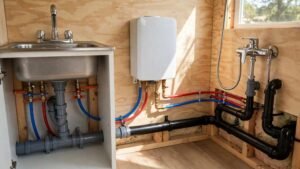
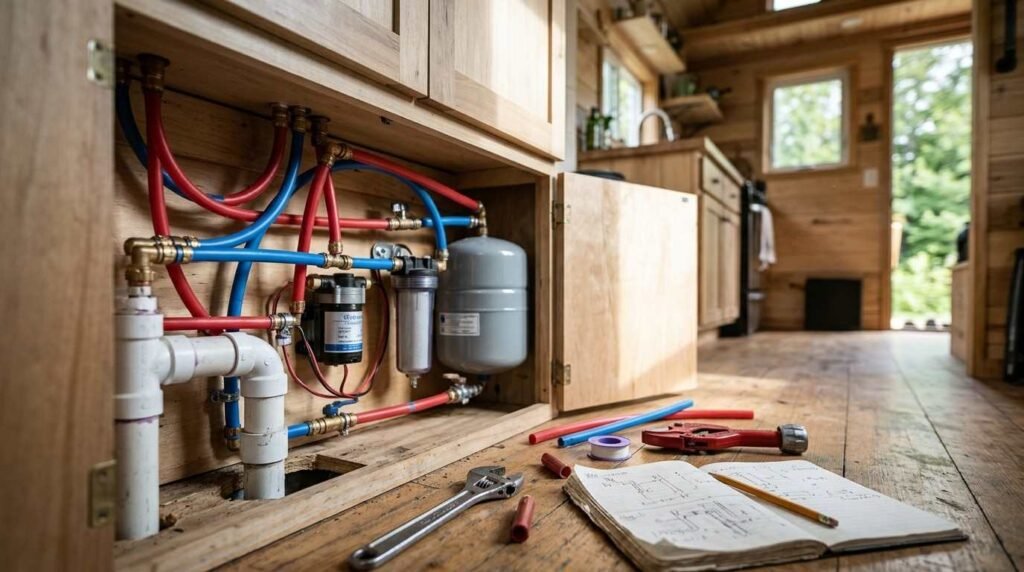
A tiny home plumbing system includes four core components: a fresh water supply line or tank, a water heater, a network of supply and drain pipes, and a wastewater removal system for gray and black water. Every one of these pieces has to be sized down without cutting corners on function.
I’ve seen builders treat tiny home plumbing like a scaled-down version of a regular house system, and that’s usually where problems start. Space constraints mean pipe runs are shorter, but access for repairs is often worse, so the quality of the initial install matters more here than in a 2,500-square-foot home.
Core Components of the System
The water supply side includes either a municipal connection or an onboard freshwater tank, pressure regulation, and distribution piping to every fixture. The waste side includes drain lines, a venting system, and either a septic connection, municipal sewer tie-in, or a composting alternative. Water heating sits in the middle of both systems and gets its own dedicated section below, since sizing it wrong is one of the most common tiny home plumbing mistakes I run into.
Fresh Water Supply Options for Tiny Homes
Tiny homes get fresh water through one of two paths: a direct connection to a municipal or well water source, or an onboard freshwater storage tank that gets refilled manually or through a periodic hookup. Which one you choose depends entirely on whether the home is stationary or mobile.
A fixed-foundation tiny home in Florida almost always benefits from a direct municipal or well connection because it removes the hassle of tank refills entirely. Mobile tiny homes or those on remote land often rely on tank storage, typically 20 to 40 gallons, which demands careful water budgeting for daily use.
Municipal Hookup vs. On-Board Water Tanks
A municipal hookup ties the tiny home directly into the local water utility line, the same way a standard house connects, giving unlimited water without refill schedules. An onboard tank setup stores a fixed water supply inside the home and needs to be refilled from an external source on a regular basis, which works for off-grid or mobile setups but requires more day-to-day water discipline from the occupant.
Wastewater Systems: Gray Water vs. Black Water
Gray water is wastewater from sinks, showers, and laundry, while black water is wastewater from toilets that contains solid waste and requires more rigorous treatment before disposal. Keeping these two streams properly separated is one of the defining design decisions in any tiny home plumbing layout.
I always tell prospective owners that this distinction isn’t just plumbing trivia, it directly affects what kind of waste system the home can legally use. Some composting toilet setups only handle black water separately, which means the gray water system still needs its own drainage or filtration path.
Why Separating Gray and Black Water Matters
Mixing gray and black water in the same disposal path increases contamination risk and often violates Florida plumbing code, which treats the two waste types differently for permitting and treatment purposes. Separated systems also make septic tank design more straightforward, since gray water can sometimes be routed through simpler filtration or greywater reuse systems rather than a full septic tank, depending on local regulations.
Choosing Plumbing Pipe Materials for Tiny Homes
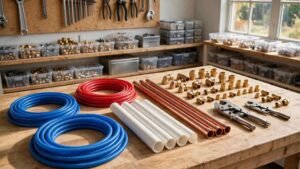
The three most common plumbing pipe materials for tiny homes are PEX, CPVC, and copper, each with different cost, flexibility, and durability tradeoffs. PEX has become the dominant choice in most new tiny home builds because of its flexibility and resistance to freezing-related cracking.
Material choice affects more than just upfront cost. It determines how the pipe runs through tight wall cavities, how it handles Florida’s heat cycling, and how easy future repairs will be in a home where wall access is limited.
PEX vs. CPVC vs. Copper
PEX is a flexible cross-linked polyethylene pipe that resists freeze damage and bends around tight corners without needing extra fittings, making it the most practical option for tiny home framing. CPVC is a rigid plastic pipe that handles hot water reliably but requires more fittings and careful support in tight spaces. Copper offers the longest proven lifespan of the three but costs significantly more and is harder to route through a tiny home’s compact framing.
| Material | Flexibility | Freeze Resistance | Relative Cost | Best Fit |
| PEX | High | High | Low-Medium | Most tiny home builds |
| CPVC | Low | Medium | Low | Budget builds, hot water lines |
| Copper | Low | Medium | High | Long-term fixed installations |
Pipe Sizing and Water Pressure Considerations
Tiny home plumbing typically uses 1/2-inch supply lines for fixtures and 3/4-inch for the main trunk line, matching standard residential sizing scaled to shorter pipe runs. Undersized piping is one of the most common causes of weak water pressure complaints I hear about after a tiny home is finished.
Pressure regulation matters even more in a tiny home because the shorter distance between the water source and the fixtures means pressure spikes reach appliances faster. A pressure-reducing valve set between 40 and 60 PSI protects both the pipes and the fixtures from premature wear.
Insulating Plumbing Lines Against Freezing
Florida rarely sees hard freezes, but tiny homes built on exposed trailers or with minimal underbelly insulation can still experience frozen pipes during the occasional cold snap, especially in North Florida. Insulating exposed plumbing runs with foam pipe wrap protects against the handful of freeze events that do occur each winter.
Pipes routed through unconditioned space, like a trailer underbelly, need insulation regardless of climate zone because that space can drop well below the interior temperature overnight.
Water Heater Options for Tiny Home Living

Tiny homes generally use one of two water heating approaches: a tankless on-demand unit or a compact mini-tank heater, both sized well below standard residential water heaters. The right choice depends on how many people live in the home and how much simultaneous hot water demand the household generates.
A family of three or four in a tiny home puts real strain on undersized water heating equipment, which is why sizing this correctly during design matters more than picking a popular brand.
Tankless vs. Mini-Tank Water Heaters
A tankless water heater heats water on demand as it flows through the unit, saving space and only using energy when hot water is actually running. A mini-tank water heater stores a small reserve of hot water, usually 2 to 6 gallons, ready for immediate use but limited once that reserve runs out. Tankless units tend to work better for tiny homes with multiple occupants since they don’t run out of hot water mid-shower the way a small tank can.
Selecting Space-Saving Plumbing Fixtures
Tiny home fixtures need to deliver full function in a fraction of the footprint, which means low-profile sinks, corner showers, and dual-purpose fixtures show up constantly in well-designed builds. Standard-sized bathroom and kitchen fixtures simply don’t fit the clearances tiny home layouts require.
Fixture choice also affects water consumption. Low-flow faucets and showerheads reduce the draw on limited tank storage without sacrificing usable water pressure.
Venting Requirements for Tiny Home Plumbing
Every drain in a tiny home plumbing system needs a vent to allow air into the drainage system, preventing the siphoning effect that pulls water out of trap seals and lets sewer gas into the living space. Skipping proper venting is a code violation and a direct health hazard.
Space constraints push many tiny home builders toward an air admittance valve instead of a full roof vent stack, which saves space but still needs to meet local code approval before installation.
Septic System Design for Tiny Homes on Land
A tiny home placed on a fixed foundation with no municipal sewer access needs a septic system sized to its actual wastewater output, which is typically much lower than a standard single-family home generates. Florida’s Department of Health regulates septic system permitting, and tank sizing is based on bedroom count and estimated occupancy rather than square footage alone.
I’ve seen landowners assume a tiny home automatically qualifies for a smaller, cheaper septic tank, and that’s not always true. Florida’s minimum septic tank sizing rules often apply regardless of how small the structure is, so this needs confirmation with the local health department before finalizing a budget.
Composting Toilets and Alternative Waste Systems
A composting toilet breaks down solid waste through aerobic decomposition instead of flushing it into a sewer or septic system, offering an alternative for tiny homes in locations without easy sewer or septic access. These systems still need a gray water disposal path handled separately, since composting toilets only manage the black water side.
Florida permits composting toilets in many jurisdictions, but approval varies by county, and some areas require a backup connection to a conventional system before issuing final approval.
Florida Plumbing Codes and Permit Requirements

Florida tiny home plumbing installations fall under the Florida Building Code, Plumbing section, and require permits for water supply connections, drain-waste-vent systems, and septic installations in most counties. Permit requirements apply whether the tiny home sits on a permanent foundation or a registered trailer chassis used as a dwelling.
Inspection timing matters here. Rough-in plumbing inspections happen before walls close up, which is the last chance to catch a sizing or routing mistake without expensive rework. Builders who skip this step to save time create problems that surface months after move-in.
Seasonal Maintenance for Tiny Home Plumbing
Tiny home plumbing systems need seasonal attention to supply line connections, water heater sediment buildup, and septic tank inspection schedules to avoid the kind of slow failures that become expensive emergencies. Florida’s humidity accelerates corrosion on exposed metal fittings faster than in drier climates.
I recommend checking supply line connections and tank water quality every three months, since small leaks in a tiny home’s compact plumbing chase can cause disproportionate water damage before they’re noticed.
Common Plumbing Problems in Tiny Homes and Prevention
The most common tiny home plumbing problems are low water pressure from undersized piping, frozen lines in unconditioned spaces, and septic system overload from incorrect tank sizing. Each of these traces back to a design decision made before construction started, not a defect that appears randomly after move-in.
Catching these issues at the design stage, rather than after the walls are closed, is the difference between a plumbing system that lasts decades and one that needs rework within the first year.
Conclusion
A well-designed tiny home plumbing system balances fresh water supply, waste separation, pipe materials, and Florida code compliance into one compact, reliable network.
Getting these decisions right from the start protects your investment and connects directly to the broader construction quality standards that define a lasting home.
We build every system with that same standard in mind. Reach out to Tiny Home Builders Florida to start your plumbing design right.
Frequently Asked Questions
How much does tiny home plumbing cost in Florida?
Tiny home plumbing installation in Florida typically runs $3,000 to $8,000 depending on water source type and waste system. Septic installations add significantly more than a municipal sewer connection.
Can a tiny home connect to a standard septic system?
Yes, a tiny home can connect to a standard septic system if the tank is sized correctly for occupancy. Florida’s Department of Health sets minimum sizing requirements regardless of home size.
Do tiny homes need a water heater?
Yes, tiny homes need a water heater, typically a tankless or mini-tank unit sized for the household. Standard residential water heaters are too large for most tiny home layouts.
What is the best pipe material for tiny homes?
PEX is generally the best pipe material for tiny homes due to its flexibility and freeze resistance. It also requires fewer fittings than rigid alternatives in tight framing spaces.
Are composting toilets legal in Florida tiny homes?
Composting toilets are legal in many Florida counties but approval varies by local jurisdiction. Some counties require a backup conventional waste connection before final approval.
How do I winterize a tiny home’s plumbing?
Winterizing a tiny home’s plumbing involves insulating exposed pipes and draining tanks before hard freezes. This matters most for trailers or homes with underbelly-routed plumbing.
Does a tiny home need a plumbing permit in Florida?
Yes, a tiny home needs a plumbing permit in Florida for water supply, drainage, and septic connections. Permits apply whether the home sits on a foundation or a registered chassis.