I get asked constantly whether a tiny house or an RV makes more sense for someone trying to downsize in Florida. A tiny house is a permanently built or wheel-mounted small dwelling typically under 400 square feet, while an RV is a factory-manufactured vehicle certified for recreational travel and temporary occupancy, and the two differ sharply in cost, legal standing, and day-to-day livability. Both options promise a simpler life at a fraction of a traditional home’s price.
But the similarities mostly end there. Picking the wrong one costs you money, legal headaches, and wasted time fixing the mismatch later.
This guide covers how tiny houses and RVs actually compare on upfront and long-term cost, what Florida law says about living in each one full-time, how utilities and livability stack up day to day, and how to match the right option to your specific lifestyle.
What Is a Tiny House?
A tiny house is a dwelling, usually between 100 and 400 square feet, built either on a permanent foundation or on a trailer chassis for mobility. I think of it less as a miniature home and more as a different design discipline entirely, where every inch has to earn its place.
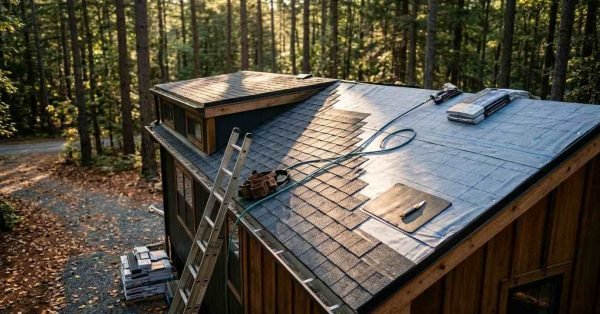
Builders generally construct tiny houses using standard residential framing, insulation, and finish materials rather than the lightweight components found in manufactured vehicles. That residential-grade build is a big part of why tiny houses feel and perform more like a traditional home than a camper does.
Tiny House on Wheels vs. Foundation
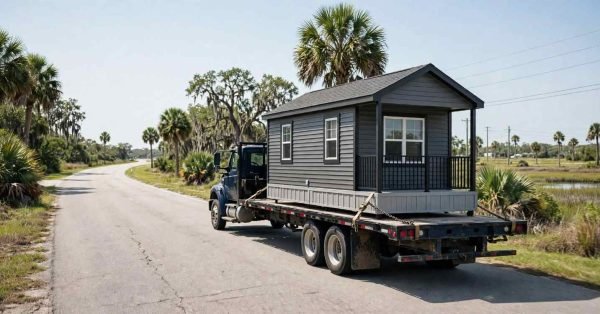
A tiny house on wheels sits on a trailer and can relocate, while a foundation tiny house is fixed to a permanent site like any conventional home. The wheeled version typically falls under RV industry standards for classification purposes, even though it’s built with house-grade materials.
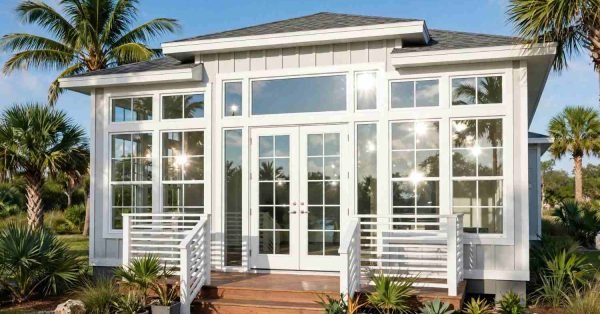
Foundation tiny houses fall under residential building codes instead, which changes permitting, financing, and insurance options significantly. I walk clients through this distinction early because it affects almost every decision that follows.
Typical Size and Layout Standards
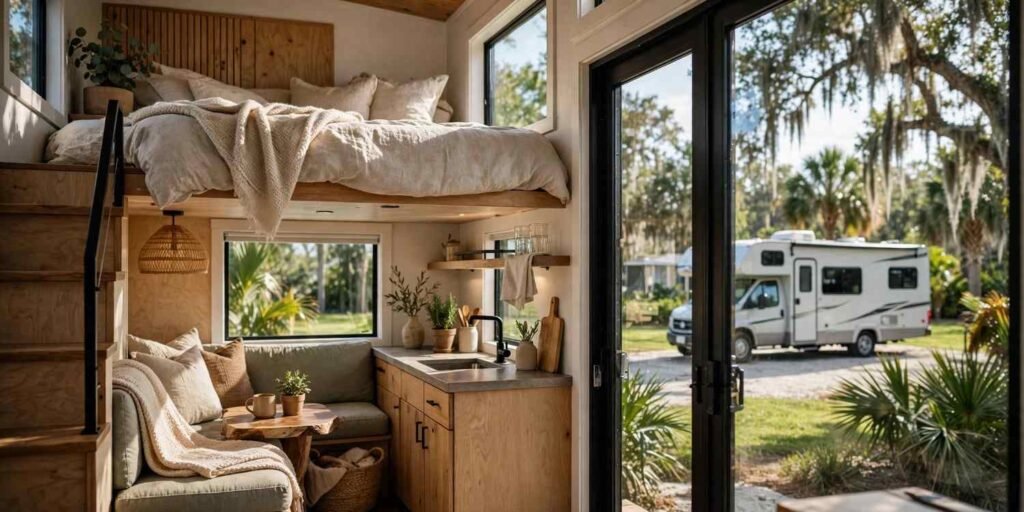
Most tiny houses range from 150 to 400 square feet, with lofted sleeping areas used to maximize floor space below. Layouts commonly include a compact kitchen, a combined living area, and a bathroom with a stall shower rather than a full tub.
Ceiling height becomes a real design constraint in wheeled units because road clearance laws cap total trailer height. A foundation-built tiny house avoids that limit entirely and can include a true second-story loft with standing headroom.
What Is an RV (and How Does It Differ)?

An RV is a motorized or towable vehicle manufactured and certified specifically for recreational travel, camping, and short-term living rather than permanent residence. The manufacturing process follows vehicle industry standards, not residential building codes, which is the core distinction from a tiny house.
RVs are designed first for mobility and weight efficiency, and livability features get built around that priority. That tradeoff shows up constantly in materials, insulation thickness, and how the unit holds up over years of daily use.
RV Classes (A, B, C, Travel Trailer, Fifth Wheel)
Class A motorhomes are the largest bus-style units, Class B are camper vans, and Class C are mid-sized units built on a truck chassis with an overhead cab bunk. Travel trailers and fifth wheels are towable units that detach from the tow vehicle, with fifth wheels requiring a truck bed hitch for added stability.
Each class targets a different use case, from weekend camping to full-time travel living. The class you choose affects everything from daily driving logistics to how much living space you actually get.
RV Certification Standards (RVIA/NFPA 1192)
RVs built for the US market are typically certified to the NFPA 1192 standard, which governs fire safety, electrical systems, and structural requirements for recreational vehicles. This certification confirms the unit meets safety benchmarks for its intended recreational use, not year-round residential occupancy.
That distinction matters more than most buyers realize, because an RV certified under NFPA 1192 was never engineered to the same durability or insulation standards as a residentially built structure.
Upfront Cost Comparison: Tiny House vs RV
A new tiny house typically costs between $45,000 and $150,000 depending on size and finishes, while a new RV ranges from $20,000 for a basic travel trailer to over $300,000 for a luxury Class A motorhome. The price spread in both categories is wide enough that “tiny house” or “RV” alone tells you very little about what you’ll actually pay.
What drives the real difference is construction method. A builder-built tiny house uses sourced residential materials and skilled trade labor, which costs more per square foot than a manufactured RV built on an assembly line.
Average Price Ranges by Type
| Option Type | Typical Price Range | Notes |
| Tiny house (builder-built) | $45,000–$150,000 | Residential-grade materials and finishes |
| Tiny house (DIY shell kit) | $20,000–$60,000 | Buyer completes interior build-out |
| Travel trailer | $20,000–$80,000 | Lightest weight, most affordable RV class |
| Fifth wheel | $40,000–$125,000 | More interior space, requires truck hitch |
| Class C motorhome | $80,000–$150,000 | Mid-range, truck-chassis built |
| Class A motorhome | $150,000–$500,000+ | Largest, most luxury-oriented |
This table shows why a side-by-side average is misleading. A budget travel trailer beats a builder-built tiny house on price every time, but a luxury Class A motorhome will cost more than most custom tiny homes.
DIY vs. Builder-Built Cost Differences
Building your own tiny house shell and finishing the interior yourself can cut total costs by 40% to 60% compared to hiring a licensed builder for the full project. Those savings come with a tradeoff in build quality, code compliance, and the time investment required to finish the work correctly.
RVs don’t really offer this DIY cost-reduction path since they come fully manufactured. Any customization happens after purchase and adds cost on top of the sticker price rather than reducing it.
Long-Term Cost of Ownership
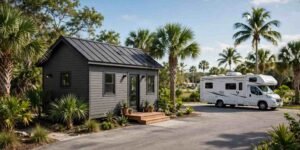
Tiny houses generally hold value better than RVs over a 10-year ownership period because they use residential-grade construction materials that depreciate more slowly than vehicle-grade components. Total cost of ownership depends heavily on how each structure ages under daily use and weather exposure.
Maintenance patterns diverge quickly after the first few years. An RV’s systems were built for intermittent travel use, not the wear of constant full-time occupancy.
Depreciation: Tiny Houses vs RVs
An RV depreciates similarly to a vehicle, often losing 20% of its value within the first year and continuing to decline steadily afterward, according to RV industry resale data. A well-maintained tiny house on a permanent foundation can actually appreciate alongside local real estate values, since it’s classified and taxed more like a residential structure.
Wheeled tiny houses sit somewhere in between, depreciating faster than a foundation home but typically slower than a comparable RV. The trailer chassis and axles are the main wear components driving that difference.
Maintenance and Repair Costs Over Time
Residential-grade tiny house materials, including standard roofing, siding, and windows, generally last 20 to 30 years before major replacement is needed. RV components like roof membranes, slide-out seals, and appliance systems often require attention within 5 to 10 years due to constant vibration from towing and more exposure-sensitive materials.
Full-time RV living accelerates this wear considerably compared to occasional recreational use. I tell people planning full-time occupancy to budget for RV system repairs every single year, not just every few years.
Financing and Insurance Differences
Financing a tiny house on a permanent foundation typically works through a construction or mortgage loan, while a tiny house on wheels and most RVs are financed through personal or RV-specific loans similar to auto financing. Lenders categorize these structures very differently, and that categorization drives your interest rate, loan term, and approval requirements.
Insurance follows the same divide. A foundation tiny house can usually be insured under a standard homeowners policy, while wheeled units need specialty coverage.
Loan Types Available for Each
Foundation tiny houses often qualify for conventional mortgages, construction-to-permanent loans, or FHA loans once they meet local minimum square footage requirements. Wheeled tiny houses and RVs typically use RV loans, personal loans, or chattel loans, which carry shorter terms and higher interest rates than a mortgage.
Loan approval for a wheeled tiny house can be harder to secure than for a comparable RV, simply because lenders have less standardized criteria for classifying it. That’s a gap I see trip up buyers more than almost anything else in the planning process.
Insurance Classification Challenges
A tiny house on wheels sometimes falls into an insurance gray area where it’s too house-like for standard RV policies but not permanent enough for homeowners insurance. Specialty tiny house insurers have emerged specifically to close this gap, but premiums and coverage details vary significantly by provider.
RVs have a much more established insurance market since the vehicle classification is well understood by every major carrier. That maturity translates into more predictable premiums and broader coverage options for RV owners.
Land, Lot Rent, and Site Costs
Where you put either structure often costs more over time than the structure itself. Buying raw land in Florida for a tiny house runs anywhere from $10,000 for a rural lot to well over $150,000 for land near coastal or metro areas.
RV lot rent at a park or campground typically runs $400 to $900 a month depending on location and amenities, which adds up to $4,800 to $10,800 annually with no equity building. A tiny house owner who buys land instead builds equity in that asset over time, which fundamentally changes the long-term financial picture between the two paths.
Is a Tiny House Legal in Florida?
Tiny houses are legal in Florida, but legality depends entirely on local county and municipal zoning codes rather than a single statewide rule. Florida adopted provisions for tiny houses under the Florida Building Code, but enforcement and zoning acceptance vary dramatically between counties.
This county-level variation is the single biggest legal hurdle tiny house buyers face in Florida. What’s permitted in one jurisdiction can be outright prohibited a few miles away.
Florida Building Code Classification
Florida classifies foundation-built tiny houses as single-family residential dwellings under the state building code, provided they meet minimum room size, ceiling height, and egress requirements. Wheeled tiny houses, by contrast, are typically classified as RVs or park models for code purposes, even when built with residential materials.
This classification split is exactly why the “on wheels vs. foundation” decision made earlier in the planning process cascades into every legal and financing question that follows. The classification doesn’t change based on how the interior looks; it changes based on how the structure is attached to the ground.
County-by-County Zoning Variations
Some Florida counties, like Volusia and Walton, have adopted explicit tiny house-friendly zoning ordinances allowing them as accessory dwelling units or primary residences on qualifying lots. Other counties still enforce minimum square footage requirements of 600 to 1,000 square feet for primary residences, which disqualifies most tiny houses outright.
Checking zoning before buying land or a tiny house unit is not optional in Florida. I’ve seen buyers purchase a unit first and discover afterward that their target county won’t permit it as a standalone residence.
Is Living in an RV Full-Time Legal?

Living in an RV full-time is legal in Florida when parked in a licensed RV park, campground, or on private property zoned to allow it, but it is generally illegal in most residential neighborhoods and on land zoned exclusively for single-family homes. The legality hinges almost entirely on location and zoning designation rather than the RV itself.
Many counties treat full-time RV residency as a code enforcement issue specifically because RVs aren’t classified as permanent dwellings. That classification gap creates ongoing legal exposure that doesn’t exist with a properly permitted tiny house.
RV Park and Campground Residency Rules
Most Florida RV parks allow full-time residency but may cap total stay length at 6 to 12 months per year, depending on the park’s zoning classification and local ordinances. Some parks are zoned strictly for transient recreational use and prohibit full-time living entirely, so confirming a park’s residency policy before committing is essential.
Campground-specific restrictions also often limit how long a single RV can occupy one site continuously, even if overall park residency is allowed. These limits catch a lot of full-time RVers off guard during their first year.
Time Limits on RV Living in Residential Zones
Many Florida municipalities limit RV parking or occupancy on private residential lots to 14 to 30 days per year unless a specific variance or permit is obtained. Exceeding that window without authorization typically triggers a code enforcement notice and, eventually, fines.
A handful of counties allow longer-term RV living on private land if it’s tied to an active construction permit for a primary residence being built on the same lot. That exception is useful for people building a tiny house or traditional home who need somewhere to live during construction.
Permitting Requirements for Each Option
A foundation tiny house generally requires a standard residential building permit covering structural, electrical, plumbing, and mechanical work, plus a certificate of occupancy before move-in. Wheeled tiny houses used as a primary residence often require a separate land use or accessory dwelling permit, since standard building permits usually don’t apply to mobile structures.
RVs don’t require a construction permit since they arrive pre-manufactured and certified, but placing one on private land for residential use often requires a temporary use permit or zoning variance. Skipping this step is one of the most common and costly mistakes I see, since it’s the one most buyers don’t realize applies to them.
Utility Hookups and Off-Grid Capability

Both tiny houses and RVs can connect to municipal utilities or run partially off-grid, but the infrastructure required differs based on whether the structure is mobile or fixed. A foundation tiny house connects to utilities the same way any standard home does, through permanent water, sewer, and electrical lines.
RVs and wheeled tiny houses rely on hookups designed for mobility, which means tanks, cords, and connections built for temporary use rather than permanent infrastructure.
Water, Sewer, and Septic Considerations
A foundation tiny house typically connects to municipal sewer or a dedicated septic system sized for the structure’s occupancy, following the same Florida health department rules as any standard home. RVs and wheeled tiny houses use fresh, gray, and black water tanks that need periodic draining at a dump station unless hooked up to a full-service site.
Septic system installation for a tiny house can cost $3,000 to $10,000 in Florida depending on soil conditions and tank size, which is a cost RV owners generally never face since their tank systems come built in.
Solar and Off-Grid Power Options
Both options can run on solar power, but a tiny house’s larger roof surface and residential electrical panel typically support a more robust solar setup than most RVs can accommodate. A full off-grid tiny house solar system in Florida often runs $15,000 to $30,000 installed, covering panels, battery storage, and an inverter sized for daily household loads.
RV solar setups tend to be smaller in scale, often covering basic lighting, device charging, and minimal appliance use rather than full off-grid independence. Florida’s abundant sunshine makes both options reasonably practical, but the tiny house setup generally delivers more complete energy independence.
Livability: Space, Comfort, and Daily Function
Tiny houses generally offer better long-term livability than RVs because residential-grade insulation, higher ceilings, and more durable finishes make daily life more comfortable over months and years of occupancy. RVs prioritize weight savings and mobility, which creates real trade-offs in comfort once the novelty of travel wears off.
This gap becomes especially noticeable during extended stationary living, which describes how most full-time tiny house and RV residents actually use their space.
Square Footage and Storage Comparison
A typical tiny house offers 150 to 400 square feet of usable floor space plus loft storage, while a comparable travel trailer or fifth wheel offers 150 to 400 square feet but with significantly less built-in storage due to lightweight cabinetry construction. Tiny houses generally include full-height cabinets and closets, while RVs rely more heavily on overhead compartments and under-bed storage bins.
Residential-style kitchens and bathrooms in tiny houses also tend to include full-size appliances and fixtures, whereas RVs typically use smaller, specialized versions built to save weight. That difference shows up daily in cooking, laundry, and basic comfort.
Insulation and Climate Control in Florida Heat
Tiny houses built with standard residential insulation, typically R-19 to R-30 in walls and roof, perform significantly better in Florida’s heat and humidity than most RVs, which commonly use thinner insulation rated R-7 to R-14. That insulation gap translates directly into higher cooling costs and less comfortable interior temperatures for RV occupants during summer months.
Humidity control is another factor that favors tiny houses, since residential vapor barriers and HVAC systems are built to manage Florida’s moisture levels better than RV-grade mini-split or rooftop AC units. Mold and moisture issues are a far more common complaint among full-time RV residents in humid climates than among tiny house owners.
Durability and Construction Standards
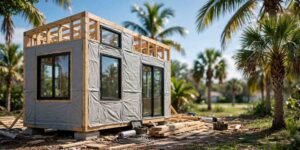
Tiny houses built to residential standards generally last 2 to 3 times longer than RVs under full-time occupancy because they use heavier framing, better moisture barriers, and materials engineered for stationary structural loads rather than highway vibration. This durability gap is one of the most overlooked factors in the tiny house versus RV decision.
Construction quality differences compound over years of Florida’s heat, humidity, and storm exposure, which is a tougher environment than most of these structures were originally designed to withstand.
Residential-Grade vs RV-Grade Materials
Tiny houses typically use standard dimensional lumber framing, house wrap, and residential-grade windows and doors, the same components used in conventional home construction. RVs use lighter aluminum or fiberglass framing with thinner wall assemblies specifically engineered to minimize weight for towing and fuel efficiency.
That weight-driven engineering tradeoff is exactly why RV walls are typically 2 to 3 inches thick compared to 4 to 6 inches in a tiny house, directly affecting both insulation value and structural durability. Lighter materials simply don’t hold up the same way over a decade of continuous use.
Hurricane and Storm Resilience
A tiny house built to current Florida Building Code wind load standards must withstand sustained winds of 140 to 180 mph depending on the wind zone, the same requirement applied to conventional homes in that region. RVs are not engineered to residential wind load standards and are generally required to be evacuated or relocated ahead of hurricanes and tropical storms.
This distinction matters enormously for full-time Florida residents, since a properly anchored tiny house can often ride out a storm that would require an RV to be moved entirely out of harm’s way.
Mobility vs. Permanence: Which Matters More?
Mobility is the single biggest lifestyle tradeoff between these two options, and it’s worth being honest with yourself about how often you’ll actually use it. An RV lets you relocate on a whim, chase seasons, or follow work across the country without selling and rebuying a home.
A tiny house on a foundation gives up that mobility entirely in exchange for stability, equity building, and the comfort of residential-grade construction. Even a wheeled tiny house, while technically mobile, is heavier and less practical to move frequently than a purpose-built RV.
Resale Value and Long-Term Investment Potential
A foundation tiny house tends to hold or grow in value alongside the local real estate market, much like any conventional home. RVs depreciate on a vehicle timeline, and most lose the majority of their value within the first 5 to 7 years regardless of condition.
Wheeled tiny houses fall in between, holding value better than RVs but rarely appreciating the way a foundation home does. Buyers focused on long-term investment potential generally come out ahead with a foundation tiny house over either alternative.
Lifestyle Fit: Who Should Choose Which?

The right choice comes down to how you actually plan to live day to day, not just which option costs less upfront. Someone craving year-round travel has very different needs than someone wanting a stable, permanent downsized home.
Best Fit for Full-Time Residents
Full-time residents who want stability, long-term durability, and the comfort of residential-grade insulation and finishes are generally better served by a foundation tiny house. The tradeoff is giving up the ability to relocate quickly if life circumstances change.
Best Fit for Travel-Focused Living
People who prioritize frequent travel, flexibility, and the ability to change locations on short notice are generally better served by an RV. The tradeoff is accepting faster depreciation, thinner insulation, and more frequent maintenance in exchange for that mobility.
How to Decide Between a Tiny House and an RV
Start by ranking your own priorities honestly: budget, mobility, permanence, and comfort rarely all point in the same direction. From there, match your top priority against the cost, legal, and livability tradeoffs covered throughout this guide rather than choosing based on price alone.
Whichever direction fits your life, getting the construction quality right from day one determines how well that choice holds up for years to come.
Conclusion
Tiny houses and RVs solve different problems even though they look similar on the surface. Cost, Florida’s zoning rules, and daily comfort all shift depending on which path you choose.
We’ve seen both paths work well when buyers match the structure to their actual lifestyle instead of the trend. Understanding these trade-offs puts you ahead of most buyers walking into this decision blind.
We build tiny houses designed for real Florida living, with residential-grade construction built to last. Reach out to Tiny Home Builders Florida to start planning a home built for comfort and longevity.
Frequently Asked Questions
Is a tiny house cheaper than an RV in the long run?
A tiny house is often cheaper long-term because it depreciates more slowly and requires less frequent system repairs than an RV. Upfront, basic RVs can still cost less than a builder-built tiny house.
Can you live in a tiny house legally in Florida?
Yes, tiny houses are legal in Florida, but legality depends on county zoning rules and building code classification. Some counties restrict minimum square footage for primary residences.
Is it legal to live in an RV full-time in Florida?
Living in an RV full-time is legal in licensed RV parks or properly zoned private land. Most residential neighborhoods prohibit full-time RV occupancy.
Which holds its value better, a tiny house or an RV?
A foundation tiny house generally holds value better since it’s tied to real estate rather than vehicle depreciation. RVs typically lose most of their value within 5 to 7 years.
Do tiny houses handle Florida heat better than RVs?
Yes, tiny houses typically use thicker residential insulation than RVs, keeping interiors cooler and more humidity-controlled. RV insulation is thinner to save weight.
Can a tiny house survive a hurricane better than an RV?
A tiny house built to Florida Building Code wind standards can often withstand hurricane-force winds in place. RVs are generally not engineered for those wind loads and require evacuation.
How long do tiny houses last compared to RVs?
Tiny houses built with residential materials typically last 20 to 30 years with proper maintenance. RVs often need major system repairs or replacement within 10 to 15 years.