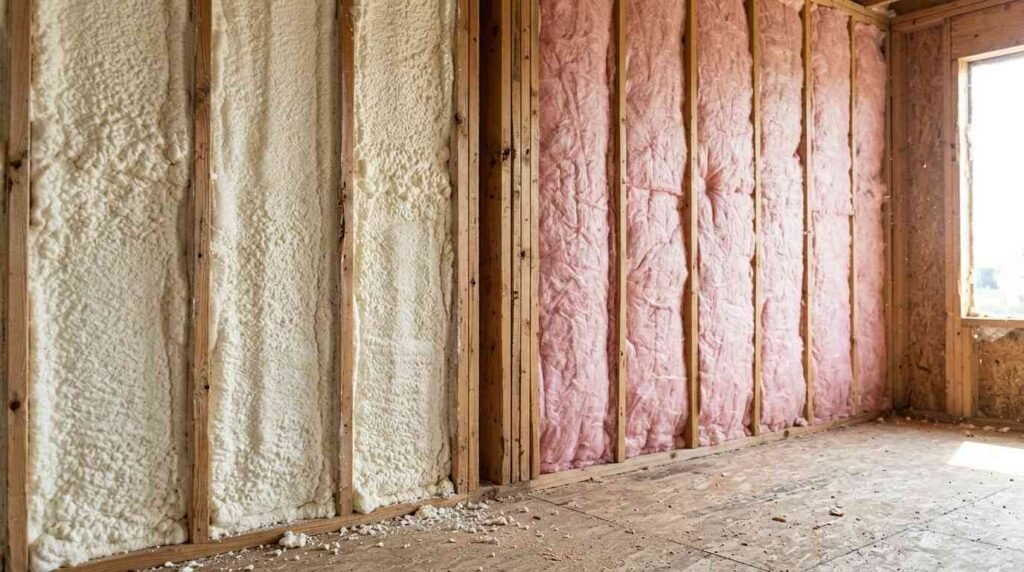
Insulation determines how comfortable, efficient, and durable a new construction home feels for decades, and the two dominant choices are spray foam and batt insulation. Spray foam is a liquid-applied material that expands to seal gaps and block air movement, while batt insulation is pre-cut fiberglass or mineral wool fitted between studs and joists. I’ve watched homeowners get this decision wrong by focusing only on sticker price.
The choice affects energy bills, humidity control, and comfort for 30+ years. Getting it wrong in Florida’s climate costs more than most buyers expect. We see the consequences in older homes constantly.
This guide covers how each insulation type performs, what Florida’s climate and building codes demand, the real cost difference over a home’s lifetime, and where each material fits best in a new build. We also walk through how to judge whether a builder installed it correctly.
What Insulation Actually Does in a New Construction Home
Insulation is a building material that slows heat transfer and reduces air movement between a home’s interior and the outside environment. It works alongside air sealing and moisture control, not instead of them. A wall can look fully insulated and still perform poorly if air leaks around it.
I think of insulation performance as three separate jobs: resisting heat flow, blocking air infiltration, and managing moisture vapor. Batt insulation handles the first job well but does little for the second. Spray foam does all three because it both insulates and seals in one application.
R-Value, Air Sealing, and Moisture Control Explained
R-value measures a material’s resistance to heat flow, with higher numbers indicating better insulating performance. A material can have a high R-value and still allow significant air leakage around its edges. This is why air sealing matters as much as the R-value printed on the package.
Moisture control adds a third layer most homeowners never consider until there’s a problem. Florida’s humidity pushes water vapor through walls year-round, and the wrong material in the wrong place traps that moisture instead of managing it.
Batt Insulation Explained: Materials, R-Value, and Installation

Batt insulation is a pre-cut material, typically fiberglass or mineral wool, installed between wall studs, floor joists, and ceiling rafters to resist heat transfer. It comes in standard widths matching 16-inch and 24-inch stud spacing. Installers cut it to fit around wiring, plumbing, and outlets by hand.
Fiberglass batts typically run R-13 to R-15 for 2×4 walls and R-19 to R-21 for 2×6 walls, according to the U.S. Department of Energy. Mineral wool batts offer similar R-values with better fire resistance and sound dampening. Both materials depend entirely on installation quality to hit their rated performance.
Gaps, compression, and gaps around penetrations are the most common failures I see with batt installation. A batt compressed to fit a tight stud bay loses a meaningful percentage of its rated R-value immediately. This is why installation quality matters as much as material selection.
Fiberglass vs Mineral Wool Batts
Fiberglass batts cost less and remain the most common batt material in new construction. Mineral wool costs more per square foot but resists fire and absorbs sound noticeably better than fiberglass, which matters in shared walls and above garages.
Spray Foam Insulation Explained: Open-Cell vs Closed-Cell

Spray foam insulation is a liquid plastic material that expands on application to fill cavities, seal air gaps, and insulate in a single step. It comes in two forms: open-cell and closed-cell, each with different density, R-value, and moisture properties. Both are applied by trained technicians using specialized equipment, not installed by hand like batts.
Open-cell spray foam expands to a softer, less dense foam and typically reaches R-3.5 to R-3.6 per inch. Closed-cell spray foam is denser, more rigid, and reaches R-6 to R-7 per inch, according to the Building Science Corporation. The density difference also changes how each type handles moisture vapor.
How Closed-Cell Differs From Open-Cell Performance
Closed-cell foam acts as its own vapor barrier because of its dense, non-permeable structure. Open-cell foam remains vapor-permeable, which means it needs a separate vapor retarder in certain wall assemblies. This distinction becomes critical in Florida’s humid climate zones.
Spray Foam vs Batt Insulation: Side-by-Side Comparison
Spray foam outperforms batt insulation on air sealing and moisture control, while batt insulation costs less upfront and remains easier to inspect and repair. The right choice depends on budget, climate zone, and which part of the home is being insulated. Here’s how the two compare across the factors that matter most in new construction.
| Factor | Batt Insulation | Spray Foam Insulation |
| R-value per inch | R-3.1 to R-3.8 | R-3.5 (open-cell) to R-7 (closed-cell) |
| Air sealing | Does not seal air gaps | Seals gaps as it expands |
| Moisture resistance | Can absorb and hold moisture | Closed-cell resists moisture; open-cell does not |
| Upfront cost | Lower | Higher, often 2 to 3 times more |
| Installation speed | Moderate, manual labor | Faster per square foot, requires certified crew |
| Inspectability | Easy to inspect and replace | Harder to inspect once cured |
| Lifespan | 20 to 30 years with proper installation | 80+ years when properly applied |
This table shows the trade-offs builders weigh on every project, and neither material wins across every category.
R-Value, Air Sealing, and Moisture Performance Compared
The R-value gap matters less than most homeowners assume once air sealing enters the equation. A wall with batt insulation and poor air sealing can underperform a lower R-value spray foam wall that has zero air leakage. This is the single biggest misconception I run into with new construction buyers.
Why Florida’s Climate Changes the Insulation Decision

Florida’s hot, humid climate makes moisture control and air sealing more important than in drier climate zones. Most of the state falls into IECC Climate Zone 1A or 2A, where humidity drives moisture into wall cavities year-round. Insulation choices that work fine in drier states can trap moisture and promote mold growth here.
Hurricane-prone regions add another layer of consideration. Closed-cell spray foam adds structural rigidity to roof decks and wall assemblies, which some builders use as a secondary wind-resistance measure alongside proper framing and fastening.
Humidity, Moisture Intrusion, and Hurricane Considerations
Humidity in Florida regularly exceeds 60% relative humidity for much of the year, according to NOAA climate data. That moisture load pushes vapor through exterior walls constantly, which is why vapor-permeable materials need careful detailing in this climate. Closed-cell spray foam’s moisture resistance becomes a genuine performance advantage here, not just a selling point.
Energy Efficiency and Long-Term Utility Cost Impact
Air sealing typically delivers a bigger energy efficiency improvement than R-value increases alone, especially in Florida’s cooling-dominated climate. Homes lose cooling efficiency primarily through air leakage, not just through walls with insufficient R-value. This is why spray foam homes often outperform batt-insulated homes of the same R-value on actual utility bills.
The Department of Energy estimates air sealing combined with proper insulation can reduce heating and cooling costs by up to 15%. In a Florida climate where air conditioning runs nearly year-round, that reduction compounds every single month.
Upfront Cost vs Lifetime Value of Each Insulation Type
Batt insulation costs less to install but can cost more over a home’s lifetime through higher energy bills and shorter replacement cycles. Spray foam carries a higher upfront price, often $1.50 to $3.50 more per square foot, but it rarely needs replacement and seals the home more completely.
I walk homeowners through a simple framework here: upfront cost matters most to a tight construction budget, while lifetime cost matters most to anyone planning to own the home for more than ten years. Lifetime cost of ownership planning changes the calculation significantly for long-term owners.
Florida Building Code and Insulation Requirements
Florida Building Code sets minimum insulation R-values based on IECC climate zones, which require different standards for ceilings, walls, and floors. Most new construction in the state falls under Climate Zone 1A or 2A requirements in the Florida Building Code. These are minimums, not performance targets for a high-quality build.
A builder meeting only the minimum code requirement is building to the lowest legal standard, not the best available standard. This distinction matters more than most buyers realize during the selection process.
IECC Climate Zone Requirements for New Homes
Climate Zone 1A, covering South Florida, typically requires ceiling insulation around R-30 and wall insulation around R-13, per IECC code tables. Climate Zone 2A, covering Central and North Florida, often requires slightly higher ceiling values. Builders who exceed these minimums are signaling a commitment to performance over bare compliance.
Where Each Insulation Type Performs Best in a Home

Spray foam performs best in roof decks, rim joists, and areas requiring an air seal, while batt insulation works well in standard wall cavities and interior sound-dampening applications. Matching the material to the location, rather than using one type everywhere, produces the best overall performance. Many high-quality builders use both materials strategically in the same home.
Attics, Walls, Crawlspaces, and Roof Decks
Roof decks benefit significantly from closed-cell spray foam because it creates a conditioned attic space and seals against Florida’s heat and humidity simultaneously. Crawlspaces and rim joists are common spray foam locations because of their irregular shapes and air-sealing needs. Standard exterior walls can perform well with either material, depending on budget and desired performance level.
Installation Quality: Why Workmanship Matters More Than Material
Poor installation can reduce any insulation material’s real-world performance well below its rated R-value, regardless of which type is used. A perfectly specified spray foam system installed by an inexperienced crew can underperform a correctly installed batt system. This is the factor most marketing materials skip entirely.
I evaluate installation quality by checking for consistent coverage, correct thickness, and proper sealing around penetrations. Construction quality standards separate builders who treat insulation as a checklist item from those who treat it as a performance system.
Common Insulation Mistakes That Hurt New Construction Homes

The most common insulation mistakes in new construction include compressed batts, gaps around electrical boxes, missing vapor barriers, and inconsistent spray foam thickness. Each of these mistakes creates a weak point where heat, air, or moisture moves through the building envelope. Most are invisible once drywall goes up.
- Compressed or stuffed batts that lose rated R-value
- Gaps left around outlets, switches, and plumbing penetrations
- Missing or improperly placed vapor barriers in humid climates
- Inconsistent spray foam thickness across a single cavity
- Insulation installed before final air sealing is complete
- Skipping insulation in rim joists and band boards
These mistakes typically get discovered only after a homeowner notices high utility bills or uneven room temperatures.
Indoor Air Quality and Health Considerations
Spray foam insulation can affect indoor air quality during and immediately after installation due to off-gassing, while properly cured foam poses minimal ongoing air quality concerns. Reputable installers follow manufacturer-specified cure times before occupants re-enter treated spaces. Batt insulation, particularly fiberglass, can release fibers into the air if disturbed or improperly sealed behind drywall.
Mineral wool batts and properly cured spray foam both perform well on long-term indoor air quality once installation is complete. The installation process itself, not the long-term material, is where air quality risks concentrate.
Insulation and Soundproofing Performance
Mineral wool batt insulation provides the best sound-dampening performance among common insulation types, followed by dense-pack fiberglass and then spray foam. Spray foam’s rigid, sealed structure actually transmits some sound frequencies more than loose-fill materials. This makes material choice relevant beyond just thermal performance.
Interior walls around bedrooms, home offices, and shared walls in multi-generational homes benefit from mineral wool specifically for this reason. A builder who understands this detail is thinking beyond baseline code compliance.
How to Evaluate a Builder’s Insulation and Construction Standards

Evaluating a builder’s insulation standards means asking what materials they use by default, whether they exceed code minimums, and how they verify installation quality. A builder who can answer these questions specifically, rather than generally, is demonstrating real construction knowledge. Vague answers about “quality materials” without specifics are a warning sign.
I recommend asking to see a builder’s standard specifications sheet rather than relying on a sales conversation alone. The specification sheet shows exactly what’s included before any upgrades or allowances change the scope.
Questions to Ask Before Choosing Spray Foam or Batt
Ask which insulation type the builder uses by default in walls versus roof decks. Ask whether they perform a blower door test to verify air sealing after installation. Ask how they handle vapor barriers given Florida’s humidity levels specifically.
Which Insulation Is Right for Your New Construction Project
The right insulation choice depends on budget, climate zone, and how long you plan to own the home, with spray foam favoring long-term performance and batt insulation favoring upfront affordability. Neither option is universally correct for every project. A hybrid approach, using spray foam in critical areas and batt elsewhere, often delivers the best balance of cost and performance.
I encourage buyers to evaluate this decision alongside the builder’s broader construction standards, not in isolation. The insulation choice reflects how a builder thinks about long-term value across the entire home.
Conclusion
Spray foam and batt insulation each solve different problems, and the right choice depends on climate, budget, and long-term ownership plans. Florida’s humidity and energy demands make air sealing and moisture resistance especially important considerations.
Understanding these tradeoffs helps you evaluate any builder’s construction standards with confidence rather than guesswork. The materials a builder chooses by default say as much about their quality as their finishes do.
We build every home with insulation decisions matched to Florida’s climate and your long-term comfort. Talk to Tiny Home Builders Florida about how we specify insulation on every project.
Frequently Asked Questions
Is spray foam insulation worth the extra cost in Florida?
Spray foam is often worth the added cost in Florida due to superior moisture resistance and air sealing. It typically pays back through lower energy bills and fewer humidity-related issues over time.
Can you mix spray foam and batt insulation in the same house?
Yes, many builders use both strategically in the same home. Spray foam often goes in roof decks and rim joists, while batt insulation fills standard wall cavities.
How long does spray foam insulation last compared to batt?
Properly installed spray foam can last 80 or more years without degrading. Batt insulation typically lasts 20 to 30 years before settling or compression reduces its performance.
Does spray foam insulation cause moisture or mold problems?
Properly cured closed-cell spray foam resists moisture and does not promote mold growth. Problems typically occur when open-cell foam is used without proper vapor detailing in humid climates.
What R-value do I need for a new home in Florida?
Most Florida homes require R-30 ceiling insulation and R-13 wall insulation under IECC Climate Zone 1A and 2A code minimums. Exceeding these minimums improves comfort and energy efficiency beyond baseline compliance.
Is batt insulation outdated for new construction?
Batt insulation is not outdated and remains widely used in quality new construction. It performs well when installed correctly and paired with proper air sealing.
How do I know if my builder installed insulation correctly?
Ask whether the builder performs a blower door test to verify air sealing after installation. Request to see installation photos or third-party inspection results before drywall is installed.