Choosing the right HVAC system for a new construction home determines comfort, energy costs, and indoor air quality for the next fifteen to twenty years. In Florida, where cooling runs nearly year-round and humidity sits above 60% for most of the year, the stakes are higher than in almost any other climate in the country.
I’ve watched too many homeowners treat HVAC selection as an afterthought buried in a builder’s spec sheet. That mistake costs thousands in energy bills and comfort complaints down the road.
This guide covers how Florida’s climate shapes system requirements, the main system types and how to size them correctly, what efficiency ratings and code compliance actually mean, what the full installation costs look like, and how to spot a quality installation before you move in.
How Florida’s Climate Shapes HVAC System Requirements
Florida’s climate places humidity control and sustained cooling capacity above nearly every other HVAC consideration. Humidity drives mold risk, indoor air quality, and even structural moisture problems inside a new build, which means a system sized only for temperature misses half the job.
I see this mistake constantly in spec-built homes where the contractor used a generic load calculation instead of one tuned to the local climate zone. A system that cools the air but doesn’t adequately dehumidify leaves a home feeling clammy even at 72 degrees.
Humidity Control as a Non-Negotiable Factor
High indoor humidity above 60% creates conditions where mold and dust mites thrive inside wall cavities and HVAC ductwork. Florida’s outdoor humidity regularly exceeds this threshold for eight or more months a year, and a correctly selected HVAC sizing and Manual J load calculation accounts for latent heat removal, not just temperature drop.
Cooling Load vs. Heating Load in Florida Homes
Florida homes carry a cooling load that outweighs heating load by a wide margin, often ten to one in southern regions of the state. This imbalance changes which system types perform efficiently, since a system optimized for heating-dominant climates wastes capacity here.
Types of HVAC Systems for New Construction
The three primary HVAC system types for new construction are central split systems, heat pumps, and ductless mini-splits, each suited to different home layouts and climate priorities. A fourth option, packaged units, works well for homes without attic or basement space for an indoor air handler.
I generally steer new construction clients toward heat pump systems in Florida because they handle both cooling and the state’s mild winter heating needs from a single unit. That said, the best fit still depends on square footage, duct layout, and zoning needs.

Central Split Systems
A central split system is a two-component HVAC setup that separates the outdoor condenser from an indoor air handler connected by refrigerant lines. This remains the most common configuration in Florida new construction because it integrates cleanly with standard ductwork plans.
Heat Pump Systems
A heat pump is an HVAC system that moves heat rather than generating it, allowing one unit to both cool and heat a home efficiently. Heat pump systems have become the default recommendation for Florida new builds because the state’s mild winters rarely demand the backup heat strip that colder climates require.
Ductless Mini-Split Systems
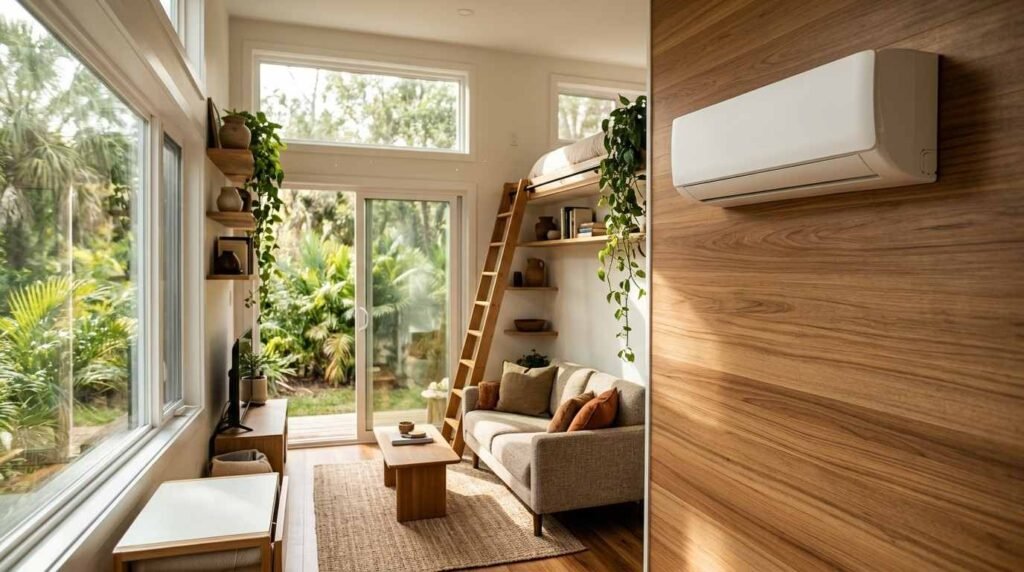
A ductless mini-split is an HVAC system that cools individual rooms or zones without a central duct network, using wall-mounted or ceiling cassette units. These fit well in additions, bonus rooms, or accessory dwelling units where extending ductwork isn’t practical.
Packaged Units
A packaged unit combines the compressor, condenser, and evaporator into a single outdoor cabinet, which suits homes without interior space for an air handler. Florida’s warm climate makes packaged units a viable option year-round, unlike in colder states where freezing coils become a maintenance issue.
HVAC Sizing and Manual J Load Calculations
A Manual J load calculation is the industry-standard formula used to determine the exact heating and cooling capacity a home needs based on square footage, insulation, window placement, and climate zone. Skipping this step, or using a rule-of-thumb estimate instead, is the single most common cause of HVAC performance complaints in new construction.
I ask every builder I evaluate whether they run a room-by-room Manual J or just size by square footage. The difference shows up in uneven temperatures between rooms and a system that short-cycles instead of running efficient, longer cooling cycles.
An oversized system cools the air quickly but shuts off before it removes enough humidity, leaving the home feeling damp despite a cool thermostat reading.
SEER2 and Energy Efficiency Ratings Explained
SEER2 measures how efficiently an HVAC system cools a home relative to the energy it consumes, with higher numbers indicating lower operating costs over the system’s lifespan. The rating system replaced the older SEER metric in 2023 with updated testing procedures that better reflect real-world performance.
Minimum SEER2 Requirements in Florida
Florida’s building code sets a minimum SEER2 rating of 14.3 for split systems, though most quality new construction installations target 16 to 18 for meaningful long-term savings. According to the U.S. Department of Energy, raising a system’s efficiency rating by just two to three points can reduce cooling costs by 10% to 15% annually in hot, humid climates.
Ductwork Design and Installation Quality
Ductwork design determines how evenly conditioned air reaches every room in a home, regardless of how efficient or well-sized the HVAC unit itself is. A high-SEER system connected to poorly designed ductwork still produces uneven temperatures, excessive noise, and wasted energy.
Most ventilation problems I encounter trace back to duct sizing and layout errors made during the rough-in phase rather than the equipment itself. Leaky or undersized ducts can waste a significant share of conditioned air before it ever reaches a vent, according to Energy Star’s duct sealing guidance.
Properly sealed and insulated ducts running through conditioned space outperform the same ducts run through a hot attic, which is a detail worth confirming during a walkthrough.
Indoor Air Quality and Humidity Management Systems
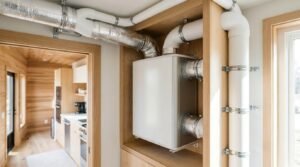
Indoor air quality systems work alongside the primary HVAC unit to remove excess moisture, filter particulates, and manage ventilation in a sealed new-construction envelope. Modern energy-efficient homes are built tighter than older construction, which improves efficiency but also traps indoor pollutants without mechanical ventilation.
Whole-Home Dehumidifiers
A whole-home dehumidifier is a standalone unit integrated into the ductwork that removes excess moisture independently of the cooling cycle. This matters in Florida because a standard AC unit only dehumidifies as a byproduct of cooling, which isn’t always enough during shoulder-season months when cooling demand is low but humidity stays high.
Florida Building Code and HVAC Compliance Requirements
Florida building code sets minimum requirements for HVAC efficiency, ductwork sealing, and load calculations that every new construction project must meet before final inspection. These standards exist specifically because the state’s climate makes HVAC performance a life-safety and structural-integrity issue, not just a comfort one.
The Florida Building Commission updates these requirements periodically, and compliance verification happens through mandatory inspections before a certificate of occupancy is issued.
Smart Thermostats and Zoning Systems
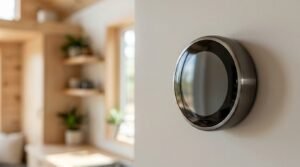
A zoned HVAC system divides a home into separate temperature-controlled areas, each managed independently through dampers and a central control panel. This setup solves the common new-construction complaint of upstairs rooms running hotter than downstairs living areas.
Smart thermostats add scheduling and remote control on top of a zoned or single-zone system, and most integrate with energy monitoring that shows real-time usage patterns.
HVAC System Costs for New Construction in Florida
HVAC system costs for new construction in Florida typically range from $8,000 to $18,000 depending on system type, square footage, and efficiency rating. This range reflects full installation, including ductwork, not just equipment cost.
Upfront Installation Costs by System Type
| System Type | Typical Installed Cost Range | Best Suited For |
| Central Split System | 8,000–14,000 | Standard single-family homes |
| Heat Pump System | 9,000–16,000 | Whole-home heating and cooling |
| Ductless Mini-Split | 3,000–7,000 per zone | Additions, ADUs, room additions |
| Packaged Unit | 7,500–13,000 | Homes without interior air handler space |
Long-Term Operating Cost Differences
A higher SEER2-rated system costs more upfront but typically pays back the difference in energy savings within five to eight years in Florida’s cooling-dominant climate. I walk every client through this payback math because the lowest upfront bid isn’t always the lowest total cost over a ten-year horizon.
Signs of Quality HVAC Installation in a New Build
A quality HVAC installation shows consistent airflow across every room, properly sealed and labeled ductwork, and documentation of the Manual J calculation used to size the system. These are verifiable details, not marketing claims, and any reputable builder should produce them on request.
Red flags include visibly crushed or kinked flexible ductwork, missing duct insulation in attic runs, and a contractor who can’t explain why a particular tonnage was chosen for the home’s square footage. I also check whether the HVAC system’s SEER2 rating matches what was specified in the original building contract, since substitutions happen more often than homeowners expect.
Maintenance Requirements for New Construction HVAC Systems
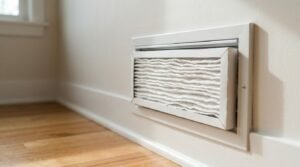
New construction HVAC systems require filter changes every one to three months, annual professional inspections, and coil cleaning to maintain rated efficiency over their lifespan. Skipping these basics is the fastest way to void a manufacturer’s warranty and shorten the system’s effective life.
Florida’s humidity and pollen levels mean filters clog faster here than in drier climates, so I recommend checking monthly even if the manufacturer’s schedule says otherwise.
Questions to Ask Your Builder About HVAC Systems
The most important questions to ask a builder involve the Manual J calculation, SEER2 rating, ductwork warranty, and brand transparency before signing a construction contract. A builder who hesitates to answer these specifics in writing is worth reconsidering.
Ask whether the HVAC subcontractor is licensed and insured separately from the general contractor, what the labor warranty covers beyond the manufacturer’s parts warranty, and whether a post-installation airflow test is included.
HVAC System Lifespan and Long-Term Performance in Florida
HVAC systems in Florida typically last 12 to 15 years, shorter than the 15-to-20-year average in milder climates due to near-constant run time and salt-air exposure in coastal areas. Coastal installations face additional corrosion risk that inland Florida homes don’t encounter to the same degree.
Routine maintenance and correct initial sizing both extend lifespan meaningfully, while an undersized or oversized system tends to fail years earlier than its rated expectancy.
HVAC Rebates and Incentives for New Construction in Florida
Florida homeowners can access federal tax credits and utility-specific rebates for installing high-efficiency HVAC systems, with some programs offering direct rebates at the point of installation. The Database of State Incentives for Renewables & Efficiency tracks current Florida-specific programs, which change periodically based on utility provider and county.
Choosing the Right HVAC Partner for Your New Construction Project
The right HVAC partner for a new construction project brings documented load calculations, transparent pricing, and a willingness to explain every decision rather than just installing what’s cheapest. We’ve built our process around exactly this kind of transparency because homeowners deserve to understand what’s going into their home and why.
Getting the HVAC system right from day one saves thousands in energy costs and comfort headaches for the life of the home. If you’re planning new construction anywhere in Florida, Tiny Home Builders Florida can walk you through system selection as part of a fully managed build from the ground up.
Conclusion
A well-chosen HVAC system brings together correct sizing, strong SEER2 efficiency, and quality ductwork to perform reliably in Florida’s demanding climate.
Every new construction decision connects back to long-term comfort, lower energy bills, and a home built to last for decades ahead.
We build homes around this standard of craftsmanship, and Tiny Home Builders Florida is ready to guide your next project from foundation to final finish.
Frequently Asked Questions
What size HVAC system do I need for a new construction home in Florida?
The correct size depends on a Manual J load calculation, not square footage alone. A professional calculation accounts for insulation, window placement, and local climate to avoid an oversized or undersized unit.
What SEER2 rating is required for new homes in Florida?
Florida requires a minimum SEER2 rating of 14.3 for split systems in new construction. Most quality installations target 16 to 18 for better long-term energy savings.
How much does a new HVAC system cost for new construction?
Costs typically range from $8,000 to $18,000 depending on system type and home size. This includes equipment, ductwork, and installation labor.
Is a heat pump or central AC better for Florida new construction?
Heat pumps are generally better for Florida because they efficiently handle both cooling and the state’s mild winter heating needs. Central AC-only systems require a separate heating source.
How long does an HVAC system last in a new Florida home?
Florida HVAC systems typically last 12 to 15 years due to near-constant operation and humidity exposure. Coastal homes may see shorter lifespans from salt-air corrosion.
Do I need a whole-home dehumidifier in Florida?
A whole-home dehumidifier helps during shoulder-season months when cooling demand is low but humidity remains high. Standard AC units only dehumidify as a byproduct of active cooling cycles.
What HVAC questions should I ask my home builder?
Ask about the Manual J calculation, SEER2 rating, ductwork warranty, and whether the HVAC subcontractor is separately licensed. A transparent builder will answer all of these in writing before contract signing.