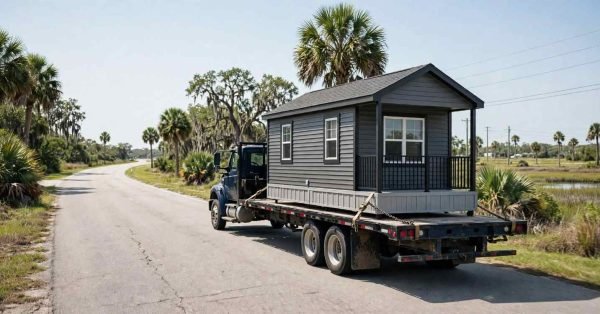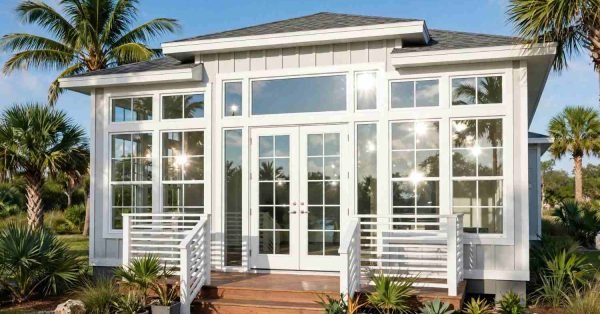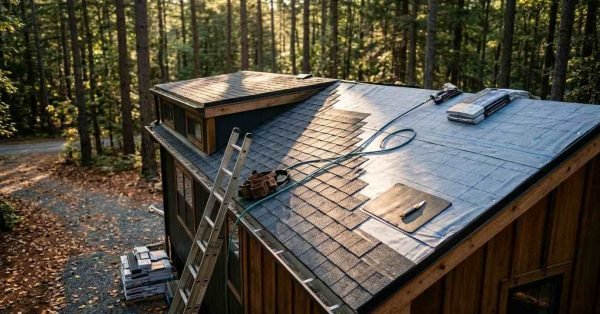

An off-grid tiny house on wheels is a self-contained, mobile dwelling that produces its own power, collects and stores its own water, and manages its own waste without any connection to municipal utilities. I build these homes in Florida, and I want you to understand every system before you commit a single dollar to one.
Getting these systems wrong means dead batteries, empty tanks, and a home that fails you in July heat. Getting them right means genuine freedom and a home that performs for decades.
This guide walks through what these homes are and how their core systems work together, the full solar and battery setup, fresh water collection, filtration, and waste handling, the Florida-specific realities of heat, towing weight, and zoning, and finally how to budget the build and choose a builder who gets it right.
What an Off-Grid Tiny House on Wheels Actually Is
An off-grid tiny house on wheels is a compact home built on a road-legal trailer that operates independently of the electrical grid, city water, and sewer systems. I describe it to clients as a house that carries its own utilities with it.
The “on wheels” part is not a small detail. It reshapes every single system choice, because weight, vibration, and limited roof space all become hard constraints the moment you decide to tow.
Off-grid vs. grid-tied tiny homes
A grid-tied tiny home plugs into existing utilities and uses off-grid gear only as backup. A true off-grid tiny house runs entirely on what it generates and stores, which demands careful sizing and real discipline about consumption.
Why on wheels changes every system decision
Towing a home means every tank, panel, and battery adds weight that affects safety and legality on the road. I size systems for the road first and comfort second, because a home you cannot legally tow is not mobile at all.
How Off-Grid Systems Work Together as One Home
Off-grid tiny house systems work as one connected loop where power runs the pumps and appliances, water feeds daily living, and waste systems close the cycle cleanly. No single system stands alone, and a weakness in one quickly drags down the others.
I think of an off-grid home as three dependent systems that must be balanced against each other and against how you actually live day to day.
The three core systems: power, water, waste
The three core systems of an off-grid tiny home are:
- Power: solar panels, batteries, and an inverter that run everything electrical.
- Water: collection, storage, and filtration that supply clean water for drinking and washing.
- Waste: toilet, greywater, and any blackwater handling that disposes of what the home produces.
Each system has its own sizing math, and each one competes for the same limited weight budget on the trailer.
Sizing systems to how you actually live
System sizing starts with honest numbers about your daily habits, not generic averages. A couple who works from home draws far more power than a weekend traveler, and I design around your real patterns rather than a brochure figure.
Solar Power Systems for a Tiny House on Wheels

A solar power system for a tiny house on wheels captures sunlight through roof-mounted panels, regulates it through a charge controller, and stores it in a battery bank for use anytime. Solar is the primary power source for nearly every off-grid build I complete in Florida.
Florida sun is a real advantage here. Florida receives roughly 5 to 5.5 peak sun hours per day on average, which makes solar power for tiny houses one of the most reliable off-grid choices in the state.
Panels, controllers, and mounting on a mobile roof
Roof space on a tiny house is tight, so panel efficiency and secure mounting matter more than on a fixed home. I use high-efficiency panels and vibration-rated mounts, because a loose panel at highway speed is both a safety hazard and a lost investment.
Reading your real daily energy use
Daily energy use is measured in watt-hours, and knowing yours is the foundation of a correctly sized system. I audit every appliance you plan to run, since undersizing leaves you in the dark and oversizing wastes thousands of dollars.
Battery Storage and Backup Power
Battery storage holds the energy your solar panels produce so your home runs after sunset and through cloudy stretches. A battery bank is the single most expensive part of most off-grid builds, and choosing the right chemistry matters enormously.
Here is how the two common battery types compare for a tiny house on wheels:
| Factor | Lithium (LiFePO4) | Lead-Acid |
| Lifespan | 3,000–5,000 cycles | 500–1,000 cycles |
| Weight | Light | Heavy |
| Usable capacity | ~90–100% | ~50% |
| Upfront cost | Higher | Lower |
Lithium vs. lead-acid banks
A lithium battery bank costs more upfront but lasts longer, weighs less, and delivers more usable capacity, which is why I specify it for almost every mobile build. Weight savings alone often justify the price on a home you tow.
Inverters, generators, and shore power backup
An inverter converts stored DC battery power into the AC power your appliances use, and most off-grid homes also keep a backup source. I build in the option for a generator or shore power so a week of rain never leaves you stranded.
Fresh Water Collection and Storage
Fresh water in an off-grid tiny house comes from filling onboard tanks at a source or harvesting rainwater, then storing it in tanks sized for your usage and trailer weight limits. Water is deceptively heavy, and storage is always a balancing act.
Water weighs about 8.3 pounds per gallon, so a modest 40-gallon tank adds over 330 pounds to your trailer when full. I plan tank capacity carefully against your towing limits.
Tank capacity and weight on a trailer
Tank capacity has to be reconciled with your trailer’s weight rating before anything else. I position fresh water storage tanks low and centered, because water shifting at speed affects how the whole home tows.
Rainwater harvesting basics
Rainwater harvesting captures roof runoff into storage for later filtration and use. Florida’s rainy season makes rainwater harvesting a strong supplement, though it requires proper first-flush diversion and filtration before the water is safe.
Water Filtration and Purification
Water filtration makes collected or stored water safe to drink by removing sediment, contaminants, and pathogens through staged filters. Clean water is non-negotiable, and I never let a client drink unfiltered rainwater or tank water.
A typical water filtration system for drinking water runs through these stages:
- Sediment filter: Removes dirt, debris, and particles.
- Carbon filter: Removes chlorine, taste, and odor.
- Purification: UV light or reverse osmosis removes pathogens.
Filtration stages for drinking water
Each filtration stage targets a different contaminant, and skipping one leaves a gap. I match the filter setup to your water source, because rainwater and city fill water carry different risks.
Greywater Management and Reuse
Greywater is the gently used wastewater from sinks and showers that can often be collected, filtered, and reused for irrigation. Managing greywater well reduces how much fresh water you need to carry.
I design greywater systems that separate this water cleanly from toilet waste, which keeps reuse legal and sanitary. Florida rules on greywater reuse vary by county, so the design has to respect local limits.
Legal and safe greywater disposal
Safe greywater disposal means never letting it pool or contaminate drinking sources. I build systems that filter and disperse greywater properly, because improper disposal creates both health risks and legal trouble.
Composting and Waterless Toilet Systems
A composting toilet is a waterless fixture that separates and dries human waste into a stable, compostable material, eliminating the need for a sewer connection or blackwater tank. Most of my off-grid builds use one, because they save water and simplify waste entirely.
A composting toilet works through a simple process:
- Separation: Liquid and solid waste are diverted apart.
- Drying: Solids mix with a cover material and dry out.
- Composting: The dried material breaks down into safe compost.
How composting toilets work
Composting toilets rely on separating liquids from solids to prevent odor and speed breakdown. I install models with active ventilation, since airflow is what keeps the system clean and odor-free.
Alternatives: incinerating and cassette toilets
Incinerating toilets burn waste to ash, and cassette toilets store it in a removable tank for disposal. Each waterless toilet option suits a different lifestyle, and I match the choice to how often you travel and empty systems.
Blackwater and Conventional Waste Options
Blackwater is toilet wastewater that requires a sealed holding tank and dump-station disposal, used only when a composting toilet is not the right fit. Some clients prefer a conventional flush toilet, and that choice brings a holding tank into the design.
A blackwater holding tank adds weight and requires regular dumping, which reduces some of the freedom off-grid living promises. I walk every client through this tradeoff before they decide.
When a holding tank still makes sense
A holding tank still makes sense for those who want a familiar flush toilet and travel near dump stations. I size and vent these tanks properly so odor and leaks never become a problem.
Heating, Cooling, and Climate Control Off-Grid in Florida

Climate control in an off-grid Florida tiny house focuses almost entirely on cooling and humidity management, using low-draw mini-splits, strong insulation, and smart ventilation. Florida heat is the hardest off-grid challenge in this state, and I design for it from the first sketch.
Keeping a tiny home cool off-grid in Florida comes down to:
- Insulation: High R-value walls and roof slow heat gain.
- Low-draw cooling: A DC mini-split uses far less battery power.
- Ventilation: Roof vents and fans exhaust heat and humidity.
- Shade and orientation: Parking and awnings cut solar heat load.
Managing Florida heat and humidity without the grid
Humidity control matters as much as temperature in Florida. I specify off-grid cooling systems that dehumidify efficiently, because trapped moisture causes mold and discomfort faster than heat alone.
Low-draw cooling and ventilation
Low-draw cooling protects your battery bank during the hottest hours. I pair an energy-efficient mini-split with passive ventilation so your solar system is never overwhelmed at peak afternoon demand.
Propane, Backup Fuel, and Energy Redundancy
Propane provides concentrated backup energy for cooking, hot water, and sometimes heating, reducing the electrical load on your solar and battery system. I use propane strategically to take pressure off the battery bank.
Energy redundancy means never relying on a single source, and propane systems are a reliable second layer. A small propane supply can run a cooktop and water heater for weeks, which spares your batteries for lighting and electronics.
Weight, Towing, and System Placement on a Trailer

Weight and placement determine whether your off-grid tiny house can be towed safely and legally, since solar, water, and tanks all add significant mass. I treat the weight budget as the master constraint for the entire design.
Here is roughly how off-grid systems add weight to a trailer:
| System | Approximate Added Weight |
| Full 40-gal fresh water tank | ~330 lbs |
| Lithium battery bank | 100–300 lbs |
| Solar panels & mounts | 100–200 lbs |
| Full blackwater/holding tank | 200+ lbs |
Balancing solar, water, and tanks for safe towing
Balancing tiny house weight distribution keeps the trailer stable at speed and within axle ratings. I place heavy items low and centered over the axles, because poor balance causes dangerous sway on the highway.
Florida Codes, Zoning, and Legal Parking
Florida codes and zoning determine where you can legally park and live in an off-grid tiny house on wheels, and the rules vary sharply by county and classification. This is the area where I see buyers make the costliest mistakes.
Tiny homes on wheels fall into distinct legal classifications:
| Classification | What It Means |
| RVIA-certified | Built as an RV; easiest to park in RV-zoned areas |
| HUD / park model | Treated more like manufactured housing |
| Uncertified | Hardest to place legally; limited options |
RVIA, HUD, and tiny home classifications
Your tiny home legal classification decides where it can legally sit, so I advise on it before construction begins. An RVIA certification opens far more parking options across Florida.
Where you can legally live off-grid in Florida
Legal off-grid living in Florida depends on county zoning, and Florida tiny house zoning laws differ widely from one county to the next. I help clients confirm a legal spot before they build, not after.
Budgeting Your Off-Grid Tiny House Build
An off-grid tiny house on wheels in Florida typically costs between $45,000 and $125,000 depending on size, finishes, and system complexity, with off-grid systems adding a meaningful share of that total. I give every client a transparent, line-item budget.
System cost ranges and where to invest first
Off-grid system costs center on solar, batteries, and water, which together often run $15,000 to $30,000. I tell clients to invest first in off-grid system costs that are hardest to upgrade later, like the battery bank and insulation.
Choosing a Builder for an Off-Grid Tiny House on Wheels
Choosing a builder for an off-grid tiny house means evaluating proven system integration experience, construction quality, and transparency, not just price. The builder you pick determines whether your systems actually work together as designed.
When choosing a tiny house builder, look for these quality indicators:
- System integration experience: proven off-grid solar, water, and waste builds.
- Weight engineering: Documented attention to towing safety.
- Code knowledge: Familiarity with Florida classifications and zoning.
- Transparency: Clear budgets, timelines, and material specs.
Quality indicators and questions to ask
The right questions reveal a builder’s real depth. I encourage buyers to ask about past off-grid projects, warranty terms, and how systems are sized, because strong answers separate true craftsmanship from marketing.
Maintaining Off-Grid Systems for Long-Term Performance
Maintaining off-grid systems means regular inspection and care of your solar, water, and waste components so they perform reliably for decades. Off-grid homes reward attention and punish neglect.
A basic off-grid maintenance routine includes:
- Panels: clean quarterly and check mounts.
- Batteries: monitor charge levels and connections.
- Water: replace filters on schedule.
- Waste: service the toilet and empty tanks as needed.
Consistent maintenance protects the investment you made, and it keeps every system performing the way it did on day one.
Conclusion
An off-grid tiny house on wheels unites power, water, and waste into one self-sufficient home, and every system depends on the others working correctly together.
These homes deliver genuine freedom when the solar, water, waste, weight, and Florida code factors are all engineered as one, and deeper resources exist for each system.
At Tiny Home Builders Florida, we design and build off-grid tiny homes that perform for generations. Talk to us about your build today.
Frequently Asked Questions
Can you really live fully off-grid in a tiny house in Florida?
Yes, you can live fully off-grid in a Florida tiny house. Strong solar resources, rainwater potential, and composting waste systems make it practical, though county zoning determines where you may legally park.
How many solar panels does an off-grid tiny house need?
Most off-grid tiny houses need between 800 and 2,000 watts of solar panels. The exact number depends on your daily energy use, appliances, and battery bank size rather than square footage.
Do off-grid tiny houses need a septic or sewer connection?
No, off-grid tiny houses do not need septic or sewer connections. Composting toilets handle solid waste without water, while greywater is filtered and dispersed, eliminating the need for conventional sewage hookups.
How much does an off-grid tiny house on wheels cost in Florida?
An off-grid tiny house on wheels in Florida typically costs between $45,000 and $125,000. Off-grid systems like solar, batteries, and water storage add roughly $15,000 to $30,000 to the total.
Is it legal to park a tiny house on wheels anywhere in Florida?
No, it is not legal to park a tiny house on wheels anywhere in Florida. Zoning and classification rules vary by county, so you must confirm a legal location before building.
What happens to off-grid systems during a Florida hurricane?
During a Florida hurricane, off-grid systems need securing and often relocation. The home’s mobility is an advantage, letting you tow it inland, but panels and loose components must be protected first.
How long do off-grid tiny house systems last?
Off-grid tiny house systems last decades with proper care. Lithium batteries last 10 or more years, solar panels 25 or more years, and composting toilets run indefinitely with routine maintenance.