Eco-friendly custom home features are design and construction choices that reduce a home’s energy use, water consumption, and environmental impact while improving durability and comfort. In Florida, where heat, humidity, and hurricanes all stress a home at once, these features aren’t a luxury add-on; they’re a performance decision. I’ve spent years watching homeowners choose between a cheaper build and a smarter one, and the smarter one almost always wins over a 10-year horizon.
Most homeowners discover this the hard way, after a summer electric bill shocks them or a storm exposes a weak envelope. We’d rather you know the tradeoffs before signing a contract.
This guide covers what actually counts as eco-friendly in Florida’s climate, the building envelope and HVAC choices that drive the biggest savings, solar and water systems, sustainable materials and indoor air quality, smart monitoring and site design, and finally the certifications, costs, and builder vetting that tie it all together.
What Makes a Home Feature “Eco-Friendly” in Florida
An eco-friendly home feature in Florida is one that reduces energy or water consumption, withstands the state’s heat and storm exposure, and lowers long-term operating costs without sacrificing comfort. That’s a different bar than in a mild climate. A feature that saves energy in Colorado might do nothing here if it doesn’t also handle 90% humidity and category-force winds.
I group these features into three buckets: energy efficiency, material sustainability, and storm resilience. The best Florida builds treat all three as one system, not three separate checkboxes. A home can be “green” on paper and still perform poorly if the envelope leaks or the HVAC is oversized.
Energy Efficiency vs. Sustainability vs. Resilience
Energy efficiency means using less power to heat, cool, and run the home. Sustainability refers to the materials and resources used to build it. Resilience measures how well the home survives Florida-specific stresses heat, humidity, hurricanes, and flooding.
These three goals sometimes pull in different directions, and a good builder knows how to balance them rather than maximizing one at the expense of the others.
High-Performance Building Envelope & Insulation
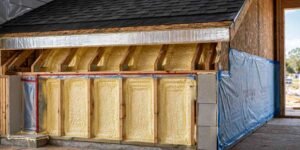
A high-performance building envelope reduces the amount of heat, humidity, and air that moves between a home’s interior and Florida’s exterior climate, directly cutting HVAC load and energy bills. This is the single biggest lever for energy performance in a hot, humid state, and it’s also the one homeowners most often underfund because it’s invisible once drywall goes up.
I’ve seen identical floor plans perform completely differently based on envelope quality alone. A tight envelope with proper vapor control can cut cooling costs by 15–20% compared to a standard code-minimum build, according to the U.S. Department of Energy’s building envelope research. That’s not a marginal difference; it compounds every month for decades.
Spray Foam vs. Batt Insulation in Humid Climates
Spray foam insulation outperforms traditional batt insulation in Florida because it creates an air seal that resists moisture intrusion, a constant risk in humid climates. Batt insulation is cheaper upfront but allows more air leakage and is more prone to moisture-related degradation over time.
Closed-cell spray foam in particular adds structural rigidity to roof assemblies, which matters when wind uplift is a real design concern.
Radiant Barrier Roof Sheathing
Radiant barrier sheathing reflects radiant heat before it enters the attic space, reducing attic temperatures by as much as 30 degrees on a hot Florida afternoon, based on Florida Solar Energy Center testing. Lower attic temperatures mean less heat transfer into living spaces and less strain on the HVAC system sitting above.
Energy-Efficient HVAC Systems for Florida Humidity
An energy-efficient HVAC system in Florida is one sized and rated specifically to handle year-round cooling demand and high humidity without excessive energy draw or indoor moisture problems. Oversizing is the most common and costly mistake I see in custom builds: a system too large for the envelope cools the air fast but never runs long enough to pull out humidity, leaving the home feeling damp even when it’s cold.
A right-sized system paired with a tight envelope from the section above does both jobs at once: temperature and moisture control.
SEER2 Ratings Explained
SEER2 is the current efficiency rating standard for air conditioning systems, replacing the older SEER metric as of 2023. A higher SEER2 rating means the system produces more cooling per unit of electricity consumed, which translates directly into lower monthly bills in a state where AC runs nearly year-round.
Dehumidification & Indoor Air Quality
Dedicated dehumidification equipment removes excess moisture from indoor air independently of the cooling cycle, preventing the mold and mildew issues that plague poorly designed Florida homes. This matters as much for health and durability as it does for comfort.
Solar Power & Battery Storage Systems

Solar power systems convert sunlight into electricity to offset a home’s grid consumption, and in Florida they typically pay for themselves faster than in most other states because of high sun exposure and electricity rates. Pairing solar with the efficient envelope and HVAC choices covered above shrinks the system size needed to offset your usage, which lowers the upfront cost of going solar in the first place.
EnergySage’s 2024 solar data puts the average Florida payback period at 6 to 9 years, with systems typically carrying 25-year warranties, meaning 15+ years of essentially free power after payback.
Solar Payback Period in Florida
Payback period is the length of time it takes for cumulative energy savings to equal the upfront cost of the solar installation. Florida’s combination of strong solar irradiance and relatively high utility rates keeps this period shorter than the national average in most regions.
Battery Backup for Hurricane Season
Battery storage systems store excess solar energy for use during grid outages, which is a meaningful resilience feature during hurricane season when power can be out for days. A battery-backed solar system keeps refrigeration, medical equipment, and basic comfort running when the grid doesn’t.
Impact-Rated, Energy-Efficient Windows & Doors
Impact-rated, energy-efficient windows serve two purposes in a Florida home: they resist wind-borne debris during hurricanes and reduce heat gain from direct sun exposure year-round. This dual function is unique to coastal and hurricane-prone climates, and it’s why window selection costs more here than almost anywhere else in residential construction.
Low-E Glass and Hurricane Codes
Low-E glass carries a microscopically thin coating that reflects infrared heat while still allowing visible light through, cutting solar heat gain without darkening the room. Combined with impact-rated framing that meets Florida Building Code wind-load requirements, these windows handle both the heat and the storm problem in a single product.
Metal & Cool Roofing Systems
Cool roofing systems use reflective materials to reduce the amount of solar heat absorbed into a home, lowering attic and interior temperatures compared to traditional dark asphalt shingles. Metal roofing in particular has become a popular eco-friendly choice in Florida because it combines this reflectivity with a lifespan of 40 to 70 years, roughly double that of standard asphalt shingles.
The upfront cost runs higher, but the combination of longevity, wind resistance, and reduced cooling load makes metal roofing one of the better long-term value features on this list.
Water Conservation & Rainwater Management Systems
Water conservation systems reduce a home’s potable water consumption through efficient fixtures, rainwater capture, and on-site reuse strategies. Florida’s water utilities have been raising rates steadily, and several counties now offer rebates specifically for homes that reduce demand on municipal water systems.
Low-Flow Fixtures & Greywater Recycling
Low-flow fixtures reduce water usage at the point of use faucets, showerheads, and toilets without a noticeable drop in performance for the homeowner. Greywater recycling systems go a step further, capturing water from sinks and showers for reuse in irrigation, which can meaningfully cut outdoor water demand in a state where lawns need near-constant watering.
Sustainable & Low-Impact Building Materials

Sustainable building materials are those sourced, manufactured, or harvested in ways that reduce environmental impact while still meeting Florida’s structural and durability requirements. This category gets the most marketing attention and the least scrutiny, so I always tell homeowners to ask builders for specifics rather than accepting “eco-friendly materials” as a blanket claim.
Material choice also affects how a home performs decades down the line, not just how it’s built today.
Engineered Wood, Recycled Steel, Low-VOC Finishes
Engineered wood products use smaller, faster-growing trees more efficiently than solid lumber while often matching or exceeding its structural strength. Recycled steel framing resists termites and warping, two persistent problems in Florida’s climate, and comes from a supply chain with a smaller carbon footprint than virgin steel production. Low-VOC paints and finishes release fewer volatile organic compounds into indoor air, a detail that matters more than most homeowners realize.
Indoor Air Quality & Non-Toxic Home Design
Indoor air quality in a custom home is shaped by the materials, finishes, and ventilation systems chosen during construction, and poor choices compound in Florida’s humid, largely sealed-home climate. Homes built tight for energy efficiency need deliberate ventilation strategies, or trapped moisture and off-gassing materials degrade air quality over time.
Non-toxic finishes, low-VOC adhesives, and mechanical fresh-air exchange systems work together to keep indoor air genuinely healthier than a standard build, not just marketed that way.
Smart Home Technology for Energy Monitoring
Smart home energy monitoring systems track real-time electricity and water usage throughout a home, giving homeowners the data needed to catch inefficiencies before they show up as a high bill. These systems turn an invisible utility cost into something you can actually see and manage, which changes behavior in ways that passive efficiency features can’t.
Smart thermostats, leak detection sensors, and whole-home energy monitors are now common additions in new Florida builds, often paying for themselves through early problem detection alone.
Passive Solar Design & Lot Orientation
Passive solar design positions a home on its lot to take advantage of natural sunlight and shade patterns, reducing reliance on mechanical heating and cooling. In Florida, this mostly means minimizing west-facing window exposure to afternoon sun and using roof overhangs to block high summer sun while still allowing lower winter light through.
Lot orientation decisions get made early in the design process and are nearly impossible to correct later, which makes this one of the lowest-cost, highest-impact choices in the entire build.
Florida-Native Landscaping & Xeriscaping

Florida-native landscaping uses plant species adapted to the state’s climate, requiring less water, fertilizer, and maintenance than non-native alternatives. Xeriscaping principles reduce irrigation demand further by grouping plants with similar water needs and minimizing turf grass, which is typically the single thirstiest element of a residential landscape.
This approach also reduces long-term maintenance costs, since native plants are naturally suited to local pests, soil, and rainfall patterns.
Green Building Certifications (Florida Green, LEED, ENERGY STAR)
Green building certifications are third-party verification programs that confirm a home meets specific sustainability and efficiency standards, giving homeowners independent proof beyond a builder’s own claims. Florida Green Building Coalition certification is tailored specifically to Florida’s climate, while LEED and ENERGY STAR carry broader national recognition.
Certification isn’t free, and it isn’t always necessary to get a genuinely efficient home. But it does provide a documented, third-party checkpoint that a builder actually followed through on the standards they promised.
True Cost vs. Long-Term Savings Breakdown
Eco-friendly features typically add 3% to 10% to a custom home’s upfront construction cost, depending on which features are selected, but many recoup that difference through utility savings within 5 to 10 years. The mistake most homeowners make is evaluating each feature in isolation rather than looking at the combined payback across the whole system.
Payback Timelines by Feature
Envelope and insulation upgrades tend to pay back fastest, often within 3 to 5 years, because they reduce HVAC load continuously with zero ongoing cost. Solar systems typically follow at 6 to 9 years. Premium roofing and high-end water systems carry the longest payback windows but add the most to resale value and storm resilience, which isn’t always captured in a simple utility-savings calculation.
Florida Rebates, Tax Incentives & Green Financing
Florida homeowners can offset eco-friendly construction costs through a combination of federal tax credits, utility rebates, and specialized green financing products. The federal solar tax credit currently covers 30% of solar installation costs, according to the Database of State Incentives for Renewables & Efficiency, and several Florida utilities offer additional rebates for high-efficiency HVAC and water conservation upgrades.
Green mortgage products also exist that factor projected energy savings into loan underwriting, effectively letting future utility savings help qualify for a larger loan today.
How to Choose a Builder for Eco-Friendly Construction
Choosing a builder for an eco-friendly custom home means vetting their specific experience with energy-efficient systems, sustainable materials, and Florida’s building codes, not just their general construction reputation. Plenty of builders will say they build “green” homes. Far fewer can walk through the actual envelope design, HVAC sizing calculations, or material sourcing decisions that make that claim true.
I always tell homeowners to ask for specifics and to treat vague answers as a warning sign, not a detail to overlook.
Questions to Ask Before Signing a Contract
Ask which specific energy-efficiency and sustainability features are included standard versus offered as upgrades, and request documentation of past projects’ actual utility costs rather than projected estimates. Ask how the builder calculates HVAC sizing, whether they’ve completed any certified green builds, and who performs blower-door or duct-leakage testing before closeout.
A builder who answers these questions with specifics, not marketing language, is the one worth hiring.
Conclusion
Eco-friendly custom home features work together as one performance system envelope, HVAC, solar, materials, and site design all reinforcing each other rather than standing alone. Florida’s climate makes these choices higher-stakes and higher-reward than almost anywhere else in the country.
The right features pay for themselves through lower bills, fewer repairs, and stronger resale value, while a well-built cluster of certifications and incentives can soften the upfront cost considerably.
We help Florida homeowners build smarter from the first design meeting. Reach out to Tiny Home Builders Florida to start planning a home built for real, lasting performance.
Frequently Asked Questions
What eco-friendly features add the most resale value in Florida?
Energy-efficient HVAC systems, impact-rated windows, and solar power consistently add the most resale value in Florida. Buyers increasingly factor utility costs and storm resilience into their purchase decisions, making these features a direct selling point.
How much more does it cost to build an eco-friendly custom home?
Eco-friendly features typically add 3% to 10% to total construction costs. The exact increase depends on which features are selected and how many are included as standard versus upgrades.
Is solar worth it for a new Florida home build?
Solar is generally worth it in Florida due to high sun exposure and electricity rates, with payback periods averaging 6 to 9 years. Systems carry 25-year warranties, providing over a decade of savings after payback.
What insulation works best in Florida’s climate?
Closed-cell spray foam insulation performs best in Florida due to its air-sealing and moisture-resistance properties. It outperforms batt insulation in humid conditions and adds structural rigidity against wind uplift.
Do eco-friendly homes hold up better in hurricanes?
Many eco-friendly features overlap directly with storm resilience, including impact-rated windows, metal roofing, and reinforced building envelopes. These features reduce both energy use and storm damage risk simultaneously.
How long does it take to recoup the cost of green features?
Payback timelines range from 3 to 5 years for insulation upgrades to 6 to 9 years for solar systems. Combined system payback typically falls within 5 to 10 years depending on feature selection.
What certifications should I look for in a green home builder?
Florida Green Building Coalition certification is specifically tailored to the state’s climate, while ENERGY STAR and LEED carry broader national recognition. Any of the three provides third-party verification beyond builder claims.