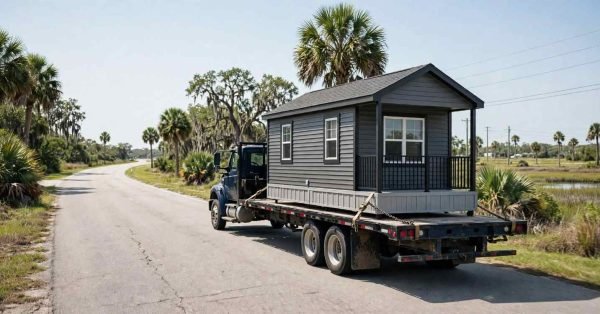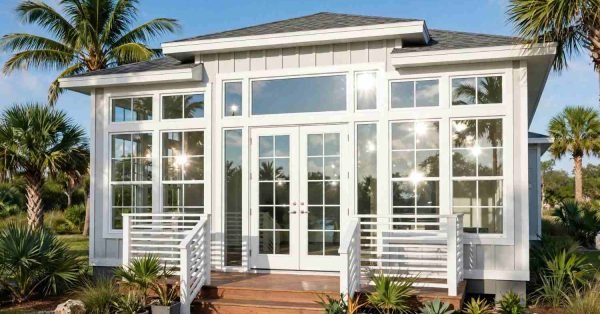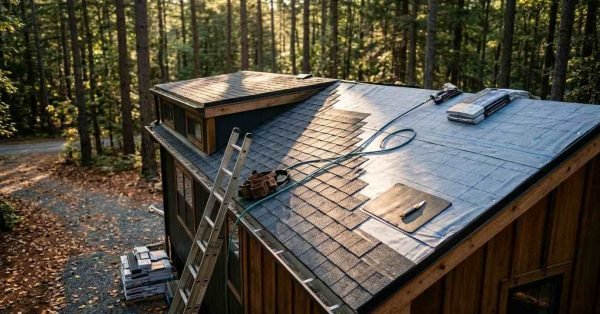

A tiny house on wheels is a dwelling built on a trailer chassis, designed to be towed like an RV while functioning as a full-time or part-time residence. Whether you need a permit depends on how your local jurisdiction classifies the structure, where you plan to place it, and whether you intend to live in it full-time. Most Florida counties require some form of permit, zoning approval, or RV certification before you can legally park and occupy one.
Skipping this step rarely saves time. I’ve seen owners forced to relocate a finished build because nobody checked zoning first.
This guide covers how Florida classifies tiny houses on wheels, which state and county rules apply, the specific permits you may need, where you can legally place one, and what happens if you skip the process. I also cover utility hookups, financing implications, and how a knowledgeable builder fits into the compliance picture.
What Counts as a Tiny House on Wheels Under Florida Law?
Florida law treats a tiny house on wheels as either a recreational vehicle or a site-built dwelling, depending on how it’s certified and used. The distinction matters because it determines which agency regulates the structure and which permits apply.
A recreational vehicle is a vehicle-type unit certified for temporary or recreational occupancy and titled through the Department of Motor Vehicles. A tiny house built to RV standards and certified by a recognized body typically falls under this category, which simplifies some aspects of placement but restricts full-time occupancy in many zones.
A THOW that isn’t RV-certified gets treated more like an unpermitted structure, and I run into building departments that won’t even discuss zoning until that certification question is settled. This single classification decision shapes almost everything that follows.
Do Tiny Houses on Wheels Need a Permit in Florida?
Yes, in most cases you need some combination of zoning approval, an RV or mobile home permit, and utility permits before legally placing and occupying a tiny house on wheels in Florida. The exact requirement set changes based on three factors: how the unit is certified, which county you’re in, and whether you’re using it as a permanent residence or a temporary/recreational structure.
A certified RV-style THOW placed in a licensed RV park usually needs only the park’s own approval and your vehicle registration. A privately owned THOW placed on residential land is a different story, since most residential zoning codes weren’t written with tiny houses in mind.
Florida does not have a single statewide “tiny house permit.” Instead, the requirement is assembled from building code, zoning ordinance, and DMV rules that each apply independently. This is why two people with nearly identical tiny houses in different counties can face completely different permitting paths.
The safest approach is confirming your specific classification and placement plan with the local building department before construction begins, not after.
RV Certification vs. Building Code Classification
RV certification through a recognized inspection body (commonly RVIA or a similar program) treats the structure as a vehicle rather than a permanent dwelling. This certification changes which codes apply and often simplifies the inspection process for placement in RV-zoned locations.
Building code classification, on the other hand, applies when a THOW is treated as a dwelling unit under the Florida Building Code rather than a vehicle. This path requires meeting residential construction standards similar to a site-built home, including structural, electrical, and plumbing inspections.
I generally tell people these two paths rarely overlap cleanly. Choosing certification upfront, before the build starts, prevents a rebuild later when a county rejects the wrong classification.
Florida Statewide Regulations Affecting Tiny Homes on Wheels
Florida regulates tiny houses on wheels through a layered system combining the Florida Building Code, Department of Highway Safety and Motor Vehicles titling requirements, and local zoning ordinances that vary by jurisdiction. No single state law defines “tiny house” as its own legal category.
The Florida Building Code governs any structure classified as a dwelling, covering structural integrity, egress, electrical, and plumbing standards regardless of size. A THOW classified this way must meet the same core safety provisions as a conventional home, scaled to its footprint.
DHSMV titling and registration apply when the unit is built on a certified trailer chassis and treated as a vehicle. This path requires a VIN, title, and registration renewal, similar to any towable RV.
Local zoning ordinances then layer on top of these state-level rules, and this is where the real variation shows up. A structure that’s perfectly compliant with state building code can still be barred from a specific residential lot by a county’s zoning map.
County and Municipal Zoning Differences Across Florida
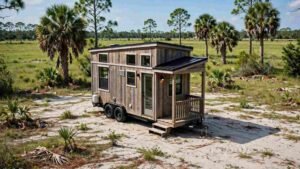
Zoning for tiny houses on wheels varies dramatically between Florida counties, with some permitting them as accessory dwelling units and others banning them entirely from residential lots. There is no uniform statewide zoning standard for THOWs.
Rural counties with larger minimum lot sizes tend to allow more flexibility, sometimes permitting a THOW as a temporary residence during construction of a primary home. Denser urban and suburban municipalities typically restrict THOWs to licensed RV parks or manufactured home communities, citing minimum square footage requirements for permanent residences.
Some counties have begun updating ordinances specifically to address tiny homes as the housing type grows in popularity, while others still apply decades-old mobile home codes that weren’t designed for this use case. I always recommend pulling the actual zoning text for the parcel, not just asking a general question at the counter, since the answer can depend on the specific zoning district a property sits in.
Permits You May Need (Building, Zoning, Utility, DOT)
A tiny house on wheels in Florida can require up to four separate permit types, each issued by a different authority for a different purpose.
The table below shows what each permit type covers and who issues it.
| Permit Type | What It Covers | Issuing Authority |
| Zoning/Land Use Permit | Confirms the parcel allows a THOW as a dwelling or accessory structure | County or municipal planning department |
| Building Permit | Required if the unit is classified as a dwelling under building code | Local building department |
| DOT/DMV Registration | Titles and registers the unit as a towable vehicle | Florida DHSMV |
| Utility Connection Permits | Covers water, septic/sewer, and electrical hookups | County utilities or health department |
Most compliance problems I see trace back to owners assuming one permit covers everything, when in practice these four approvals come from four separate offices.
Where You Can Legally Place a Tiny House on Wheels in Florida

Legal placement options for a tiny house on wheels in Florida generally fall into three categories: licensed RV parks and campgrounds, dedicated tiny home communities, and private residential land that meets specific zoning conditions.
RV parks and campgrounds offer the most straightforward path since they’re already zoned for transient and recreational vehicle occupancy. Dedicated tiny house communities, though still limited in number across the state, are built specifically around THOW zoning compliance.
Placing a THOW on private residential land as a full-time residence is the path most likely to run into zoning conflict, particularly in counties with minimum square footage requirements for primary dwellings. Some jurisdictions allow a THOW as a temporary residence on a residential lot during construction of a permanent home, which gives owner-builders a legal interim option.
What Happens If You Skip the Permit Process?
Building or placing a tiny house on wheels without the required permits exposes an owner to fines, forced removal, and complications with insurance and resale down the line. Code enforcement in most Florida counties actively investigates unpermitted structures, often triggered by a neighbor complaint or a utility connection request.
Beyond fines, an unpermitted THOW typically can’t be insured as a dwelling, which leaves the owner financially exposed after a fire, storm, or theft. Lenders won’t finance a structure without documented compliance either, which becomes a major problem if you ever want to sell or refinance.
I’ve watched owners spend more money correcting a permit violation after the fact than the original permit would have cost. The math rarely favors skipping the process.
How Permit Requirements Differ for THOW vs. Foundation Tiny Homes
A foundation-built tiny home is anchored permanently to a lot and classified as a standard dwelling under the Florida Building Code from the start, which removes the vehicle-versus-dwelling ambiguity that complicates THOW permitting. Its permit path looks much closer to a conventional small home build.
A THOW keeps its mobility, which is exactly what creates the dual classification problem. Because it can move, regulators treat it differently depending on whether it’s parked temporarily or established as a permanent residence.
This difference matters most for anyone deciding between the two paths before construction starts, since the permitting route shapes design decisions from day one.
Utility Connections and Permitting (Water, Septic, Electric)
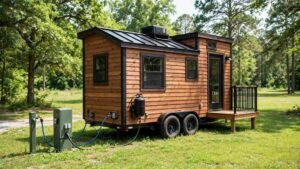
Connecting a tiny house on wheels to water, septic, and electrical service typically requires separate permits from the permits covering the structure itself. These utility permits are issued by the county utilities department or health department rather than the building department handling the structure.
Septic system permits involve a site evaluation to confirm the soil and lot size can support a system sized for the structure’s occupancy. Electrical hookups, especially for a THOW drawing power similar to a standard home rather than a campsite pedestal, often require an inspection separate from the RV-style shore power connection.
Owners who secure structural and zoning approval but skip the utility permit step are the ones I most often see stalled right before move-in.
Insurance, Financing, and Lending Implications of Permitting
Permitting status directly determines whether a tiny house on wheels can be insured as a dwelling and whether a lender will finance it. Insurers generally require documented proof of compliant permitting before issuing a homeowner’s or dwelling policy rather than a basic RV policy.
Traditional mortgage lenders remain cautious about THOWs regardless of permitting, but specialty lenders and some credit unions will finance a compliant unit when it’s titled, zoned correctly, and inspected. An uncompliant structure closes off nearly all of these options at once.
This is the financial reality that turns permitting from a bureaucratic step into a long-term asset protection decision.
How to Confirm Requirements With Your Local Building Department
The fastest way to confirm permit requirements is calling the zoning or planning division of the county where the land sits and describing the exact structure, classification, and intended use before any construction begins. Generic online guidance can’t account for a specific parcel’s zoning district.
Ask specifically whether the department classifies a THOW as a vehicle or a dwelling, what zoning districts allow it, and which utility permits apply to the planned hookups. Request the answer in writing when possible, since verbal guidance from a counter conversation can be hard to rely on later.
Working With a Builder Who Understands Florida Permitting
A builder experienced in Florida’s tiny house regulations can shorten the permitting timeline considerably by knowing which classification path fits a given county before the design is finalized. This upfront guidance prevents the redesign-and-resubmit cycle that catches a lot of first-time owner-builders off guard.
We walk clients through the classification decision, coordinate with the local building department, and sequence construction so utility and structural inspections happen in the right order. That coordination is often the difference between a project that moves smoothly and one that stalls at the inspection stage.
A knowledgeable builder also knows which counties have recently updated their THOW ordinances, which matters since this is a fast-changing area of code across Florida.
Conclusion
Permitting for a tiny house on wheels in Florida depends on classification, placement, and intended use rather than one blanket rule. Zoning, building code, DOT titling, and utility permits each play a separate role.
Getting this right protects your investment, your insurance coverage, and your ability to finance or resell later. The county-specific details matter more than general guidance.
We help Florida homeowners navigate permitting from day one. Contact Tiny Home Builders Florida before you break ground.
Frequently Asked Questions
Is a tiny house on wheels legal in Florida?
Yes, tiny houses on wheels are legal in Florida, but legality depends on proper classification, zoning compliance, and permitting in the specific county where it’s placed.
Do I need a permit if my tiny house stays on a trailer?
Yes, most Florida counties still require zoning approval and possibly a building or RV permit even if the structure remains on its trailer permanently.
Can I park a tiny house on wheels on my own land in Florida?
It depends on your county’s zoning ordinance, since some allow THOWs as temporary or accessory dwellings while others restrict them to RV parks only.
How much does a tiny house permit cost in Florida?
Costs vary by county and permit type, typically ranging from a few hundred dollars for zoning review to over a thousand for full building permits and inspections.
Does Florida require tiny houses to meet building code?
Only if the structure is classified as a dwelling rather than a recreational vehicle; RV-certified units follow different standards than building-code-classified THOWs.
Can I live in a tiny house on wheels full-time in Florida?
Full-time occupancy is possible but restricted by county zoning, with many jurisdictions limiting THOWs to temporary or recreational use outside designated communities.
What happens if I build a tiny house without a permit?
Unpermitted structures risk fines, forced removal by code enforcement, and major complications with insurance, financing, and future resale.