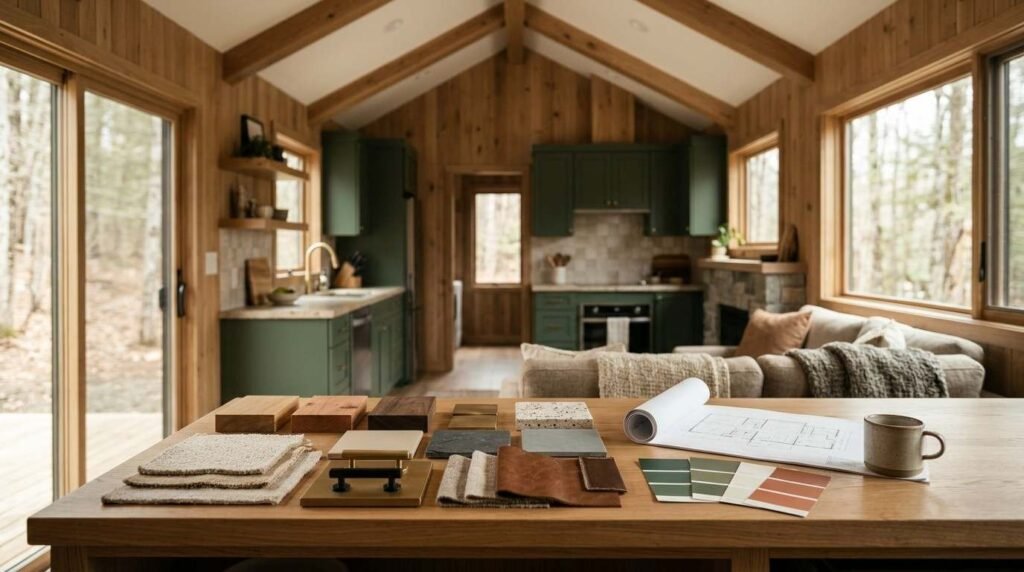
Park model home interior design is the process of selecting materials, finishes, and layouts that maximize comfort, durability, and visual appeal within a compact living space. Material choice matters more here than in a full-size home because every surface works harder in less square footage. I’ve seen homeowners judge a builder’s quality almost entirely by what’s underfoot and overhead.
Florida’s heat and humidity push interior materials to their limits faster than in drier climates. A finish that looks great on day one can warp, peel, or mold within a year if it wasn’t chosen for this environment. That gap separates builders who understand the region from those who don’t.
This guide covers what separates quality park model interiors from average ones, including wall and flooring systems, cabinetry and countertop construction, bathroom and kitchen finishes, trim and lighting details, and how Florida’s climate should shape every material decision. I’ll also walk through what to look for when comparing builders on finish quality rather than price alone.
What Makes Park Model Home Interior Design Different
Park model home interior design differs from standard residential design because every material decision is constrained by square footage, weight limits, and mobility requirements. A park model typically tops out around 400 square feet, which means wall thickness, cabinet depth, and flooring buildup all get scrutinized in ways a 2,500-square-foot house never experiences.
Space constraints force a design approach built around multi-purpose surfaces and lighter-weight materials. Cabinetry often doubles as structural bracing, and wall systems are chosen partly for how much weight they add during transport. I think this is where a lot of buyers get surprised they assume “small” means “simple,” but it actually means more engineering per square foot, not less.
Materials matter more in compact spaces because flaws are harder to hide and more frequently touched. A countertop in a 3,000-square-foot kitchen gets used daily by one household; a park model countertop gets touched, wiped, and leaned on constantly in a much tighter footprint. Durability standards have to be higher per square inch, not lower, which is the opposite of what most first-time buyers expect.
Interior Wall Materials and Finishes

Interior wall materials in park model homes typically fall into two categories: tongue-and-groove wood paneling and drywall-based systems, each offering different durability, weight, and aesthetic tradeoffs. The right choice depends on how the home will be used and where it will sit.
Tongue-and-groove wood paneling remains a popular choice because it adds warmth, hides seams well, and holds up to the vibration of transport better than rigid drywall. Pine and cedar are common species, though cedar carries a natural resistance to humidity that pine lacks without additional sealant.
Drywall-based wall systems bring a more traditional home feel and allow for a wider range of paint finishes, but they’re more prone to cracking during transport and require more careful installation with flexible joint compound. Builders who use drywall in mobile structures typically reinforce the seams with mesh tape rather than paper tape alone.
Wall finish durability in Florida comes down to moisture resistance as much as impact resistance. A wall finish rated for interior use in a dry climate can still fail here if it traps humidity behind the surface, which is why vapor-permeable wall coatings matter more in this market than in most others.
Flooring Materials for Park Model Homes

The best flooring materials for park model homes balance moisture resistance, low weight, and visual warmth, with luxury vinyl plank currently the dominant choice among Florida builders. Flooring takes more daily abuse per square foot in a small home, so wear layer thickness matters even more than it would in a standard house.
Luxury vinyl plank, often shortened to LVP, resists water, dents, and temperature swings better than almost any other residential flooring option at a comparable price point. It also installs as a floating floor, which tolerates the minor flexing that happens during transport and setup far better than rigid materials.
Laminate and engineered wood flooring offer a closer visual match to real hardwood, but both are more vulnerable to moisture intrusion than LVP. I generally steer people away from laminate near entry doors or in units destined for coastal Florida, since humidity finds every seam eventually.
Tile shows up almost exclusively in wet areas like bathrooms and entryways because of its weight. A fully tiled park model floor would push the unit’s total weight beyond what most chassis and transport permits allow, so tile gets reserved for small, high-moisture zones rather than whole-home use.
Cabinetry Construction and Materials
Cabinet construction quality depends primarily on whether the cabinet box is built from solid wood, plywood, or MDF, with plywood generally offering the best balance of weight, strength, and moisture resistance for park model use. Each material behaves differently once humidity and vibration enter the picture.
Solid wood cabinetry looks premium and holds up structurally, but its weight becomes a real constraint in a transportable structure, and solid wood panels expand and contract more with humidity swings than engineered alternatives. Plywood boxes with hardwood veneer doors tend to split the difference, keeping weight manageable while resisting warping better than particleboard.
MDF, or medium-density fiberboard, shows up most often in budget cabinetry and painted finishes because it machines cleanly and takes paint evenly. The tradeoff is poor moisture tolerance. MDF swells and delaminates when exposed to standing water, which makes it a riskier choice under sinks in a Florida-based unit.
Cabinet hardware and finish durability often gets overlooked until hinges sag or drawer slides stick within the first year. Soft-close hinges rated for high-cycle use and full-extension ball-bearing drawer slides cost more upfront but outlast standard hardware by years in daily-use conditions.
Countertop Materials and Surface Options

Quartz and granite are the two most durable countertop materials available for park model homes, with quartz generally preferred for its lower maintenance and consistent appearance. Both materials add meaningful weight, so builders typically limit full-slab installations to smaller runs rather than wrapping an entire kitchen.
Granite requires periodic sealing to maintain its stain resistance, while quartz is engineered with resin binders that make it non-porous without any sealing at all. For a homeowner who wants a set-it-and-forget-it surface, that difference carries real weight over a decade of ownership.
Laminate and solid-surface countertops bring the weight down considerably and cost less, which matters in weight-sensitive builds. Modern laminate has closed much of the visual gap with stone, though it remains more vulnerable to heat damage from hot pans set directly on the surface.
Ceiling Materials and Treatments
Park model ceilings commonly use lightweight materials like vaulted wood paneling, textured drywall, or PVC panel systems, each chosen primarily to keep the home’s overall weight within transport limits. Ceiling height in a park model is already compressed, so the material’s thickness and the lighting it supports both factor into the decision.
Vaulted wood ceilings add a sense of openness that helps a small interior feel larger than its footprint, and tongue-and-groove pine remains the most common choice for this treatment. PVC panel ceiling systems show up more often in bathrooms and kitchens, where their moisture resistance outperforms painted drywall.
Interior Trim, Molding, and Millwork
Interior trim and millwork in a park model home typically uses finger-jointed pine or MDF rather than solid hardwood, since both machine easily and take paint or stain without the cost of premium lumber. Trim does more visual work in a small space because sightlines are shorter and details get noticed faster.
Baseboards, door casings, and window trim all need tight, consistent joints because gaps are far more visible in a compact room than in a sprawling one. Builders who skimp on trim fit tend to get caught immediately, since there’s nowhere for a sloppy seam to hide.
Window and Door Interior Finishes
Interior window and door finishes affect both the perceived quality of a park model home and its resistance to Florida’s humidity, with vinyl-clad and composite frames generally outperforming raw wood trim around openings. Wood trim directly against glass sees more condensation exposure than trim elsewhere in the home.
Composite or PVC-wrapped window casings resist swelling and discoloration in ways that painted wood trim simply can’t match over several humid seasons. Interior door finishes follow a similar logic, with solid-core doors holding their shape better than hollow-core options once humidity becomes a factor.
Lighting Fixtures and Electrical Finishes
Lighting fixture and electrical finish choices in park model homes lean heavily toward LED fixtures and moisture-rated trim kits, both of which reduce heat output and long-term maintenance in a small, enclosed space. Recessed lighting remains popular because it doesn’t eat into the limited ceiling height the way surface-mounted fixtures do.
Under-cabinet lighting and pendant fixtures over kitchen islands add functional task lighting without consuming floor or counter space. Switch plates and outlet covers finished in brushed nickel or matte black tend to read as a more deliberate design choice than standard white plastic, even though the cost difference is minor.
Bathroom Materials and Fixture Finishes
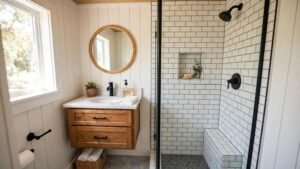
Bathroom materials in park model homes face the highest moisture exposure in the entire structure, which makes shower surround material and vanity finish the two most consequential decisions in this room. A bathroom finish failure shows up faster here than anywhere else in the home.
Shower and tub surround materials generally split between fiberglass one-piece units and tiled surrounds. Fiberglass surrounds install faster, weigh less, and have fewer grout lines to maintain, while tile offers more design flexibility at the cost of ongoing grout sealing. Grout sealing frequency in humid climates runs higher than most homeowners expect when they first move in.
Vanity and fixture finish options range from laminate-topped vanities to solid-surface or quartz tops paired with moisture-resistant cabinet boxes. Chrome and brushed nickel faucet finishes resist the water-spot buildup that oil-rubbed bronze tends to show in hard-water areas.
Kitchen Finishes and Hardware

Kitchen finishes in a park model home concentrate heavily on backsplash material, hardware finish, and faucet quality, since the kitchen typically sees the most daily contact of any room in the unit. Tile backsplash remains the most common choice because it’s easy to wipe down and resists grease buildup better than painted drywall.
Cabinet hardware finish, whether brushed brass, matte black, or stainless, ties the kitchen’s visual identity together more than almost any other single choice. A pull-down faucet with a ceramic disc valve will outlast a standard compression valve by years under daily kitchen use.
Interior Paint, Stains, and Protective Coatings
Interior paint and stain selection for park model homes should prioritize mildew-resistant, low-VOC formulas, since Florida’s humidity accelerates mold growth on standard interior paint far faster than in drier regions. A satin or semi-gloss finish also wipes clean more easily than flat paint in high-touch areas.
Wood stains and clear protective coatings on trim and paneling need a moisture-resistant topcoat to prevent the wood beneath from absorbing ambient humidity over time. Builders who skip this step often see trim discoloration within the first two Florida summers.
Textiles, Window Treatments, and Soft Finishes
Textiles and window treatments in a park model home work best when chosen for moisture and mildew resistance rather than appearance alone, since fabric in a humid climate holds onto dampness longer than hard surfaces. Cellular shades and faux-wood blinds generally outperform fabric curtains in bathrooms and kitchens.
Area rugs and soft furnishings should use synthetic or treated fibers rather than natural wool or cotton in high-humidity units, since natural fibers trap moisture and can develop odor or mildew faster than treated synthetics.
Durability and Climate Considerations for Florida Interiors

Florida’s climate directly shapes which interior materials hold up over time, with humidity-resistant materials and active mold mitigation strategies separating long-lasting interiors from ones that deteriorate within a few years. Heat and moisture work together here in a way that most national building guides don’t fully account for.
Humidity-resistant material choices include closed-cell foam backing under flooring, moisture-rated drywall in bathrooms and kitchens, and cabinet boxes built from marine-grade plywood rather than standard interior-grade sheets. Each of these choices costs more upfront but reduces the odds of a moisture-related failure within the first five years.
Mold and moisture mitigation in finishes goes beyond material selection into ventilation and vapor barrier placement behind walls and under floors. A properly installed vapor barrier reduces interior humidity intrusion by a measurable margin in manufactured and park model structures, according to the U.S. Department of Energy’s building science research, which is why vapor barrier placement deserves as much attention as the visible finish on top of it.
Budget Tiers and Material Cost Comparison
Interior material costs in park model homes generally break into three tiers: builder-grade, mid-grade, and premium, with the difference often concentrated in flooring, countertops, and cabinetry rather than paint or trim. Builder-grade packages typically use laminate countertops, MDF cabinets, and sheet vinyl flooring.
Mid-grade packages step up to LVP flooring, plywood cabinet boxes, and solid-surface or quartz countertops in key areas. Premium packages add full quartz or granite countertops, solid wood cabinet doors, and tile in wet areas beyond just the shower surround. The jump between tiers usually reflects material longevity more than visual difference on day one.
How to Evaluate Interior Finish Quality When Choosing a Builder
Evaluating interior finish quality when choosing a builder starts with asking for the specific material brands and grades used in cabinetry, flooring, and countertops rather than accepting general descriptions like “premium” or “upgraded.” Vague language in a sales conversation often signals vague material sourcing behind it.
A builder who can name the plywood grade in their cabinet boxes, the wear-layer thickness on their flooring, and the sealant schedule for their countertops is demonstrating the kind of construction quality transparency that separates reliable builders from ones relying on marketing language.
Walking through a completed unit and checking drawer slides, cabinet door alignment, and trim seams under direct light reveals more about actual craftsmanship than any brochure. I always tell people to open every drawer and door in a model unit before judging the build quality of the home they’re considering.
Conclusion
Interior materials and finishes determine how a park model home performs over years, not just how it photographs on day one. Wall systems, flooring, cabinetry, and climate-specific choices all compound into long-term comfort and durability.
Florida’s humidity makes material selection a bigger factor here than in most markets, and understanding these tradeoffs helps you evaluate builders on substance instead of showroom appeal alone.
We build every interior with these durability standards in mind, and we’d welcome the chance to show you the difference at Tiny Home Builders Florida.
Frequently Asked Questions
What is the best flooring for a park model home in Florida?
Luxury vinyl plank is generally the best flooring choice for Florida park model homes. It resists moisture, temperature swings, and daily wear better than laminate or engineered wood at a similar price point.
Are park model homes built with real wood cabinets?
Some park model homes use solid wood cabinet doors over plywood boxes, while budget units often use MDF. Plywood boxes with hardwood veneer offer the best balance of weight and durability.
How do you prevent moisture damage in park model interiors?
Moisture damage prevention relies on vapor barriers, moisture-rated drywall, and marine-grade plywood in cabinetry. Proper ventilation in bathrooms and kitchens further reduces humidity buildup behind finished surfaces.
What countertop material lasts longest in a small home?
Quartz countertops generally last the longest in a small home because they resist staining, scratching, and heat without requiring periodic sealing. Granite performs similarly but needs occasional resealing.
Can you customize interior finishes in a park model home?
Yes, most builders offer tiered or fully custom finish packages covering flooring, cabinetry, and countertop materials. Customization options typically depend on the builder’s production process and chassis weight limits.
How much do interior upgrades add to a park model home cost?
Interior upgrades typically shift total cost based on tier, with mid-grade to premium flooring, cabinetry, and countertop packages adding the most compared to builder-grade materials. Exact pricing varies by builder and material brand.
What interior materials hold up best in Florida’s climate?
Materials with strong moisture resistance, including LVP flooring, marine-grade plywood cabinetry, and quartz countertops, hold up best in Florida’s humidity. Mildew-resistant paint and sealed trim further extend interior lifespan.