I’ve sat across the table from enough Florida buyers to know the financing question comes before almost anything else. Park model home financing typically relies on RV loans, chattel loans, or personal loans rather than traditional mortgages, because most park models are classified as recreational vehicles or personal property instead of real estate. That classification shapes every dollar figure you’ll see from a lender.
It matters right now because Florida’s park model market moves fast, and buyers who don’t understand their financing lane often lose their spot in a community or miss a seasonal rate window. I’ve watched good deals stall over a loan type nobody explained upfront.
This guide covers how park models get classified for lending purposes, the loan types available (RV, chattel, personal, dealer, and land-home), what credit and down payment ranges to expect, and how Florida’s insurance rules, especially around wind and flood, affect what you’ll pay to protect the home once it’s yours.
What Is a Park Model Home (And Why Financing Works Differently)
A park model home is a recreational vehicle, typically under 400 square feet, built to ANSI A119.5 standards and intended for seasonal or semi-permanent placement rather than year-round conventional living. I explain this classification first because it’s the single biggest factor lenders look at before anything else.
Builders and dealers in Florida often market these units alongside manufactured homes, but the two are legally distinct. A manufactured home falls under HUD Code and qualifies for different loan products entirely.
Park Model vs. Manufactured Home vs. RV Classification
The classification distinction determines everything downstream in the financing conversation. HUD-code manufactured homes can qualify for FHA and conventional-adjacent loan programs, while ANSI-certified park models generally cannot, because they’re titled similarly to travel trailers.
I’ve seen buyers assume their park model would finance like a small manufactured home, only to find out mid-application that it doesn’t. The title work alone changes which lenders will even consider the file.
Why Classification Determines Financing Eligibility
Lenders price risk based on how an asset depreciates and how easily it can be repossessed. A unit titled as an RV depreciates faster on paper than a site-built structure, which pushes rates higher and terms shorter across nearly every lender I’ve worked with.
Can You Get a Traditional Mortgage for a Park Model Home?
No, most park model homes cannot be financed with a traditional mortgage because mortgage lenders require the property to be classified as real estate, and park models are typically titled as personal property or vehicles. This single rule eliminates the majority of mainstream mortgage products before a buyer even applies.
There are narrow exceptions, which I’ll get into under land-home financing further down, but they require specific conditions most park model purchases don’t meet.
Why Most Park Models Don’t Qualify for Conventional Mortgages
Conventional and FHA mortgage underwriting is built around permanently affixed structures on a foundation, with the land and home title combined into one real estate asset. Park models sitting on leased lots or temporary piers don’t meet that definition in nearly any Florida jurisdiction I’ve reviewed.
HUD Code vs. ANSI A119.5 Certification Impact on Lending
ANSI A119.5 certification governs recreational park trailers and signals to a lender that the unit is built for RV-style financing, not mortgage-style underwriting. A Consumer Financial Protection Bureau report found that manufactured housing finance options remain limited compared to site-built homes, and park models sit even further outside that mainstream lending box.
RV Loans for Park Model Homes
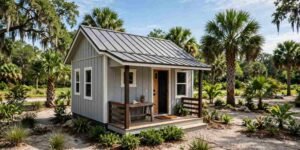
RV loans are the most common financing path for park model homes because the units are legally titled as recreational vehicles in most states, including Florida. These loans come through RV-specific lenders, credit unions, and some regional banks that understand the asset class.
I point most buyers here first because approval timelines tend to run faster than chattel or land-home alternatives, often closing within two to three weeks.
Loan Terms, Rates, and Typical Down Payments
RV loan terms for park models typically run 10 to 20 years, with interest rates a percentage point or two above conventional mortgage rates depending on credit profile. Down payments usually land between 10% and 20% of the purchase price, though some lenders go lower for buyers with strong credit.
| Loan Feature | Typical Range |
| Loan term | 10–20 years |
| Interest rate | 6%–11% (credit-dependent) |
| Down payment | 10%–20% |
| Approval timeline | 2–3 weeks |
Lender Requirements (RVIA Certification, Age Limits)
Most RV lenders require RVIA certification as a baseline qualification, along with restrictions on unit age; many won’t finance a park model older than 10 to 15 years. I’ve had clients get denied purely on unit age even when their credit was excellent.
Chattel Loans (Personal Property Loans)
A chattel loan is a loan secured by the park model itself as personal property rather than by land or a combined real estate title. This is the second most common financing route I see Florida buyers use, particularly those placing a unit in a land-lease community.
How Chattel Loans Differ From Real Property Loans
Chattel loans skip the land entirely and secure the debt against the physical structure, which means the lender can repossess the unit without touching the underlying lot. That separation is exactly why rates run higher than a mortgage secured by both land and structure together.
Pros, Cons, and Typical Terms
Chattel loans typically close faster than land-home loans and work well for buyers in rented-lot communities, but they carry shorter terms, usually 15 to 23 years, and higher rates than conventional financing. The tradeoff is speed and flexibility against total cost over the life of the loan.
Personal Loans and Unsecured Financing Options
A personal loan for a park model home is an unsecured loan based on the borrower’s creditworthiness rather than the home itself. I usually see this used for lower-priced units or as a supplement to cover a down payment gap.
When a Personal Loan Makes Sense
Personal loans make the most sense for smaller park model purchases, typically under $50,000, where the paperwork and appraisal requirements of an RV or chattel loan outweigh the benefit. The tradeoff is a higher interest rate in exchange for speed and simplicity.
Manufacturer and Dealer Financing Programs
Many park model manufacturers and dealers offer in-house financing arrangements, often through a partnered lender rather than the dealer itself. These programs can simplify the buying process since financing and purchase happen under one roof.
In-House Financing Pros and Cons
Dealer financing often comes with promotional rates or reduced fees, but the terms are sometimes less competitive than an independent credit union once the promotional period ends. I always tell buyers to get a comparison quote from an outside lender before signing dealer paperwork.
Land-Home Financing (When Park Model Sits on Owned Land)
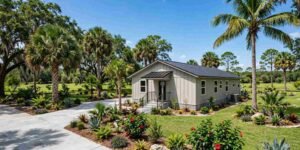
Land-home financing becomes possible when a park model is permanently affixed to land the buyer owns, allowing the home to be classified as real property instead of personal property. This is the one path that can open the door to conventional mortgage-style products.
Converting to Real Property Status in Florida
Converting a park model to real property status in Florida requires removing the wheels and axles, placing the unit on a permanent foundation, and filing the appropriate county paperwork to retitle it. The process varies by county, and I’ve seen some Florida counties move through it in weeks while others take months.
Construction-to-Permanent Loan Considerations
A construction-to-permanent loan can work for a land-home park model setup, covering site prep and installation before converting to a standard mortgage once the home is permanently affixed. Lenders offering this product are limited, and most require the retitling to be complete before final conversion.
Credit Score and Down Payment Requirements
Most park model lenders look for a credit score of at least 600 to 650 for approval, though the strongest rates typically require scores above 700. Down payment expectations shift with credit tier, loan type, and unit age.
Typical Credit Tiers and Rate Impact
| Credit Tier | Score Range | Typical Rate Impact |
| Excellent | 740+ | Lowest available rates |
| Good | 680–739 | Moderate rate increase |
| Fair | 620–679 | Noticeable rate increase |
| Below 620 | Under 620 | Limited lender options |
Financing Park Models in Florida RV Resorts and Land-Lease Communities
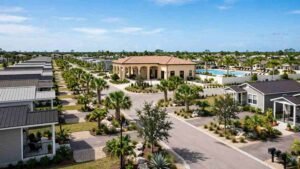
Financing a park model inside a Florida RV resort or land-lease community adds an extra layer of lender scrutiny because the buyer doesn’t own the underlying land. Lenders need assurance the lot lease is stable and long enough to outlast the loan term.
Lender Restrictions on Leased-Land Properties
Many lenders require a minimum remaining lease term, often matching or exceeding the loan length, before approving financing on a leased lot. I’ve seen deals fall through because a community’s lease renewal terms didn’t meet a lender’s minimum threshold.
Community Approval and Lot Lease Requirements
Beyond the lender’s own requirements, the community’s HOA or park management approval process typically runs parallel to loan underwriting, and both have to clear before closing. Buyers who start one process without the other often face delays late in the timeline.
How Much Does It Cost to Finance a Park Model Home?
Total financing cost for a park model home depends on loan type, term length, and interest rate, with RV and chattel loans typically costing more over time than a comparable real-estate-secured mortgage. A $90,000 park model financed over 15 years at 8% interest costs roughly $43,000 more in interest than the same loan at a 5% mortgage-equivalent rate.
Interest Rates, Loan Terms, and Total Cost Comparison
Shorter terms reduce total interest paid but raise the monthly payment, while longer terms lower the payment and increase lifetime interest cost. I walk every buyer through both scenarios before they sign, because the “cheaper monthly payment” option is rarely the cheaper total option.
Understanding Park Model Home Insurance
Park model home insurance is a specialized policy type that covers recreational park trailers differently than standard homeowners or RV insurance, because the structure doesn’t fit neatly into either category. Getting this wrong is one of the most expensive mistakes I see Florida buyers make after closing.
Why Standard Homeowners Insurance Doesn’t Apply
Standard homeowners insurance is underwritten for permanently affixed, site-built structures on owned land, which excludes most park models by definition. Buyers who assume their existing homeowners policy extends to a park model purchase often discover the gap only after filing a claim.
Types of Park Model Insurance Coverage
Park model insurance generally falls into two primary categories: comprehensive coverage for full-time residents and seasonal coverage for part-time or vacant-period use. Choosing the wrong category can leave a unit uninsured during exactly the months it’s most vulnerable.
Comprehensive (Full-Timer) vs. Seasonal Coverage
Comprehensive, or full-timer, coverage insures the park model as a primary residence year-round, while seasonal policies reduce or suspend certain coverages during vacancy periods common in snowbird communities. Florida’s hurricane season timing makes this distinction especially important for seasonal residents who are away during peak storm months.
Liability, Contents, and Loss-of-Use Coverage
A complete park model policy typically bundles structure coverage with liability protection, contents coverage for belongings inside the unit, and loss-of-use coverage if the home becomes uninhabitable after a covered event. Skipping any one of these three leaves a real gap in protection.
Florida-Specific Insurance Considerations
Florida’s wind, flood, and hurricane exposure makes park model insurance meaningfully more complex and more expensive than in most other states. I tell every buyer to budget for this before they fall in love with a unit price.
Hurricane, Wind, and Flood Coverage Requirements
Flood insurance is typically a separate policy from wind and structure coverage, and FEMA flood zone designation determines whether it’s required or simply recommended. According to FEMA’s National Flood Insurance Program data, properties in high-risk flood zones face significantly higher premium requirements regardless of structure type.
Tie-Down and Anchoring Requirements for Insurability
Florida building code requires specific tie-down and anchoring systems for park models, and insurers frequently deny or reduce coverage for units that don’t meet current anchoring standards. An inspector checks this before many policies will even bind.
What Affects Park Model Insurance Premiums in Florida?

Park model insurance premiums in Florida are driven primarily by location relative to the coast, the age and construction quality of the unit, and the strength of its tie-down system. Two identical units ten miles apart can carry noticeably different premiums based on flood zone alone.
Location, Construction, and Age-of-Unit Factors
Coastal proximity raises wind and flood exposure, older units face higher premiums due to outdated materials and anchoring methods, and construction quality, including the grade of materials used, affects how insurers assess storm survivability. I’ve seen premium differences of several hundred dollars a year between a five-year-old unit and a twenty-year-old one in the same community.
How to Choose a Park Model Insurance Provider
Choosing a park model insurance provider means comparing specialized RV and park model insurers rather than general homeowners carriers, since few mainstream insurers understand this asset class well. Not every national carrier even offers a park model-specific product.
Questions to Ask Before Signing a Policy
Buyers should ask whether the policy covers full replacement cost or actual cash value, how it handles seasonal vacancy, and whether wind and flood coverage are included or sold separately. I’ve seen more disputes over actual-cash-value payouts than almost any other insurance issue in this space.
Financing and Insurance Mistakes to Avoid
The most common mistake I see is buyers assuming park model financing works like a conventional mortgage, which leads to shopping the wrong lenders and getting surprised by shorter terms and higher rates. The second most common mistake is underinsuring for Florida’s flood and wind exposure to save a few hundred dollars a year on premiums.
Both mistakes are avoidable with the right information upfront, which is exactly why understanding classification, loan type, and coverage requirements before shopping matters so much.
Conclusion
Park model financing and insurance both hinge on one fact: these homes are classified differently than site-built houses, and that changes every loan and policy decision that follows. Understanding RV loans, chattel loans, and Florida’s wind and flood rules puts buyers in control from day one.
Land-home conversion, community lease terms, and coverage types all connect back to that same classification question, and getting it right early saves money for years afterward.
We’ve guided Florida buyers through financing and insurance decisions on real park model projects, and Tiny Home Builders Florida is here to help you navigate yours with confidence.
Frequently Asked Questions
Can you get a mortgage for a park model home in Florida?
No, standard mortgages generally aren’t available for park model homes because they’re titled as personal property or RVs. A mortgage becomes possible only if the unit is permanently affixed to owned land and reclassified as real property.
What credit score do you need to finance a park model home?
Most lenders require a minimum credit score of 600 to 650 for park model financing approval. Scores above 700 typically qualify for the lowest available interest rates.
Is park model insurance more expensive in Florida than other states?
Yes, Florida’s hurricane, wind, and flood exposure generally makes park model insurance more expensive than in lower-risk states. Coastal proximity and flood zone designation are the biggest cost drivers.
What’s the difference between an RV loan and a chattel loan for a park model?
An RV loan treats the park model as a recreational vehicle, while a chattel loan treats it as personal property secured independently of any land. Both skip real estate financing, but terms and lender requirements differ between the two.
Do you need flood insurance for a park model home in Florida?
Flood insurance is required or strongly recommended depending on the property’s FEMA flood zone designation. It’s typically a separate policy from standard wind and structure coverage.
How much down payment is needed for a park model home loan?
Most park model loans require a down payment between 10% and 20% of the purchase price. The exact amount depends on credit score, loan type, and lender requirements.
Can a park model home be converted to real property in Florida?
Yes, a park model can be converted to real property if it’s permanently affixed to owned land, has its wheels and axles removed, and the owner files the appropriate county paperwork. The process and timeline vary by Florida county.