I’ve walked enough Florida properties to know that siding is the single most argued-about decision in a park model build. Park model home siding is the exterior cladding material that protects the structure from moisture, wind, and UV exposure while defining its curb appeal, and in Florida that choice carries more weight than almost anywhere else in the country. The humidity doesn’t forgive bad choices, and neither does hurricane season.
I’ve seen homeowners chase a look without asking whether it survives a summer here. That gap between aesthetics and performance is exactly 30 words I want you walking into this decision with open eyes about.
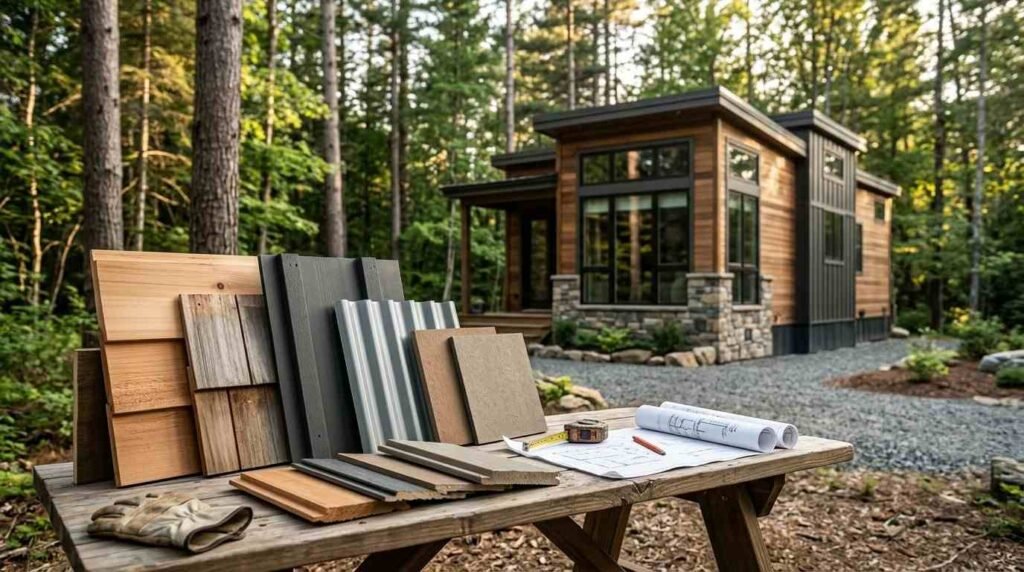
This guide covers how park model siding differs from standard home construction, the major material categories (vinyl, fiber cement, metal, wood, and composite), how Florida building codes and HUD classification shape your options, and what to look for when judging a builder’s installation quality.
What Siding Means for a Park Model Home
Siding on a park model home is the exterior wall covering that shields the structural sheathing from rain, sun, and wind while sealing the home’s thermal envelope. I think of it as the home’s first line of defense, not just its face.
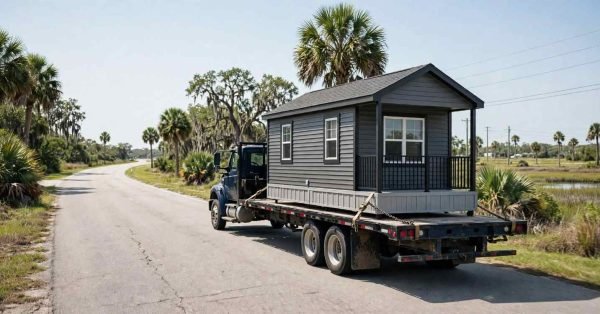
Park models get built on a steel chassis and shipped to site, which means every material choice has to survive transport vibration before it ever meets Florida weather. We’re not just picking a color here. We’re picking something that has to hold its seams through a move and then through a decade of coastal air.
How Park Model Siding Differs From Site-Built Home Siding
Park model siding attaches to a lighter-gauge wall assembly than a site-built home, because weight limits on a towable chassis cap out well below a traditional foundation-built structure. I’ve had clients assume their siding choice works the same way it would on a conventional house, and that assumption causes real problems down the line.
Fasteners, furring strips, and attachment methods all shift when the wall behind the siding is thinner and more weight-sensitive. This is why HUD code requirements for park model classification directly shape which siding systems a manufacturer can even offer.
Why Florida’s Climate Changes the Siding Equation
Florida’s combination of high humidity, intense UV, and hurricane-force wind events turns siding selection into a performance decision as much as a visual one. I tell every homeowner the same thing: what works in a dry climate can fail here in five years instead of twenty.
Salt air near the coast accelerates corrosion and fading at a rate inland buyers rarely plan for. We factor this into every material recommendation before we ever discuss color swatches.
Vinyl Siding for Park Model Homes
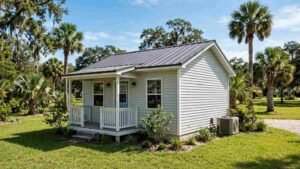
Vinyl siding is a PVC-based exterior cladding material that resists moisture and requires minimal upkeep, making it the most common choice for park model homes in Florida. It’s affordable, it’s lightweight, and it doesn’t rot.
I like vinyl for first-time park model buyers because it forgives a lot. You’re not babysitting it every season the way you would wood.
Durability and Lifespan in Humidity and Heat
Quality vinyl siding typically lasts 20 to 30 years in Florida’s climate when installed with proper expansion gaps for thermal movement. Cheap vinyl without those gaps buckles and warps within just a few summers, and I’ve seen that exact failure on homes installed by crews cutting corners.
Heat causes vinyl to expand more than most materials, so installation technique matters as much as the product itself. A good installer accounts for this before the first panel goes up.
Cost Range and Maintenance Expectations
Vinyl siding generally runs $3 to $8 per square foot installed, according to HomeAdvisor’s 2024 siding cost data, making it one of the more budget-friendly options for a full park model exterior. That range swings based on panel thickness and insulated backing.
Maintenance is mostly a seasonal hose-down and an occasional check for cracked panels after storms. I’ve never had a client complain vinyl was high-maintenance, which is more than I can say for a few other materials on this list.
Fiber Cement Siding (HardiePlank-Style) Options
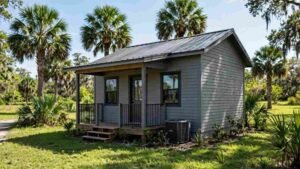
Fiber cement siding is a composite material made from cement, sand, and cellulose fibers that resists fire, rot, and pest damage better than wood or vinyl alternatives. It’s become the premium standard in a lot of Florida neighborhoods for exactly that reason.
I recommend it to homeowners who want a longer-term exterior and don’t mind a higher upfront cost to get there.
Moisture and Storm Resistance
Fiber cement holds up against wind-driven rain and doesn’t absorb moisture the way wood does, which matters enormously during Florida’s wet season. James Hardie’s product testing shows fiber cement products engineered specifically for high-humidity, high-wind climates.
I’ve watched fiber cement survive storm seasons that stripped paint off neighboring vinyl homes. It simply doesn’t flex and crack the same way.
Weight Considerations for Park Model Chassis
Fiber cement weighs roughly 2.5 times more than comparable vinyl panels, according to the Fiber Cement Siding Manufacturers Association, which means it demands a stronger wall assembly to carry it. This is the single biggest limiting factor on whether a park model can even use it.
Not every manufacturer’s chassis rating accommodates the extra load without design adjustments. I always confirm structural capacity before a client falls in love with a fiber cement look.
Metal Siding and Aluminum Cladding
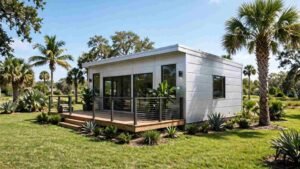
Metal siding on a park model home is a corrugated or flat-panel aluminum or steel exterior cladding valued for its fire resistance and low long-term maintenance. I see it less often than vinyl, but it has a loyal following among buyers who want a modern, industrial look.
It handles Florida sun without fading the way painted materials do over time.
Corrosion Resistance Near Coastal Areas
Aluminum resists corrosion far better than untreated steel in salt-air environments, which makes it the stronger choice for anyone building within a few miles of Florida’s coastline. Steel panels need a quality powder coat or they rust at the seams within a couple of years near brackish water.
I steer coastal buyers toward aluminum almost every time unless budget rules it out.
Noise and Insulation Trade-Offs
Metal siding transmits rain noise more than vinyl or fiber cement unless it’s installed over a solid insulated backing layer. Buyers who’ve lived under a metal roof know this sound already, and it’s the same principle on the walls.
A proper underlayment solves most of this, but it adds a cost line a lot of quotes leave out.
Wood and Engineered Wood Siding
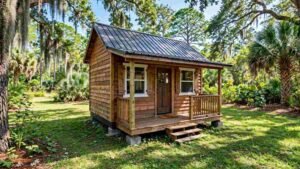
Wood siding brings a warmth and texture that manufactured materials struggle to replicate, but Florida is genuinely one of the harder climates in the country to maintain it in. I don’t discourage clients from choosing wood, but I make sure they know what they’re signing up for.
Engineered wood products close some of this gap by treating the fiber core against moisture before milling.
Aesthetic Appeal vs. Upkeep Demands
Natural wood siding needs repainting or resealing roughly every three to five years in Florida’s UV and humidity, compared to the decade-plus intervals other materials allow. That maintenance cycle is the trade a homeowner makes for the look.
I’ve had clients choose wood anyway because the character outweighs the upkeep for them, and that’s a legitimate choice as long as it’s an informed one.
Rot and Pest Vulnerability in Florida
Untreated wood siding is highly susceptible to rot and termite damage in Florida’s humid, pest-heavy environment. This is the real risk, more than fading or splitting.
Engineered wood with factory-applied borate treatment resists both problems significantly better than standard lumber siding. I won’t install untreated wood on a coastal or wooded lot without a serious conversation first.
Composite and Engineered Cladding Panels

Composite cladding panels combine recycled wood fiber, polymers, and resins into a single engineered board designed to resist the specific failure points of natural wood. They split the difference between wood’s look and vinyl’s low maintenance.
I’ve started seeing more park model manufacturers offer these as a mid-tier option between budget vinyl and premium fiber cement.
The panels typically carry manufacturer warranties covering 25 to 30 years against rot and insect damage, which tells you how confident the industry is in the moisture-resistant core. That warranty length alone sways a lot of my clients’ decisions.
Board and Batten Siding Styles
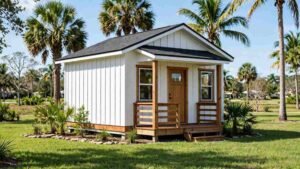
Board and batten is a siding pattern, not a material, built from wide vertical boards with narrow strips covering the seams between them. You can execute this look in vinyl, fiber cement, or engineered wood, which makes it one of the more flexible style decisions on this list.
I like recommending it to clients who want a farmhouse or coastal cottage look without committing to a specific material family. It pairs especially well with Florida’s modern coastal design trend.
Stucco and Synthetic Stucco Finishes
Stucco is a cement-based exterior finish applied in layers over a wire lath, traditionally common on Florida site-built homes but far less practical on a park model structure. The weight and rigid application process don’t translate well to a towable chassis.
I rarely recommend it for park models specifically because of this mismatch.
Why Stucco Is Less Common on Park Models
Traditional stucco cracks under the vibration and flex a park model experiences during transport, which makes it a poor match for anything built off-site and moved. Synthetic stucco systems exist that use a flexible acrylic base instead of rigid cement.
Even those synthetic versions remain uncommon in the park model space because manufacturers favor materials with proven transport durability.
How Florida Building Codes Affect Siding Choices
Florida building code requires exterior cladding in designated wind zones to meet specific wind-load and water-infiltration testing standards before approval. This isn’t a suggestion; it’s enforced at the permitting stage in most counties.
I always confirm a siding product’s testing certification before recommending it to a client in a high-velocity hurricane zone.
Wind Load and Hurricane Zone Requirements
Siding products sold for use in Florida’s High-Velocity Hurricane Zone must pass impact and wind uplift testing under Florida Building Code Chapter 16, which covers coastal Miami-Dade and Broward counties specifically. Products without this certification simply aren’t legal to install there.
Builders outside those two counties still need to meet statewide wind-load minimums, which vary by the home’s designated wind speed rating.
HUD Code Considerations for Park Model Classification
Park models classified under ANSI A119.5 standards follow a different regulatory path than HUD-code manufactured homes, which affects which siding systems manufacturers can certify for use. This classification distinction trips up a lot of first-time buyers who assume all factory-built homes follow identical rules.
I always clarify which code a specific model falls under before discussing exterior material options, because it changes what’s actually available.
Insulation and Energy Efficiency Behind the Cladding
The insulation and vapor barrier system installed behind the siding determines how much of a park model home’s cooling cost gets driven by its exterior wall assembly. Siding gets all the attention, but what’s underneath often matters more for your utility bill.
I spend as much time discussing house wrap with clients as I do discussing the visible siding material itself.
House Wrap and Vapor Barrier Basics
A properly installed house wrap creates a drainage plane that channels moisture away from the wall assembly before it reaches the structural sheathing. Skipping this step, or installing it poorly, is one of the most common causes of hidden rot I’ve seen on inspection.
Florida’s humidity makes this layer non-negotiable in a way drier states simply don’t experience.
How Siding Choice Affects Cooling Costs
Insulated vinyl siding with a foam backing can reduce a wall assembly’s thermal transfer compared to hollow vinyl panels, lowering the cooling load on Florida’s air conditioning systems. The U.S. Department of Energy notes that wall insulation improvements can meaningfully reduce overall HVAC demand in hot climates.
I treat this as one of the most overlooked value-adds in the entire siding conversation, because most buyers never ask about it.
Color, Texture, and Curb Appeal Considerations
Lighter siding colors reflect more solar heat than dark colors, which has a real, measurable effect on a Florida home’s surface temperature and indoor comfort. I’ve had clients choose a lighter shade purely for this reason once they understood the trade-off.
Texture matters too. Wood-grain vinyl and board-and-batten patterns read as higher-end from the street, even at a mid-range price point, which is worth knowing if curb appeal and resale value matter to you.
Maintenance Requirements by Siding Material
Every siding material carries its own maintenance rhythm, and matching that rhythm to your actual willingness to do upkeep is as important as the material’s raw durability. I ask every client directly how much exterior maintenance they actually want to do, because the honest answer changes the recommendation.
Vinyl needs the least attention. Wood needs the most. Fiber cement and composite panels sit comfortably in between.
Signs Your Siding Needs Repair or Replacement
Warping, cracking, or soft spots on the siding surface typically signal moisture has already reached the wall assembly behind it. Catching these signs early, rather than waiting for visible mold or structural softness, saves significant repair cost.
I tell homeowners to walk their home’s perimeter every few months, especially after a major storm, checking specifically for separated seams.
Cost Comparison Across Siding Types
Siding costs vary substantially by material, and the installed price per square foot tells only part of the story once you factor in lifespan and maintenance. Vinyl sits at the low end, fiber cement and metal in the middle, and premium engineered composites near the top.
I always walk clients through cost-per-year-of-service rather than just upfront price, because a cheaper material that needs replacement in half the time isn’t actually the better deal.
How to Evaluate a Builder’s Siding Installation Quality
A builder’s siding installation quality is best judged by their attention to flashing, seam sealing, and manufacturer-specified fastening patterns rather than the siding material itself. Even the best material fails if it’s installed wrong.
I’ve inspected homes with premium fiber cement siding that failed within three years purely because of bad flashing work underneath it.
Questions to Ask About Flashing and Seams
Ask a builder directly how they handle flashing at window and door openings, since this is the single most common point of water infiltration on any home. A builder who can answer this in specific detail, rather than a vague reassurance, is one worth trusting.
I also ask to see photos of a project mid-installation, before the siding goes on, because that’s when flashing quality is actually visible.
Warranty Coverage for Exterior Cladding
Manufacturer warranties on siding materials typically range from 20 to 50 years depending on the product, but most of those warranties only hold if installation followed the manufacturer’s exact specifications. A builder’s own workmanship warranty, separate from the material warranty, is what actually protects you if installation was the failure point.
I always ask for both warranties in writing before a client signs a contract.
Conclusion
Siding on a park model home isn’t a cosmetic afterthought. It’s a structural decision that determines how well your home handles Florida’s humidity, heat, and storm seasons for decades.
We’ve walked through every major material category, how Florida’s codes shape what’s available, and what separates a careful installation from one that fails early. The right choice depends on your climate exposure, your maintenance tolerance, and your builder’s actual craftsmanship.
We’d rather walk you through these trade-offs honestly than sell you a look that fails in five years. Talk to Tiny Home Builders Florida before you choose your exterior.
Frequently Asked Questions
What is the best siding for a park model home in Florida?
Vinyl siding is generally the best overall choice for Florida park models because it resists moisture, requires minimal upkeep, and handles humidity well. Fiber cement offers stronger storm resistance if your chassis can support the added weight.
How long does vinyl siding last on a park model home?
Quality vinyl siding typically lasts 20 to 30 years in Florida’s climate when installed correctly. Poor installation without proper expansion gaps can cut that lifespan dramatically within just a few years.
Is fiber cement siding too heavy for a park model chassis?
Fiber cement weighs about 2.5 times more than vinyl, so it depends on your specific chassis rating. Not every park model structure is engineered to carry it without design adjustments.
Does park model siding need to meet hurricane codes?
Yes, siding installed in Florida’s designated wind zones must meet wind-load and water-infiltration testing standards. Requirements are strictest in High-Velocity Hurricane Zones like Miami-Dade and Broward counties.
What siding material requires the least maintenance in Florida?
Vinyl siding requires the least maintenance, generally needing only occasional cleaning and storm-damage checks. Wood siding requires the most, often needing resealing every three to five years.
Can metal siding handle Florida’s coastal humidity?
Aluminum siding handles coastal humidity and salt air well due to its natural corrosion resistance. Steel siding needs a quality protective coating or it rusts faster near brackish water.
How much does it cost to re-side a park model home?
Costs vary by material, with vinyl generally running $3 to $8 per square foot installed. Fiber cement and metal options typically cost more upfront but offer longer service life.