Choosing windows and doors for a park model home in Florida is a decision shaped by code compliance, wind-load ratings, and humidity resistance, not just style. A park model window or door is a code-regulated building component that must meet ANSI A119.5 manufacturing standards and Florida Building Code wind-load requirements while fitting the smaller structural openings typical of park model construction. Get this wrong and you face leaks, code failures, or a home that can’t survive a named storm.
I’ve walked enough job sites to know this choice gets rushed. Buyers focus on the floor plan and finishes, and windows and doors become an afterthought picked from a builder’s standard package.
This guide covers what separates park model window and door construction from standard residential building, how material choices and energy ratings perform in Florida’s climate, what hurricane and wind-load codes require, and how to budget and maintain these components so they last. We’ll also cover the questions worth asking your builder before signing anything.
What Makes Windows and Doors Different in Park Model Homes
Park model windows and doors are governed by ANSI A119.5, the manufacturing standard for park model RVs, rather than the standard residential building code that applies to site-built homes. This single distinction changes everything about how openings are sized, rated, and installed.
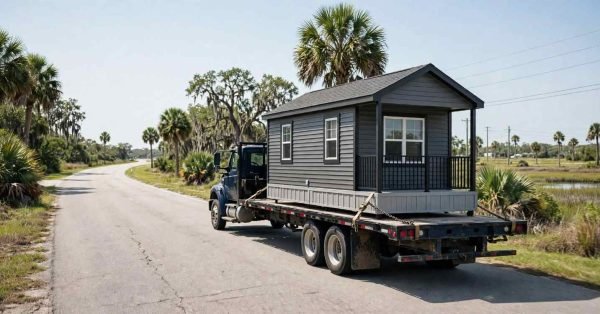
Park models max out around 400 square feet of main floor area, which forces smaller rough openings than a conventional house frame allows. Park model dimensions typically restrict window widths to what fits within a trailer-style chassis and transportable width limits, usually capped near 8.5 feet for highway transport.
That transportability requirement is also why RVIA/ANSI code compliance governs the opening rather than the local residential code alone. Builders operating in Florida still have to layer state wind-load and impact standards on top of the ANSI baseline, which is where many stock units fall short.
Window Frame Materials for Park Model Homes
The best window frame material for a Florida park model is fiberglass or vinyl with multi-chamber reinforcement, because both resist the humidity, salt air, and thermal cycling that degrade weaker materials over a shorter lifespan. Material choice affects durability, energy performance, and maintenance burden for the life of the home.
Vinyl window frames are the most common choice in park model construction because they’re inexpensive, don’t conduct heat, and never need repainting. Lower-grade vinyl can warp under direct Florida sun exposure over the years, so frame-grade and UV stabilizers matter more here than in milder climates.
Fiberglass window frames cost more upfront but hold their shape better under heat and resist expansion and contraction across temperature swings. I recommend fiberglass for any park model going into a site with full southern or western sun exposure.
Aluminum window frames show up often in older or budget park models because the material is strong and lightweight. Aluminum conducts heat and cold directly through the frame, which works against energy efficiency goals in a Florida climate without added thermal breaks.
Wood and composite frames are rare in park model builds because of weight and moisture vulnerability, though composite blends appear in higher-end units. A wood-frame window swells and rots faster in high-humidity coastal environments than any synthetic alternative, which is the main reason it’s an uncommon pick here.
Window Types Suited to Park Model Layouts
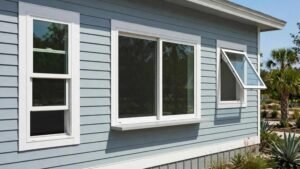
The window types that work best in park model layouts are single-hung, sliding, and awning styles, because each fits narrow wall cavities while still allowing ventilation and emergency egress. Layout constraints drive this decision more than aesthetic preference.
Single-hung and double-hung windows are standard in most park models because the vertical sliding sash needs less swing clearance than a casement, which matters when furniture sits close to exterior walls. Double-hung adds the ability to tilt both sashes inward for cleaning, a feature worth asking about since not every manufacturer includes it standard.
Sliding windows work well on shorter wall sections and are a common choice above kitchen counters and in bedrooms, since the horizontal slide doesn’t require any exterior clearance.
Awning and casement windows hinge outward and seal tighter against wind-driven rain than sliders, which makes them a strong choice for bathrooms and any wall facing prevailing storm direction.
Energy Efficiency Ratings for Florida’s Climate
The most important energy efficiency ratings for Florida park model windows are a low U-Factor and a low Solar Heat Gain Coefficient, since both directly control how much heat transfers into the home during Florida’s long cooling season. These two numbers matter more here than almost anywhere else in the country.
U-Factor measures how well a window prevents heat transfer, with lower numbers performing better; Florida’s climate zone generally calls for a U-Factor of 0.40 or lower on vertical windows. Solar Heat Gain Coefficient (SHGC) measures how much solar radiation passes through the glass, and a lower SHGC, generally below 0.25, keeps interior spaces cooler without relying entirely on HVAC capacity.
Low-E glass applies a microscopically thin metallic coating that reflects infrared heat while still letting visible light through, and it’s become close to standard on any quality park model build. Impact-rated glazing adds a laminated interlayer between glass panes that holds the pane together under windborne debris impact, serving double duty as both a storm protection feature and a UV filter.
According to ENERGY STAR’s Southern climate zone criteria, windows sold in Florida must meet a U-Factor of 0.40 or less and an SHGC of 0.25 or less to carry the certification. ENERGY STAR certification on windows and doors signals third-party verification that the unit meets these regional performance thresholds, which is a faster credibility check than reading spec sheets line by line.
Hurricane and Wind-Load Resistance Requirements

Florida park model windows and doors must meet wind-load and impact resistance requirements set by the Florida Building Code, and these requirements vary by wind zone based on the property’s distance from the coast. This is the single most consequential code layer for any Florida build.
Florida Building Code wind zones divide the state into wind speed design categories, with coastal areas inside the High-Velocity Hurricane Zone (Miami-Dade and Broward counties) facing the strictest testing requirements in the country. Properties outside that zone still carry wind-load ratings tied to their county’s design wind speed, commonly in the 140-170 mph range.
Impact windows use laminated glass that stays intact when struck by debris, while shutters protect standard glass by physically blocking impact before it reaches the pane. Impact glass costs more initially but eliminates the labor of deploying and storing shutters before every storm, which matters for part-time or seasonal park model residents.
Door wind-load ratings follow the same design-pressure logic as windows, and any exterior door including sliders and French doors installed in a wind zone needs a Florida Product Approval (FL# or NOA number) confirming it was tested for that pressure rating.
Exterior Door Materials for Park Model Homes
Steel and fiberglass are the best exterior door materials for Florida park models because both resist the humidity, insect activity, and impact requirements that wood doors struggle with over time. Material selection here affects both security and long-term maintenance.
Steel entry doors offer the highest impact resistance per dollar and come pre-rated for hurricane wind loads in most manufacturer lines, though lower-gauge steel can dent more easily in tight park model storage and transport conditions.
Fiberglass entry doors mimic a wood grain appearance without the rot risk, and quality units include a foam core that outperforms steel on insulation value.
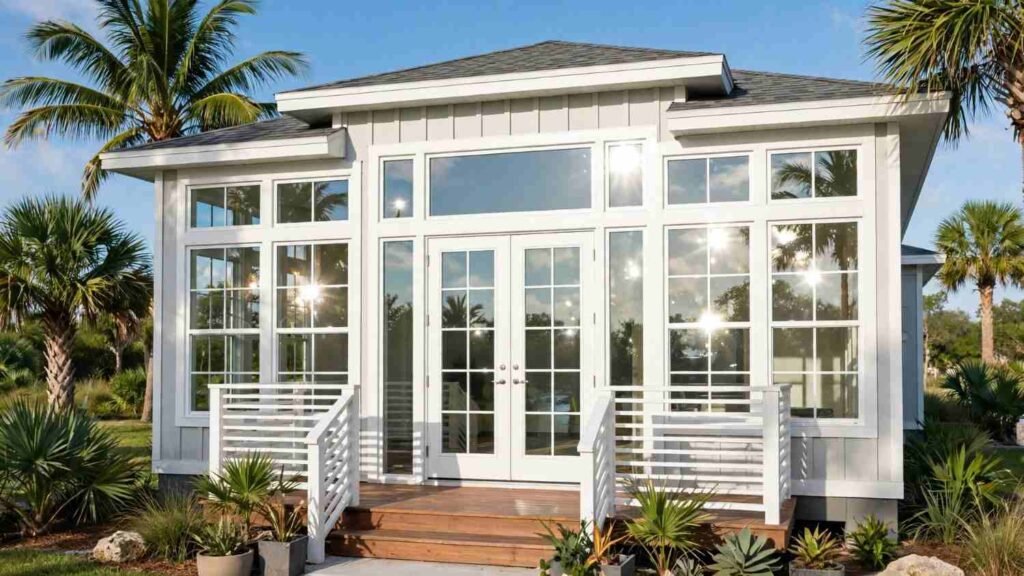
Sliding glass and French patio doors bring in natural light and outdoor access but require closer scrutiny of their wind-load rating, since large glass panels carry more surface area for wind pressure than a solid door.
Interior Door Options and Space-Saving Considerations
Pocket doors and barn-style sliders are the preferred interior door options for park model homes because both eliminate the swing radius that a hinged door demands in tight floor plans. Every square foot matters more in a sub-400-square-foot layout.
Pocket doors slide into a cavity built inside the wall itself, which recovers floor space a swinging door would otherwise claim, though the wall needs enough depth and can’t carry plumbing or significant electrical runs at that location.
Barn-style sliding doors mount on an exterior track and don’t require any in-wall cavity, making them easier to retrofit into an existing build than a true pocket door. They’ve also become a popular design feature in park models beyond their space-saving function.
Moisture, Humidity, and Water Intrusion Protection
Proper flashing, sealant, and corrosion-resistant hardware are what prevent water intrusion around park model windows and doors in Florida’s high-humidity, high-rainfall climate. Even a correctly rated window fails if it’s installed without proper moisture protection around the opening.
Flashing and sealant application direct water away from the rough opening and down the exterior wall assembly rather than letting it collect behind the frame; this installation detail matters as much as the window’s own rating, and poor flashing is a leading cause of warranty claims regardless of product quality.
Corrosion-resistant hardware stainless steel hinges, screws, and locking mechanisms resists the salt-air corrosion that standard-grade hardware suffers within a few years near Florida’s coastline. Coastal and near-coastal properties should confirm hardware grade specifically, since standard inland-grade hardware is a common cost-cutting substitution.
Insulation and Weatherstripping Standards
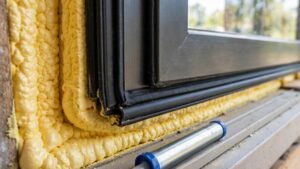
Quality weatherstripping and insulated frame cavities around every window and door opening prevent the air leakage that drives up cooling costs in a Florida park model. This detail gets overlooked because it’s invisible once installation is complete.
Weatherstripping seals the gap between the sash or door slab and its frame, and the material degrades faster under Florida’s UV exposure and heat than in milder climates, so compression-quality and material grade are worth confirming rather than assuming. Spray foam or low-expansion foam sealant around the rough opening perimeter closes air gaps that a visual inspection alone won’t catch.
Size, Placement, and Natural Light Planning
Window size and placement in a park model home are governed first by egress code requirements and second by cross-ventilation and daylight goals. Code compliance isn’t optional, but good placement decisions go well beyond the minimum.
Egress window requirements mandate a minimum clear opening generally 5.7 square feet with specific minimum height and width dimensions in at least one window per sleeping room, so occupants have a code-compliant escape route in an emergency.
Window placement for cross-ventilation positions openable windows on opposing or adjacent walls to let airflow pass through the structure, which reduces reliance on air conditioning during Florida’s shoulder seasons.
Security Features for Windows and Doors
Multi-point locking systems and laminated impact glass provide the strongest security features for park model windows and doors, since both resist forced entry far better than standard single-point locks and annealed glass. Security and storm resistance often overlap in the same upgraded components.
Multi-point locks engage the door frame at three or more points along its length instead of just at the handle, which distributes force resistance and makes prying significantly harder. Laminated glass, the same glazing used for impact resistance, serves a dual purpose since it resists both wind-borne debris and manual break-in attempts.
Cost Factors and Budgeting for Windows and Doors
Window and door costs for a Florida park model typically range from a few hundred dollars for a basic vinyl single-hung unit to well over a thousand dollars per opening for impact-rated fiberglass windows with Low-E coatings. Budget planning should account for code-driven upgrades, not just base unit pricing.
Price ranges by material and type place standard vinyl windows at the lower end, aluminum in the middle, and impact-rated fiberglass or vinyl with laminated glass at the top of the range; exterior doors follow a similar pattern with steel priced below fiberglass and glass sliders priced above both.
Long-term value versus upfront cost favors spending more on impact-rated, high-SHGC-performance units up front, since the alternative storm damage, higher cooling bills, or premature replacement costs more over the ownership period than the initial price difference.
Maintenance Requirements by Material Type
Vinyl and fiberglass windows need the least maintenance of any frame material, requiring only periodic cleaning and hardware lubrication, while aluminum and wood-composite options demand closer attention to corrosion and sealant condition. Maintenance burden should factor into the material decision, not just purchase price.
Track channels on sliding windows and doors collect sand, salt residue, and debris in coastal Florida locations faster than inland properties, so periodic track cleaning prevents premature wear on rollers and seals. Checking weatherstripping and sealant annually, ideally before hurricane season, catches degradation before it becomes a leak.
Questions to Ask Your Builder About Windows and Doors
Asking for the specific NOA or Florida Product Approval number for every window and door model is the single most useful question a buyer can ask, since it confirms the exact tested wind-load rating rather than a general manufacturer claim. Specific documentation beats general assurances every time.
Beyond the approval number, ask what U-Factor and SHGC ratings the standard package includes, whether impact glass or shutters come standard or as an upgrade, and what hardware grade is used around coastal or high-humidity sites. A builder who answers these with specific numbers rather than general reassurance is the one worth trusting with the rest of the build.
Common Mistakes When Selecting Windows and Doors
Accepting a builder’s standard window package without confirming its wind-load rating against the property’s actual wind zone is the most common and costly mistake Florida park model buyers make. Several other mistakes compound this one across a typical build.
Buyers frequently skip verifying SHGC and U-Factor numbers, assuming any new window performs well, when older or budget units can fall well outside Florida’s recommended thresholds. Another frequent error is choosing frame material on appearance alone without accounting for the specific sun exposure and salt-air conditions of the home’s actual site placement.
Conclusion
Windows and doors determine how well a park model home performs against Florida’s heat, humidity, and hurricane risk. Material, rating, and code compliance matter more than appearance alone.
Every opening connects to the home’s broader energy performance and storm resilience. Choosing correctly now prevents costly problems for years ahead.
We build Florida park model homes with windows and doors rated for real conditions. Talk to Tiny Home Builders Florida about your project today.
Frequently Asked Questions
What is the best window material for park model homes in Florida?
Fiberglass and vinyl are the best window materials for Florida park models because both resist humidity, salt air, and UV degradation better than aluminum or wood. Fiberglass costs more but holds up longer under direct sun exposure.
Do park model homes need impact windows in Florida?
Properties in Florida’s wind zones, especially coastal areas, need impact-rated windows or approved shutter protection to meet Florida Building Code requirements. The exact rating depends on the property’s specific wind zone designation.
What U-Factor is recommended for Florida park model homes?
Florida’s climate zone recommends a U-Factor of 0.40 or lower for windows to meet ENERGY STAR Southern zone criteria. Pairing it with a low SHGC further reduces cooling costs.
How much do windows and doors cost for a park model home?
Costs range from a few hundred dollars for basic vinyl windows to over a thousand dollars per opening for impact-rated fiberglass units. Exterior doors vary similarly based on material and glass content.
Can you install sliding glass doors in a park model home?
Sliding glass doors can be installed in park model homes but require wind-load-rated glass and a verified Florida Product Approval number. Large glass panels need closer scrutiny than standard doors due to greater wind pressure surface area.
How do I know if my park model windows meet Florida Building Code?
Ask your builder for the NOA or Florida Product Approval number for each window model, which confirms the tested wind-load rating. This number verifies compliance more reliably than general manufacturer claims.
How often should park model windows and doors be replaced?
Quality vinyl and fiberglass windows typically last 20-30 years with proper maintenance, while hardware and weatherstripping may need replacement sooner. Annual inspection before hurricane season catches issues before they become leaks.