Park model home delivery is the process of transporting a factory-built park model home from the manufacturing facility to its final site using a specialized hauler, oversize-load permits, and a planned route. I’ve watched this process trip up more buyers than almost any other stage of building, mostly because nobody explains it clearly ahead of time. Florida adds its own layer of complexity, from hurricane season timing to bridge clearances on older county roads.
Getting delivery wrong costs time, money, and sometimes damages the home. Most problems I see trace back to skipped prep steps, not bad luck.
This guide walks through how a park model home gets built and secured for the road, what permitting and hauler selection actually involve, how site prep and delivery day unfold, and what costs, insurance, and seasonal timing look like across Florida regions. I’ll also cover the delays that catch people off guard and how to avoid them.
What Is Park Model Home Delivery and Why It Works Differently
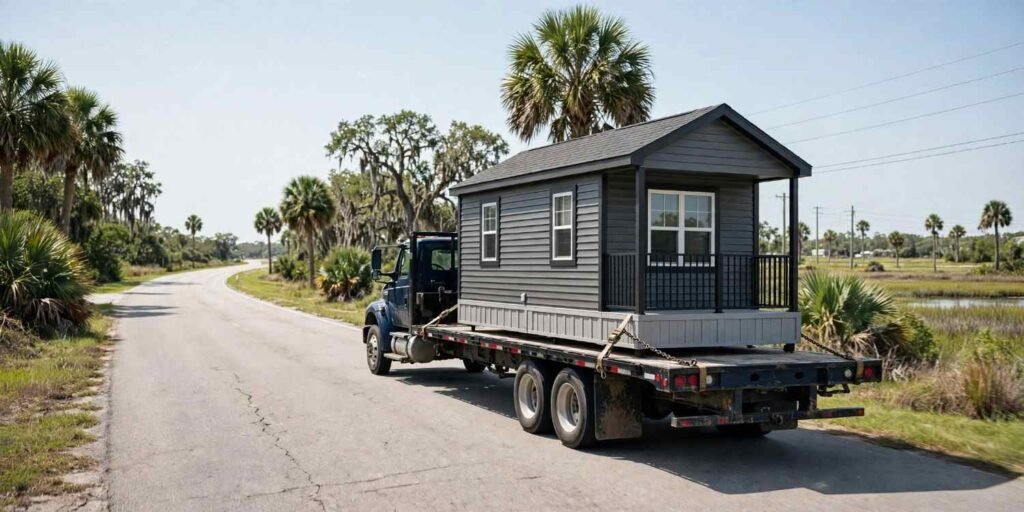
Park model home delivery works differently from standard home construction because the entire structure is built off-site and transported as one complete unit rather than assembled piece by piece. That single fact changes almost everything about the process, from the permits required to the kind of company you hire to move it.
A park model home is a factory-built dwelling, typically under 400 square feet, that is constructed on a steel chassis and classified as a recreational vehicle for transport purposes. That classification matters because it determines which regulations apply to the move, not the home’s actual use once it’s placed.
I’ve found most buyers assume delivery works like a modular home drop-off. It doesn’t. The whole unit rolls down the highway on its own wheels or a trailer bed, which means road width, height, and weight limits all come into play before the home ever reaches the site.
Park Model vs. Modular Home Transport Rules
Modular homes typically arrive in sections and get craned into place, while a park model arrives as one finished unit towed behind a truck. The RV classification means park models follow DOT and RV transport rules rather than modular home shipping regulations.
This distinction affects permitting timelines, the type of carrier you need, and even which routes are legally available. A modular hauler and a park model hauler are not interchangeable.
Why Park Models Are Classified as RVs for Transport
Park model homes carry a chassis and axles similar to a large travel trailer, which is why the National Fire Protection Association’s NFPA 1192 standard classifies them under recreational vehicle construction codes rather than residential building codes for transport purposes.
That classification is what allows the home to travel on public roads without a special manufactured-housing transport permit, though it still needs an oversize-load permit in most cases given typical park model widths.
How Park Model Homes Are Built Before Transport
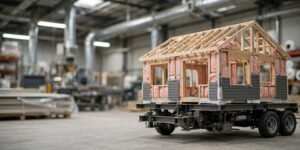
Park model homes go through a structured factory build and a separate pre-transport preparation phase that secures every loose element before the unit ever leaves the plant. Skipping or rushing this stage is where a lot of road damage originates.
The factory build follows the same general sequence as site-built construction, just compressed into a controlled indoor environment: framing, electrical and plumbing rough-in, insulation, interior finishes, and exterior siding. Quality control inspections typically happen at each stage rather than only at the end.
Factory Construction and Pre-Delivery Inspection
Reputable manufacturers run a final walkthrough before the home leaves the facility, checking for issues that wouldn’t show up until the unit hits highway vibration. I always ask to see documentation of this inspection, not just a verbal assurance.
A pre-delivery inspection usually covers structural fasteners, appliance securement, window and door seals, and the condition of the chassis and axles.
Securing the Home for the Road
Interior cabinets, appliances, and fixtures all get braced or strapped down before the home moves, since highway vibration is far more aggressive than anything the structure experiences once it’s placed. Loose items during transport are one of the most common sources of interior damage.
Exterior elements like skirting, steps, and awnings are typically shipped separately and installed after the home reaches its site.
The Permitting and Paperwork Required Before Delivery
Delivery cannot legally proceed in Florida without an oversize-load permit, and in most cases without zoning or HOA clearance confirming the site can legally receive the home. Missing either one is the single most common reason delivery dates slip.
Permit requirements depend on the home’s width, height, and the specific route the hauler plans to take, which means permits are often route-specific rather than blanket statewide approvals.
Florida Oversize Load Permits
The Florida Department of Transportation requires an oversize/overweight permit for any load exceeding standard width thresholds, and most park model homes exceed those thresholds by design. Permits typically specify approved travel times, often daylight-only, and sometimes restrict weekend or holiday travel.
HOA and Zoning Clearance Before Delivery Day
Many Florida communities and HOAs have specific rules about manufactured and park model housing placement, and some require advance approval of the delivery route and timing. I’ve seen deliveries turned away at the gate because this step got overlooked until the truck was already en route.
Choosing a Transport and Hauling Company
Choosing the right hauler for a park model home means verifying RV or manufactured-housing transport licensing, confirmed insurance coverage, and direct experience with units of a similar size and weight. This single decision affects almost every other part of the delivery timeline.
Not every trucking company is equipped or licensed to move a park model home legally. Some specialize in standard freight and lack the pilot car network, permitting relationships, or chassis-securing equipment this kind of load requires.
A qualified hauler typically carries specific endorsements for oversize loads and maintains relationships with state permitting offices, which speeds up what can otherwise be a multi-week approval process. Rate and availability matter, but they shouldn’t outweigh licensing and insurance verification.
I always recommend asking a prospective hauler how many park model or similar RV-classed units they’ve moved in the past year. A company that mostly hauls boats or standard freight may not have the specific securing and routing experience this job demands. The difference shows up most clearly when something goes wrong on the road, not when everything goes right.
Pricing conversations should happen only after licensing and insurance are confirmed, never before. A low quote from an unlicensed or underinsured hauler isn’t a deal; it’s a liability waiting to surface.
Licensed Hauler Requirements in Florida
Florida requires commercial haulers moving oversize loads to carry a valid Florida Highway Patrol escort certification when the load requires pilot vehicles, along with standard commercial trucking licensure. Confirming both before booking prevents last-minute cancellations.
Questions to Ask Before Booking Transport
Ask how many similar-sized units the hauler has moved, whether they carry cargo insurance specific to manufactured structures, and who handles permit filing. A hauler who can’t answer these clearly is a warning sign worth taking seriously.
Delivery Route Planning and Florida Road Restrictions
Delivery route planning for a park model home involves mapping every bridge, overpass, and narrow road segment between the factory and the final site to confirm the unit will physically clear each obstacle. A single low bridge can force a 50-mile detour.
Florida’s road network includes a mix of modern highways and older rural roads, and the older segments are where most clearance problems surface. Route planning software helps, but local hauler experience with a specific county’s roads often catches issues a map alone would miss.
Bridge, Overpass, and Width Clearance Issues
Older Florida counties sometimes have overpasses with clearance heights that haven’t been updated in decades, and a park model home’s height can exceed those limits even when it fits comfortably on an interstate. This is why experienced haulers physically verify routes rather than relying solely on digital mapping.
Escort Vehicle Requirements for Wide Loads
Florida law requires pilot or escort vehicles for loads exceeding certain width thresholds, which most park model homes meet. Escort requirements typically scale with load width, and some routes require escorts both front and rear.
Site Preparation Required Before the Home Arrives
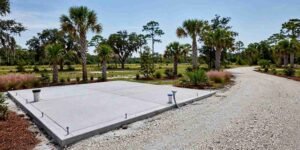
Site preparation means the foundation pad, utility stub-outs, and access path must all be complete and inspected before the delivery truck is scheduled to arrive. A site that isn’t ready on delivery day usually means a costly rescheduling fee and a truck sitting idle.
The foundation type varies depending on local code and the owner’s preference, but it generally needs to be fully cured and leveled well before delivery, since the home will be set directly onto it within hours of arrival. Utility stub-outs for water, sewer or septic, and electrical should be positioned exactly where the home’s connection points will land.
Access matters just as much as the pad itself. The path from the public road to the final resting spot needs enough width and a firm enough surface to support a loaded delivery truck, which is considerably heavier than typical residential vehicles. Soft ground, tight turns, or overhanging tree limbs can all stop a delivery in its tracks.
I walk every site personally before confirming a delivery date, because photos rarely capture the real width of a driveway or the angle of a turn. A site that looks fine on paper sometimes isn’t, once a 14-foot-wide load tries to navigate it.
Pad, Foundation, and Utility Hookup Readiness
The foundation pad needs to be level, fully cured, and positioned to match the home’s exact dimensions, with utility stub-outs capped and clearly marked. Inspecting this before the truck is dispatched avoids a wasted trip.
Driveway and Access Clearance for the Delivery Truck
Access paths need a minimum width that accounts for the home’s full dimensions plus clearance for the truck cab, and the surface needs to support the combined weight without rutting. Overhanging branches and utility lines along the path are common last-minute obstacles.
What Happens on Delivery Day
Delivery day involves the hauler positioning the home on-site, disconnecting it from the transport chassis, and setting it onto the prepared foundation using hydraulic jacks or a crane, depending on the home’s size and site constraints. The whole process typically takes a matter of hours once the truck arrives, assuming the site is fully ready.
The crew first maneuvers the home into its final position, which can take longer than expected on tight lots or sites with limited turning radius. Once positioned, the home gets leveled using the foundation’s pre-set points, and the chassis is either left in place or removed depending on the foundation type.
Placement precision matters more than people expect. A home set even slightly out of level can create long-term issues with doors, windows, and interior finishes. Experienced crews check level multiple times during the setting process, not just once at the end.
Placement, Leveling, and Positioning
Leveling uses adjustable piers or blocks set at specific points along the chassis, checked with a level instrument rather than estimated by eye. Getting this step right prevents stress cracks and misaligned doors down the road.
Timeframe From Arrival to Setup
A straightforward delivery with a ready site typically takes three to six hours from truck arrival to final leveling, though tight access or site complications can extend that significantly.
Delivery and Transport Costs in Florida
Park model home delivery costs in Florida typically range from $3 to $8 per loaded mile, plus separate fees for permits, pilot cars, and site setup, according to figures commonly cited by manufactured housing industry transport data. Distance is the biggest single variable, but it’s far from the only one.
Permit fees vary by county, and route complexity, and pilot car costs add up quickly on routes requiring multiple escort vehicles. Setup costs, covering the crew that levels and positions the home on arrival, are usually quoted separately from the transport fee itself.
I tell every client to get a fully itemized quote before signing anything. A quote that bundles “delivery” into one flat number without breaking out mileage, permits, escorts, and setup makes it nearly impossible to compare bids fairly or catch inflated charges.
Distance from the factory to the site drives most of the base cost, which is why buying from a manufacturer closer to the final location often saves more than people expect. A few hundred extra miles can add thousands to the final transport bill once permits and escort requirements scale with distance.
What Affects the Final Transport Price
Total mileage, load width, the number of required escort vehicles, and route complexity through urban areas or older infrastructure all factor into the final price. Rural, direct routes are generally cheaper than routes through dense metro areas.
Hidden Fees to Watch For
Watch for separate charges covering permit filing fees, overnight storage if delivery gets delayed, and rescheduling fees if the site isn’t ready on the scheduled date.
Insurance and Liability During Transport
Insurance during transport determines who pays if the home is damaged en route, and that responsibility typically shifts from the manufacturer to the hauler once the home leaves the factory lot. Confirming this handoff point in writing protects buyers from disputes later.
Most hauling contracts specify cargo insurance covering the full replacement value of the home while in transit, separate from the hauler’s general commercial auto liability policy. These are not the same coverage, and a hauler carrying only liability insurance may leave a damaged home uncompensated.
Who Is Responsible If Damage Occurs
Liability typically falls on the hauler once they take physical possession of the home, assuming the contract specifies cargo coverage. Buyers should confirm this in the transport agreement rather than assuming it’s automatic.
Verifying Hauler Insurance Coverage
Request a certificate of insurance naming cargo coverage limits specifically, not just a general liability summary, before the home leaves the factory.
Weather and Seasonal Delivery Considerations in Florida

Weather and seasonal timing affect park model home delivery because Florida’s hurricane season and rainy season both create scheduling and site-access risks that don’t exist during the drier winter months. Planning delivery around these windows reduces the odds of a costly delay.
Hurricane season runs roughly June through November, and haulers typically build contract language allowing them to delay delivery when storm watches or warnings are active along the route. Rainy season, which overlaps significantly with hurricane season, creates a separate problem: saturated, soft ground that can’t support a loaded delivery truck even on a clear day.
Hurricane Season Scheduling Risks
Permits can be suspended statewide during active storm warnings, and haulers generally won’t risk a loaded transport when tropical systems are approaching the route.
Rainy Season Site Access Problems
Daily afternoon storms common to Florida’s wet season can leave unpaved access roads too soft to support delivery trucks for days after a heavy rain event.
Common Delivery Delays and How to Avoid Them
Most park model delivery delays trace back to incomplete permits or a site that isn’t physically ready when the truck arrives. Both are avoidable with enough lead time.
Permit processing in Florida can take anywhere from a few days to several weeks depending on the county and route complexity, and starting this process early is the single best way to protect a target delivery date. Site-readiness delays are just as common and usually come down to a foundation that hasn’t cured or utility stub-outs that were never completed.
Permit Processing Bottlenecks
Busier counties and routes crossing multiple jurisdictions typically take longer to process, so starting permit applications four to six weeks ahead of the target date is a reasonable buffer.
Site-Readiness Delays
A foundation that hasn’t fully cured, or utility stub-outs positioned incorrectly, are the two most common reasons a scheduled delivery gets pushed back at the last minute.
Post-Delivery Setup and Final Inspections
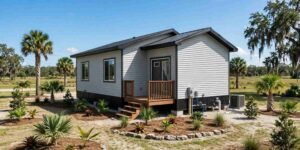
Post-delivery setup covers connecting the home to utilities, installing skirting, and completing a final walkthrough before anyone moves in. This stage typically happens within a day or two of the home being set and leveled.
Utility connections- water, sewer or septic, and electrical- are usually handled by licensed local contractors rather than the hauling crew, since this work often requires separate permits and inspections. Skirting, which closes the gap between the home’s underside and the ground, gets installed once the home is confirmed level and settled.
Utility Connection and Skirting Installation
Local licensed contractors typically handle utility hookups, and skirting installation usually follows a day or two later once the home has fully settled on its foundation.
Final Walkthrough Before Occupancy
A final walkthrough checks door and window operation, level readings throughout the home, and that all utility connections are functioning before the home is cleared for occupancy.
How Park Model Delivery Differs by Florida Region
Delivery logistics shift noticeably between Florida’s coastal and inland regions, mainly due to wind-load anchoring requirements near the coast and differing road infrastructure further inland. A delivery plan that works in central Florida doesn’t always transfer directly to a coastal county.
Coastal counties often require additional anchoring and tie-down specifications tied to local wind-zone building codes, which can extend the post-delivery setup timeline. Inland counties tend to have more flexibility on anchoring but sometimes present more challenging rural road conditions for the hauler.
Coastal vs. Inland Delivery Challenges
Coastal counties frequently mandate enhanced anchoring systems tied to Florida’s high-velocity hurricane zone building code requirements, while inland deliveries more often contend with narrower rural roads and older bridge infrastructure.
Conclusion
Park model delivery hinges on permits, a qualified hauler, and a truly ready site working together on the same timeline. Florida’s weather and road quirks add real variables worth planning around early.
We’ve seen how coastal anchoring codes, rural route restrictions, and seasonal storm windows all shape a realistic delivery schedule.
We build this expertise into every project we manage. Reach out to Tiny Home Builders Florida and let’s plan your delivery right the first time.
Frequently Asked Questions
How long does park model home delivery take in Florida?
Delivery itself typically takes one day once permits and site prep are complete. The full process, including permitting and scheduling, often takes two to six weeks from order to arrival.
Do I need a permit to transport a park model home?
Yes, Florida requires an oversize-load permit for most park model homes due to their width. The permit specifies approved travel times and routes.
Can a park model home be delivered to any property?
Not always. The property needs a prepared foundation, adequate access width, and zoning or HOA approval before delivery can legally proceed.
What size truck is needed to deliver a park model home?
Most park model homes require a heavy-duty tractor-trailer rated for oversize loads, since the units typically exceed standard width and weight limits for regular freight trucks.
Who is responsible if the home is damaged during transport?
Liability typically shifts to the hauler once they take possession of the home, provided the transport contract specifies cargo insurance coverage for that period.
How much does park model home delivery cost in Florida?
Costs typically run $3 to $8 per loaded mile, plus separate permit, escort, and site-setup fees that depend on route complexity and distance.
What should I prepare on-site before delivery day?
The foundation pad needs to be cured and level, utility stub-outs need to be positioned correctly, and the access path needs to be clear and wide enough for a loaded delivery truck.