A custom home is a residence designed and built to a specific buyer’s specifications rather than selected from a pre-set floor plan, and its resale value depends more on construction quality and lot location than on the price paid to build it. I’ve watched plenty of homeowners assume a bigger budget automatically means a bigger payday later. That’s not how Florida’s resale market actually works.
Getting this wrong costs real money at closing. I want you walking into a build with eyes open, not surprises.
This guide covers what “worth it” really means, how custom costs compare to production homes, the resale mechanics appraisers use, which features hold value in Florida, and how builder quality and location change the entire equation.
What “Worth It” Actually Means for a Custom Home
Building a custom home is worth it when the long-term value it creates exceeds what you’d get from a comparable existing or production home, and that calculation has three separate parts people tend to blend together. Cost is what you pay to build. Value is what the home is actually worth once it’s finished. Resale is what someone else will pay you for it later.
I treat these as three different conversations with clients, not one. A home can cost a fortune and still have mediocre resale value if the builder cut corners where it doesn’t show. A modest custom build with excellent construction quality can outperform a flashier one once it’s time to sell.
Cost vs. Value vs. Resale – The Three Separate Questions
The question “did I overpay” is a cost question. The question “is my home worth what I think” is a value question. The question “will I get my money back” is a resale question, and Florida’s market answers each one differently depending on the build.
I ask every client which of these three they’re actually worried about before we talk numbers.
Custom Home Costs in Florida vs. Production Homes

Custom homes in Florida typically cost 20% to 40% more per square foot than comparable production-built homes, largely because of labor customization, material selection, and the absence of economies of scale a production builder gets from repeating the same plan hundreds of times. That premium is real, and it’s not evenly distributed across the build.
Per-Square-Foot Cost Differences
Florida production homes commonly land between $140 and $180 per square foot depending on region, while custom builds often run $200 to $350 per square foot once site conditions, design complexity, and finish levels are factored in. I’ve seen that range swing even wider on waterfront lots where foundation and wind-load engineering get expensive fast.
The gap isn’t just markup. A chunk of it goes into decisions a buyer never sees until something fails or holds up decades later.
Where the Premium Actually Goes
Some of that extra cost buys things a future buyer will notice and pay for: layout, finishes, lot position. Some of it buys things nobody sees until there’s a problem: structural engineering, moisture barriers, impact-rated glazing specs beyond code minimum.
I tell clients the second category matters more for resale than the first, even though it’s invisible on a walkthrough.
Resale Value Reality – What Appraisers and Buyers Actually Pay For
Custom homes in Florida often appraise for less than their construction cost because appraisers rely on recent comparable sales, not build specifications, and truly unique homes frequently lack close comps in the same neighborhood. That mismatch is the single biggest resale surprise I see custom homeowners run into.
An appraisal isn’t a judgment of craftsmanship. It’s a market comparison exercise, and custom homes by definition resist easy comparison.
Appraisal Comparables Problem for Custom Homes
Appraisers pull three to six recent sales within a tight radius and adjust for differences in size, age, and condition. A one-of-a-kind custom home in a neighborhood of production builds often gets valued closer to the neighborhood average than to its actual build cost, regardless of the materials used inside the walls.
This is why lot selection matters as much as the build itself, which I get into later in this guide.
Buyer Pool Size and Days on Market
Highly personalized design choices shrink the pool of buyers who want that exact home, and a smaller buyer pool typically means more days on market and more negotiating leverage for the buyer. A home built around one family’s specific taste in layout or finishes asks the next buyer to either love those same choices or pay to undo them.
I always ask clients to picture a stranger touring the home before finalizing anything irreversible.
Features That Hold Resale Value in Florida

Features that hold resale value in Florida share one trait: they solve a problem every buyer in the state actually has, regardless of personal taste. Storm protection, energy performance, and structural durability top that list because every Florida buyer eventually thinks about hurricanes, heat, and humidity.
Hurricane and Wind-Mitigation Features
Impact-rated windows, reinforced garage doors, and a documented wind mitigation inspection report routinely translate into both lower insurance premiums and stronger resale positioning, since buyers and their lenders both factor storm risk into Florida purchase decisions. A home with a current wind mitigation report in hand sells faster than one without, in my experience, because it removes a buyer’s biggest unknown.
Features that protect against Florida’s specific climate risks tend to retain value even as design trends shift.
Custom Features That Rarely Pay Back at Resale
Highly personalized features, think niche hobby rooms, unusual layouts, or statement finishes tied to one owner’s taste, rarely return their full cost at resale because the next buyer has to want that exact feature rather than simply tolerate it. I’ve seen six-figure outdoor kitchens and home theaters barely move the needle on an appraisal.
Buyers pay for flexibility, not for someone else’s specific vision frozen into drywall and tile.
Builder-grade substitutions dressed up to look custom create a different problem: they photograph well but fail inspection scrutiny once a buyer’s inspector starts checking behind the finishes.
How Builder Quality Changes the Resale Equation
Builder quality changes the resale equation by determining how much of a custom home’s value survives inspection, appraisal, and years of Florida weather, rather than how impressive it looks on move-in day. Two identical floor plans built by two different builders can diverge wildly in value five years later.
Craftsmanship Signals Appraisers Can’t Ignore
Appraisers and inspectors both note visible craftsmanship signals consistent tile lines, properly flashed windows, even reveals on cabinetry as proxies for overall build quality, and those signals influence condition ratings that feed directly into appraised value. Sloppy trim work raises questions about what corners got cut somewhere less visible.
Material Grade and Long-Term Durability
Material grade determines how a home performs after the first decade, not just how it looks at closing, and Florida’s heat and humidity are unusually punishing on lower-grade materials. A builder who specs moisture-resistant sheathing and marine-grade hardware in coastal zones is protecting a resale number that won’t show up for years.
I walk every client through material specs line by line before they sign anything, because this is where most long-term value gets decided.
How to Evaluate a Custom Home Builder’s Quality Standards
Evaluating a custom home builder’s quality standards means checking verifiable evidence of past work, not promotional claims, starting with licensing, insurance, warranty terms, and a physical walkthrough of a completed project. Marketing materials tell you what a builder wants you to believe. Completed homes tell you what they actually deliver.
Questions to Ask Before Signing a Contract
I push every prospective homeowner to ask about subcontractor relationships, typical change-order frequency, and how disputes over defects get resolved, because the answers reveal more about a builder’s quality culture than any brochure.
A builder who hesitates to provide references from homes built three or more years ago is telling you something important.
Red Flags in Builder Credentials
Unlicensed subcontractors, unusually short warranty periods, and an inability to produce past client references are the clearest red flags I watch for, since each one points to a builder who isn’t confident their work holds up under scrutiny. A builder proud of their craftsmanship wants you talking to past clients.
Florida Building Codes and Construction Standards That Protect Value
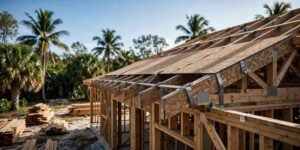
The Florida Building Code sets statutory minimum standards for wind resistance, flood elevation, and energy performance, and homes built above these minimums generally retain value better than homes built exactly to the legal floor. Code minimums exist to prevent failure, not to maximize long-term value.
Builders who voluntarily exceed code thicker roof decking, additional hurricane straps, upgraded fenestration are building in a margin of safety that shows up later as fewer repairs and stronger inspection reports.
I treat code compliance as the starting line, never the finish line, on every project I’m involved with.
Energy Efficiency as a Resale and Ownership Cost Factor
Energy efficiency affects resale value because Florida buyers increasingly factor utility costs into their purchase decision, and a well-insulated, properly sealed home with high-efficiency HVAC can command a measurable premium over an equivalent home with poor envelope performance. Utility bills are one of the few ongoing costs a buyer can estimate before closing, which makes efficiency tangible in a way many upgrades aren’t.
Spray foam insulation, properly sized HVAC systems, and high-performance glazing all reduce long-term ownership costs and increasingly show up as selling points in Florida listings.
Lot Value, Location, and Land Appreciation in Florida Markets

Lot value and location frequently appreciate faster than the structure sitting on them, which means the land a custom home is built on can matter more to long-term resale than the home’s finish level. Florida’s population growth has pushed land values up steadily in high-demand counties, regardless of what gets built on any individual parcel.
A modest custom home on a strong lot in a growing area tends to outperform a lavish custom home on a weak or flood-prone lot, five or ten years out.
Custom vs. Semi-Custom vs. Production Homes – Resale Comparison
Production homes typically offer the most predictable resale value because of abundant comparables, semi-custom homes land in the middle with moderate personalization and moderate comp availability, and fully custom homes carry the highest resale variability because of their uniqueness. Each category trades predictability for personalization in a slightly different ratio.
Semi-custom builds a base plan with selected upgrades, often capture much of the design satisfaction homeowners want from custom building while keeping enough standardization that appraisers can find usable comparables nearby.
I steer budget-conscious clients toward semi-custom more often than people expect, specifically because of this resale math.
Timeline to Break Even – How Long Before a Custom Build Pays Off
Most custom homeowners in Florida need five to ten years of ownership before the premium paid to build custom is offset by appreciation and avoided transaction costs, though this window shortens significantly in high-growth areas. Shorter ownership timelines make the custom premium much harder to recover.
I ask every client how long they realistically plan to stay before we finalize a budget, because the answer changes which features are worth paying for.
Insurance, Climate Risk, and Long-Term Value in Florida

Florida’s insurance market factors construction details directly into premiums, meaning a home built with stronger wind mitigation and flood-resistant design can carry meaningfully lower insurance costs than an identical-looking home built to minimum code. Insurance cost has become a visible line item buyers negotiate over, not a background detail.
Flood zone designation, elevation certificates, and roof age or rating all factor into both premium cost and resale negotiations in ways that didn’t matter nearly as much a decade ago.
When Building Custom Makes Financial Sense (And When It Doesn’t)
Building custom tends to make financial sense when you’re planning to stay long-term, building on a strong or appreciating lot, and prioritizing construction quality over maximum personalization, and it tends to make less sense for short-term ownership or highly niche design choices in a market full of comparable production homes. The decision hinges less on budget size than on timeline and lot quality.
I’d rather tell a client custom isn’t the right call for their situation than watch them learn that lesson at closing five years later.
Signs You’re Working With a Builder Who Protects Your Investment
A builder who protects your investment documents material specifications in writing, welcomes third-party inspections at multiple build stages, and can point to homes they built years ago that are still performing well. Transparency throughout the build process is the clearest long-term indicator I know of.
We built our own process around exactly these habits because we’ve seen what happens to homeowners when a builder skips them.
Conclusion
A custom home’s worth comes down to construction quality, lot value, and how long you plan to stay, not the size of the price tag. Florida’s resale market rewards durability and storm resilience over personalization alone.
If you’re weighing a custom build, talk to Tiny Home Builders Florida about a construction plan built around long-term value, not just move-in day appeal.
Frequently Asked Questions
Does a custom home appraise for what it costs to build?
Not always. Appraisers rely on recent comparable sales rather than construction cost, so unique custom homes often appraise below their build price when few similar comps exist nearby.
Do custom homes sell faster or slower than production homes?
Custom homes typically sell slower than production homes because their personalized features narrow the pool of interested buyers, extending average days on market.
What adds the most resale value to a custom-built home in Florida?
Hurricane-resistant features, energy-efficient systems, and strong lot location add the most resale value, since these solve problems every Florida buyer shares regardless of personal taste.
Is it cheaper to buy an existing home than build custom in Florida?
Yes, in most cases. Existing homes generally cost less upfront than custom builds, though they may lack the storm resilience or efficiency upgrades a new custom home provides.
How much does builder quality affect long-term home value?
Builder quality significantly affects long-term value, since material grade and craftsmanship determine how well a home performs during inspections, appraisals, and years of Florida weather exposure.
Do hurricane-resistant features increase resale value in Florida?
Yes. Impact windows, reinforced structures, and documented wind mitigation reports typically increase resale value by lowering insurance costs and reducing buyer risk perception.
How long should I plan to stay in a custom home to make it worth it?
Most owners need five to ten years to recoup the custom building premium through appreciation and avoided transaction costs, though strong-growth areas can shorten that timeline.