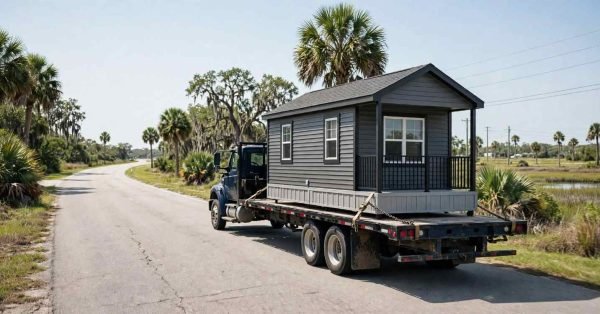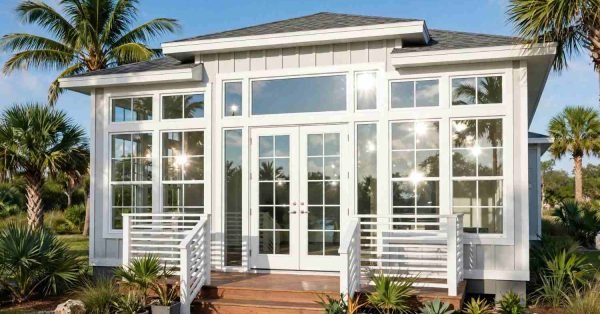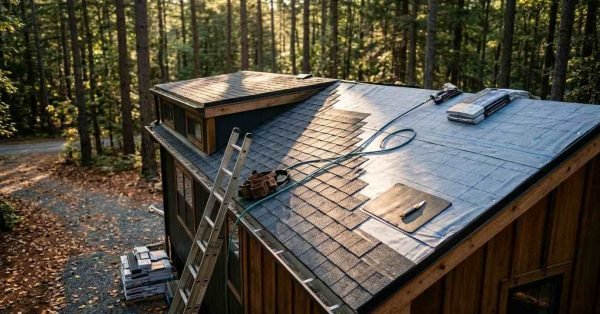

A park model home is a transportable dwelling under 400 square feet built on a chassis, and Florida zoning laws treat it differently depending on whether a county classifies it as an RV, a manufactured home, or a permanent accessory structure. This classification question is the single biggest factor in where you can legally put one.
I’ve watched buyers fall in love with a park model floor plan before checking a single zoning map. That order gets people into trouble fast.
This guide covers how Florida classifies park model homes legally, the zoning districts and county variations that govern placement, private land and HOA rules, permit and permanent foundation requirements, setback and floodplain restrictions, and the mistakes that most often delay or block an approval.
What Is a Park Model Home, Legally Speaking?

A park model home is classified in Florida under NFPA 1192 and ANSI A119.5 standards as a recreational vehicle built on a single chassis, with a floor area not exceeding 400 square feet in the setup mode. That classification matters more than the home’s appearance.
Park Model vs. RV Classification
Most park models get built to RV standards even though they look and live like small permanent homes. Florida’s Department of Highway Safety and Motor Vehicles still titles them as recreational vehicles, which pulls them under RV zoning rules rather than residential building codes in many counties.
Park Model vs. Manufactured/Tiny Home Classification
A manufactured home carries a HUD certification label and gets treated as a permanent residential structure in most Florida zoning codes. A park model carries no HUD label, and that single missing certification is why counties routinely zone it differently than a tiny home built on a permanent foundation.
How Zoning Laws Treat Park Model Homes in Florida
Florida has no single statewide zoning law for park model homes, which means placement legality depends entirely on how each county and municipality classifies recreational vehicles within its residential, agricultural, and RV-specific zoning districts.
Residential Zoning Districts
Standard single-family residential zoning (commonly labeled RSF-1 or R-1 across Florida counties) usually prohibits RV-classified structures as a primary dwelling. A handful of counties carve out exceptions for park models placed on a permanent foundation with utility connections, but this isn’t the default rule anywhere.
Agricultural & Rural Zoning Districts
Agricultural-zoned land tends to offer the most flexibility, since many counties permit a single accessory dwelling for farm workers or family members. Florida’s agricultural zoning statute gives counties latitude here, and some allow a park model as that accessory structure without the restrictions applied to residential districts.
| Zoning District Type | Typical Park Model Treatment | Common Restrictions |
| Single-Family Residential | Often prohibited as primary dwelling | Foundation, permanent utility hookup required for exceptions |
| Agricultural | Frequently allowed as accessory dwelling | One unit per parcel, acreage minimums |
| RV/Mobile Home Park | Generally permitted | Park-specific rules apply, not county zoning |
| Rural Residential | Varies widely by county | Setbacks, lot size minimums |
County-by-County Zoning Variation Across Florida
Florida delegates zoning authority to its 67 counties and hundreds of municipalities, so a placement rule in Polk County carries no weight in Lee County or anywhere else in the state.
Why There’s No Single Statewide Rule
Florida’s home rule structure under its constitution gives local governments zoning authority, and the legislature has never passed a uniform park model placement law. Each jurisdiction writes its own definition of “recreational vehicle” and decides independently whether that definition excludes year-round occupancy.
How to Check Your County’s Ordinance
Start with the county’s planning and zoning department, not a real estate listing. Most counties publish their land development code online, and the relevant section is usually titled “recreational vehicles” or “manufactured/mobile homes” rather than anything mentioning park models directly.
Can You Put a Park Model Home on Private Land?
Placing a park model home on privately owned land in Florida is possible in many counties, but it depends on the parcel’s zoning classification, lot size, and whether the home will serve as a primary or secondary dwelling.
Vacant Residential Lots
A vacant lot zoned for single-family residential use will often require the park model to sit on a permanent foundation and connect to a licensed septic or sewer system before a county issues a certificate of occupancy. Some counties reject park models outright regardless of foundation work, which is why confirming the rule before purchasing land matters so much.
Land as an ADU (Accessory Dwelling Unit)
Florida’s growing accessory dwelling unit legislation has opened a path for some homeowners to place a park model behind an existing primary residence. This route typically caps square footage, requires separate utility metering in some jurisdictions, and limits use to a family member or caregiver rather than a rental tenant.
Park Model Homes in RV Parks & Mobile Home Communities
RV parks and licensed mobile home communities remain the most straightforward placement option in Florida because these properties already hold the zoning classification and infrastructure that park models require.
Florida regulates these communities under Chapter 513 of the Florida Statutes, which governs licensing, utility standards, and safety requirements rather than leaving it to county discretion. The tradeoff is that residents typically lease the land rather than own it, and park rules can restrict exterior modifications, additions, or long-term parking of a second vehicle.
Park Model Homes in Deed-Restricted Communities & HOAs

A homeowners association can prohibit park model homes entirely through its governing documents, even in a county where zoning law would otherwise permit one.
Deed restrictions function independently of county zoning and often predate any park model-specific rule the county has adopted. I always tell buyers to request the HOA’s covenants and architectural guidelines before assuming a zoning green light settles the matter, because an HOA board can deny an application a county would approve without objection.
Permanent vs. Temporary Placement Rules
Florida counties draw a hard line between a park model installed as temporary recreational housing and one installed with the intent of permanent residential occupancy, and that distinction changes which code requirements apply.
Foundation & Anchoring Requirements
A permanently placed park model typically needs tie-down anchoring that meets Florida’s wind load standards for its wind zone, since the entire state falls under hurricane-resistance requirements. Counties near the coast often require additional engineering certification beyond what inland counties mandate.
Utility Hookup Requirements (Water, Sewer, Electric)
| Utility Type | Permanent Placement Requirement |
| Water | Connection to public supply or permitted well |
| Sewer | Connection to public sewer or permitted septic system |
| Electric | Licensed electrical service, not generator-only power |
Florida Building Code & Park Model Home Standards
The Florida Building Code does not directly regulate park model homes because their RV classification places them under state and federal recreational vehicle standards instead of residential construction codes.
This gap is exactly why counties end up writing their own supplemental rules. A county that wants a park model to perform like a permanent residence will often layer its own foundation, wind-resistance, and utility requirements on top of the manufacturer’s RV certification rather than relying on NFPA 1192 alone.
Permits Required Before Placing a Park Model Home
Most Florida counties require a zoning compliance permit, a site plan review, and separate utility permits before a park model home can be legally occupied on a property.
Site Plan & Zoning Permit
This permit confirms the parcel’s zoning district allows the placement and that the proposed location satisfies setback and lot coverage rules. Skipping this step is the single fastest way to receive a stop-work order after delivery.
Utility & Septic Permits
Connecting to a septic system requires a separate permit through the county health department in most of Florida, and that process runs on its own timeline independent of the zoning approval.
Setback Requirements & Lot Size Minimums
Florida counties commonly require a minimum setback of 10 to 25 feet from side and rear property lines for a park model home, though the exact figure depends entirely on the zoning district and county.
Lot size minimums follow the same county-specific pattern, and a parcel that meets setback requirements can still fail a minimum acreage threshold in agricultural zoning.
Floodplain, Wind Zone & Coastal Placement Restrictions
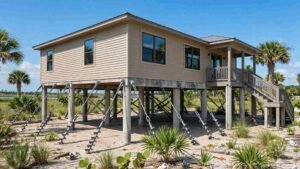
Florida’s entire land area sits within a FEMA-designated flood zone classification, and a park model placed within a Special Flood Hazard Area typically needs elevation above base flood elevation before a county will approve occupancy.
Coastal counties layer wind-borne debris region requirements on top of flood rules, which often means impact-rated windows or shutters become a placement condition rather than an optional upgrade. FEMA’s flood map service lets a buyer check a specific parcel’s designation before committing to a purchase.
Park Model Homes as a Primary Residence vs. Secondary Dwelling
Using a park model home as a year-round primary residence triggers a stricter review in most Florida counties than using the same structure as a seasonal or secondary dwelling.
Counties that permit seasonal RV-style occupancy often cap the number of consecutive months a resident can stay, sometimes as low as six months, which disqualifies full-time living even where placement itself is legal. Confirming occupancy intent with the zoning office prevents a technically legal placement from becoming an illegal use.
Restricted & Prohibited Placement Areas in Florida
Certain land categories in Florida prohibit park model placement outright, regardless of ownership or intended use.
Conservation easements, wetlands protected under state environmental rules, and land within certain coastal construction control lines typically block any new structure, park model or otherwise. Historic districts in cities like St. Augustine or Key West also commonly restrict exterior structure types through architectural review boards layered on top of standard zoning.
Common Zoning Mistakes That Delay or Block Placement
Buyers most often lose time and money by purchasing land before confirming zoning, assuming RV park rules apply statewide, or skipping the HOA covenant review entirely.
Another frequent mistake involves confusing a county’s mobile home zoning allowance with park model eligibility, since the two structure types face different rules in many land development codes despite looking similar on paper.
How to Confirm a Property Is Zoning-Compliant Before You Buy
Confirming zoning compliance before purchasing land requires a direct conversation with the county planning department, a title search for deed restrictions, and written confirmation of the specific zoning district’s allowed uses.
Request the zoning confirmation in writing rather than relying on a verbal answer from a planning office staff member. A written determination becomes useful documentation if a dispute arises later during permitting, and it protects a buyer from a verbal answer that later turns out to be informal or incorrect.
Conclusion
Zoning classification, county rules, and foundation requirements together determine where a park model home can legally sit in Florida. No statewide standard exists, so every parcel carries its own answer.
Understanding these layered rules protects a purchase before it happens, and the right land review prevents costly surprises after delivery.
We help homeowners navigate these placement questions from the ground up. Reach out to Tiny Home Builders Florida to start your zoning review today.
Frequently Asked Questions
Is a park model home considered a permanent structure in Florida?
A park model home is classified as a recreational vehicle in Florida, not a permanent structure, unless a county specifically approves permanent foundation and utility installation. That approval varies significantly by jurisdiction.
Do you need a permit to place a park model home in Florida?
Yes, most Florida counties require a zoning compliance permit, a site plan review, and separate utility permits before placement. Skipping any of these steps risks a stop-work order after delivery.
Can a park model home be used as a full-time residence in Florida?
Some Florida counties allow full-time occupancy with proper zoning approval and permanent utility connections. Others cap occupancy at a seasonal limit, sometimes six months, even where placement itself is legal.
What is the minimum lot size for a park model home in Florida?
Minimum lot size requirements vary by county and zoning district, with no statewide standard. Agricultural zoning often requires larger acreage minimums than residential or RV-zoned parcels.
Can you put a park model home on agricultural land in Florida?
Many Florida counties allow a park model home on agricultural land as an accessory dwelling, often for family members or farm workers. Restrictions typically limit this to one unit per qualifying parcel.
Do HOAs allow park model homes in Florida communities?
HOAs can prohibit park model homes through deed restrictions even where county zoning permits them. Reviewing the community’s covenants before purchasing land is essential.
What happens if a park model home violates local zoning laws?
A zoning violation can result in a stop-work order, fines, or a required removal of the structure. Counties generally require correction before issuing occupancy approval.