
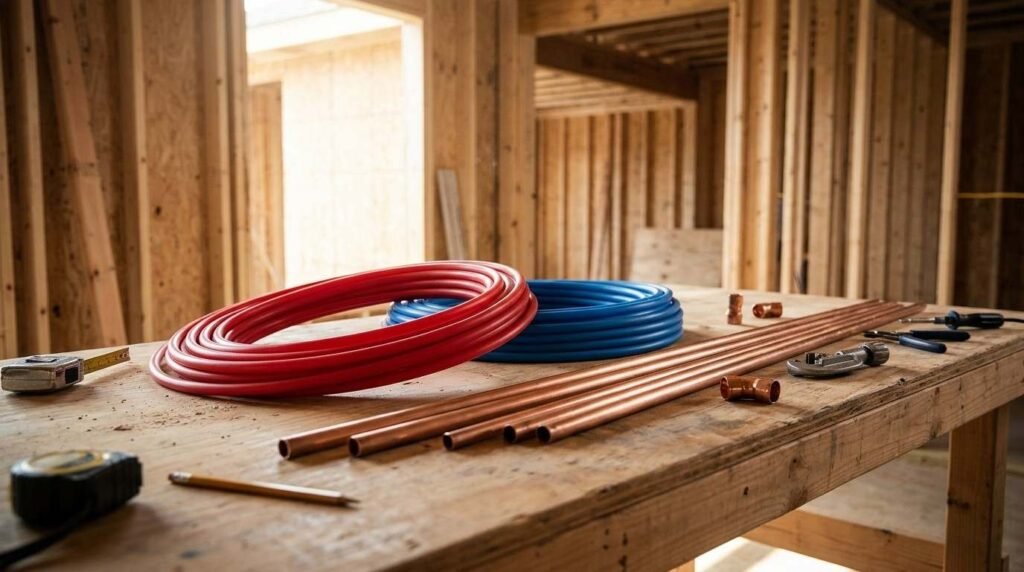
Plumbing material choice shapes a new home’s cost, durability, and maintenance needs for decades, and PEX and copper remain the two dominant options for residential new construction in Florida. PEX is a flexible cross-linked polyethylene pipe, while copper is a rigid metal pipe that has been the industry standard for generations. Both move water reliably, but they diverge sharply on cost, installation, climate resistance, and lifespan.
I’ve watched too many new homeowners sign off on a plumbing spec sheet without understanding what it actually means for their home’s next 30 years. Getting this wrong adds cost, risk, or both.
This guide covers what each material is and where it’s used, how they compare on cost, durability, and Florida-specific climate and water conditions, what installation and code requirements look like, and how builder material choices affect resale value and long-term maintenance. By the end, I want you asking your builder sharper questions, not just nodding along to a spec sheet.
What Is PEX Piping?
PEX is a flexible plastic pipe made from cross-linked polyethylene, and builders use it for most interior water supply lines in modern residential construction. It bends around corners without needing elbow fittings, which cuts down on joints and potential leak points. I see it running through wall cavities and under slabs on the majority of new builds I review today.
Manufacturers produce PEX in three main types, labeled A, B, and C, based on the cross-linking process used. PEX-A offers the most flexibility and expand-style fittings, while PEX-B is the most common and cost-effective option in production homes. Builders typically run PEX from the manifold to individual fixtures, a layout called a home-run system, which isolates each fixture on its own line.
What Is Copper Piping?
Copper piping is a rigid metal pipe that has supplied residential water systems reliably for more than 80 years. It’s naturally resistant to bacterial growth and holds up under high heat, which is why it still shows up in water heater connections even in PEX-dominant homes. Builders join copper sections using soldered or pressed fittings rather than flexible runs.
Copper pipe comes in three wall-thickness types: K, L, and M. Type L is the standard for interior residential supply lines, Type M is thinner and used in lower-pressure applications, and Type K is the heaviest-duty option reserved for underground or municipal work. A builder’s choice of copper type affects both cost and long-term durability.
How PEX and Copper Compare on Cost
Material and labor costs separate PEX and copper by a meaningful margin on a typical new construction budget. PEX pipe itself costs roughly 30% to 50% less than copper per linear foot, and that gap widens further once copper prices spike with commodity market swings, according to the National Association of Home Builders’ cost data.
Labor costs compound the material savings, since PEX’s flexibility lets a single plumber run longer sections faster without soldering joints. A full re-pipe or new installation in copper routinely takes two to three times longer than the equivalent PEX installation, which directly inflates the labor line on a build budget. Builders working on tight construction timelines lean toward PEX partly for this reason alone.
Copper’s higher upfront cost isn’t without payoff, though. It holds scrap value and resists certain failure modes that eventually cost homeowners more in future repairs, which the next section breaks down directly.
How PEX and Copper Compare on Durability and Lifespan

Copper pipe typically lasts 50 years or more, while PEX pipe carries a manufacturer-rated lifespan of 25 to 40 years under normal residential conditions. Both exceed a standard mortgage term, but copper’s longer track record gives it an edge in homes built for multi-generational ownership.
PEX’s main failure points come from prolonged UV exposure and rodent damage, since the plastic degrades when left unprotected outdoors or chewed through in attics. Copper’s primary failure mode is pinhole leaks caused by pitting corrosion, which develops slowly from water chemistry imbalances rather than physical damage.
Builders who understand these failure patterns design around them rather than ignoring them. Proper installation practice shields PEX from sunlight and rodents while managing copper’s exposure to aggressive water chemistry, a factor that matters even more in Florida specifically.
How PEX and Copper Perform in Florida’s Climate and Water Conditions
Florida’s heat, humidity, and water chemistry create conditions that stress plumbing materials differently than in cooler, drier states. High ambient attic temperatures accelerate PEX degradation if it’s installed without adequate insulation or sun shielding, while Florida’s often-acidic or high-mineral groundwater increases copper’s pitting corrosion risk in some regions.
Coastal properties add another variable, since humid, salt-laden air can accelerate corrosion on any exposed metal fittings, including copper. Builders working in coastal counties often favor PEX specifically to reduce this exposure risk, though PEX still needs protection from direct UV in exposed crawlspaces or utility runs.
Water chemistry testing before construction helps a builder make an informed material recommendation rather than a generic default choice. This is one of the clearest places where a builder’s local expertise outweighs a one-size-fits-all national spec.
Installation Differences Between PEX and Copper
PEX installation requires fewer specialized tools and less training time than copper, since it uses crimp, clamp, or expansion fittings instead of an open flame. Copper installation demands a licensed plumber skilled in sweat-soldering joints, torch safety, and proper flux application, which adds both cost and scheduling complexity to a build.
Installation timeline impact shows up most clearly on larger custom homes, where hundreds of linear feet of pipe need to be run through walls, slabs, and ceilings. A flexible PEX home-run system lets crews complete rough-in plumbing in a fraction of the time copper sweating requires, directly shortening a construction schedule.
Building Code and Permitting Considerations
Florida Building Code permits both PEX and copper for residential potable water supply, provided installation meets the applicable sections of the Florida Building Code Plumbing chapter. Local jurisdictions sometimes add specific requirements around PEX UV exposure limits or copper pipe sizing, so code compliance isn’t automatically identical county to county.
A qualified builder pulls permits and schedules inspections that confirm whichever material is used meets these local standards before walls get closed in. Skipping this step, or using an unlicensed installer, creates code violations that surface during a home inspection or resale appraisal years later.
Health, Safety, and Water Quality Considerations

Both PEX and copper are approved as safe for potable water use under current U.S. plumbing codes, though each carries distinct water-quality considerations. Copper can leach trace amounts of copper into water under certain acidic conditions, while some PEX formulations have been studied for potential taste or odor transfer in the first months after installation.
A 2023 water quality review found no evidence of health risk from properly certified PEX-A or PEX-B piping](https://www.epa.gov) used under current manufacturing standards. Builders using NSF-certified PEX products meet the same safety threshold copper has held for decades. Choosing certified materials from a reputable manufacturer matters more here than the PEX-versus-copper debate itself.
Environmental Impact and Sustainability
Copper is fully recyclable and retains scrap value indefinitely, which gives it a sustainability edge at the end of a pipe’s service life. PEX, as a petroleum-based plastic, isn’t widely recycled through standard municipal programs, though its lighter weight and lower manufacturing energy footprint offset part of that disadvantage during production.
Homeowners weighing environmental priorities alongside cost and performance should treat this as one factor among several rather than a deciding one on its own, since both materials carry trade-offs depending on what stage of the lifecycle gets weighted most heavily.
Repair, Maintenance, and Long-Term Serviceability
PEX repairs typically involve cutting out a damaged section and installing a new crimp or expansion fitting, a straightforward job for a licensed plumber. Copper repairs require re-soldering or, in cases of widespread pitting corrosion, replacing entire sections of pipe run, which costs significantly more in labor.
Common repair scenarios differ by material too: PEX more often needs attention after rodent damage or UV exposure, while copper more often needs attention after years of slow pinhole corrosion. Knowing which failure mode applies to a home’s plumbing system helps homeowners budget realistically for eventual maintenance.
Impact on Home Resale Value and Buyer Perception
Home inspectors and buyers increasingly recognize both PEX and copper as acceptable, code-compliant materials, though older plumbing types like polybutylene or galvanized steel still raise red flags during inspection. A documented, permitted installation of either PEX or copper supports a clean inspection report and protects resale value.
Some buyers in higher-end markets still perceive copper as a premium material due to its longer history and perceived durability, even though certified modern PEX performs comparably in most residential applications. A builder who documents material choices and warranties helps offset any perception gap at resale time.
Which Builders Use PEX, Copper, or Both – and Why It Matters

Builder material choice often comes down to regional norms, cost targets, and the builder’s own installation expertise rather than a strict performance verdict between the two materials. Production builders working on tighter margins and schedules lean heavily toward PEX, while custom builders targeting a premium market sometimes specify copper for water heater connections and PEX elsewhere as a hybrid approach.
Questions to Ask Your Builder About Plumbing Materials
- Which plumbing material is specified in my construction contract, and why?
- Is the PEX or copper product NSF-certified for potable water use?
- How is the plumbing system protected from Florida’s UV and attic heat exposure?
- What warranty applies to the plumbing materials and labor?
- Will the installer pull permits and schedule required inspections?
A builder who answers these clearly, without hesitation, is demonstrating the kind of transparency that separates a high-quality build from a corner-cut one.
How to Decide Which Is Right for Your New Construction Project
The right choice depends on budget, expected ownership timeline, local water chemistry, and how much weight a buyer places on long-term resale perception. A family planning to stay in a home for decades may value copper’s longer track record, while an investor focused on build cost and faster timelines often finds PEX the more practical choice.
Decision Factors Checklist:
- Construction budget and timeline constraints
- Local water chemistry test results
- Expected length of home ownership
- Builder’s installation expertise with each material
- Resale market expectations in the target neighborhood
- Code requirements specific to the county or municipality
None of these factors override the others completely, which is exactly why this decision benefits from a builder who explains trade-offs rather than defaulting to whichever material is cheapest to install.
Conclusion
PEX and copper both deliver safe, code-compliant water supply, but they diverge on cost, lifespan, and climate resilience in ways that matter for Florida construction.
The right material depends on budget, ownership timeline, and local conditions, not marketing claims or default specs alone.
We help homeowners weigh these trade-offs honestly. Tiny Home Builders Florida builds with transparency so your plumbing choice reflects your home’s long-term value.
Frequently Asked Questions
Is PEX or copper better for new construction in Florida?
Neither is universally better; PEX suits faster timelines and tighter budgets, while copper suits buyers prioritizing a longer material track record. Florida’s heat and water chemistry make proper installation more important than the material choice alone.
Does PEX piping contain harmful chemicals?
NSF-certified PEX products meet current U.S. safety standards for potable water. Choosing certified materials from a reputable manufacturer matters more than the material type itself.
How long does PEX piping last compared to copper?
PEX typically lasts 25 to 40 years, while copper often lasts 50 years or more. Both exceed a standard mortgage term under normal residential conditions.
Can PEX and copper be used together in the same home?
Yes, many builders combine both, using copper near water heaters and PEX for the rest of the supply lines. This hybrid approach balances cost with heat resistance where it matters most.
Does plumbing material affect home resale value?
A documented, code-compliant installation of either material supports resale value and inspection outcomes. Some buyers still perceive copper as a premium material, though certified PEX performs comparably.
What causes copper pipes to fail over time?
Pinhole leaks from pitting corrosion are copper’s most common failure mode, developing slowly from water chemistry imbalances. This differs from PEX, which more often fails from UV exposure or physical damage.
Is PEX piping approved under Florida Building Code?
Yes, the Florida Building Code permits PEX for residential potable water supply when installed to applicable code sections. Some jurisdictions add specific requirements around UV exposure protection.