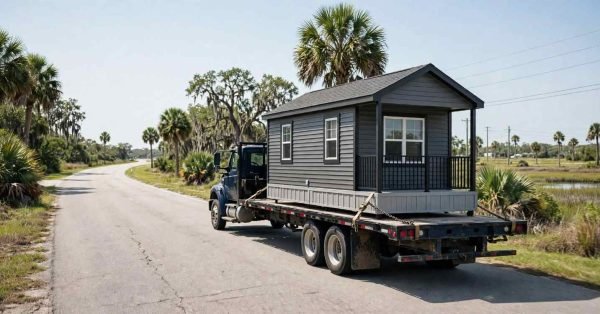
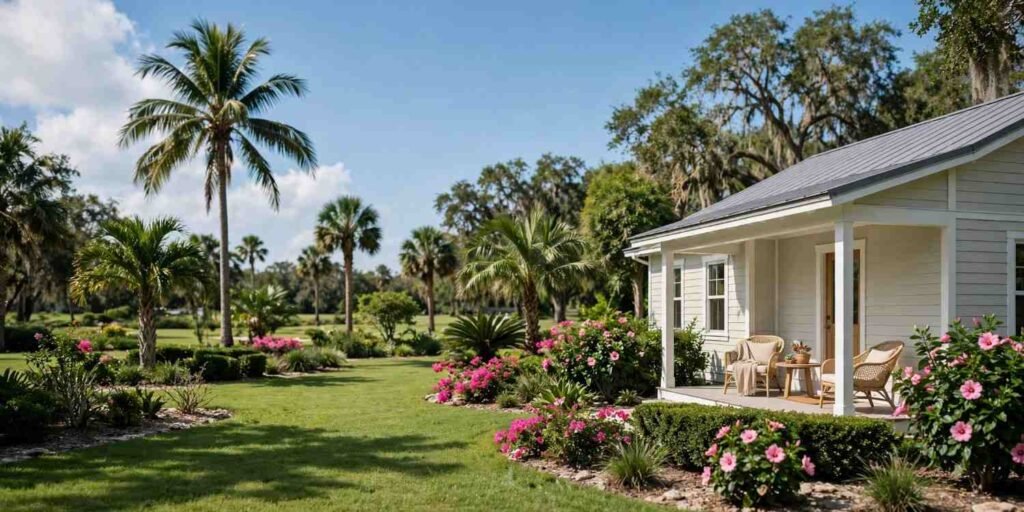
Park model home resale value is the price a park model home commands on the secondary market, shaped by age, construction quality, land arrangement, location, and regional buyer demand. I’ve watched owners sell for near-new prices, and others take losses that could have been avoided with better information, and the difference almost always comes down to a few decisions made years earlier.
Resale value matters now because Florida’s park model market is active, specific, and far less forgiving than the broader housing market most owners assume applies to them.
This guide covers how park models depreciate and compare to traditional homes, how land ownership and location shape value, which construction and maintenance choices protect your investment, how to price, prepare, and sell for maximum return, and the legal, financing, and timing factors that decide whether you leave money on the table.
What Determines Park Model Home Resale Value
Park model resale value is set by five core factors: age and condition, construction quality, land arrangement, location, and current regional buyer demand. I weigh these in roughly that order when I’m asked to estimate what a used unit should fetch.
Park model home resale value is a market-driven price that reflects how buyers perceive long-term usability, title structure, and site arrangement at the moment of sale. Unlike site-built homes, park models carry more variables because they can be classified as personal property or real property depending on how they’re attached and titled.
Age, Condition, and Construction Quality
Age matters, but condition matters more. A well-maintained 15-year-old park model with a quality frame and updated finishes often outperforms a neglected 5-year-old unit.
Location and Land Arrangement
Where the home sits and whether you own that land can swing resale value by tens of thousands of dollars. I’ll break that out in detail further down.
Market Demand in the Region
Florida’s retiree and seasonal buyer base keeps park model demand steadier than most states, but demand is hyper-local. A park with a waitlist supports stronger pricing than one with empty lots.
How Park Model Homes Depreciate Over Time
Park model homes typically depreciate 15–25% in the first year and then settle into 3–5% annual depreciation for roughly the next decade, according to patterns tracked across RVIA-member manufacturers and secondary-market listings.
That curve is sharper than site-built housing but gentler than RVs or motorhomes. The reason sits in the middle category park models occupy: they’re built to RV industry standards (ANSI A119.5) but used as semi-permanent residences, which creates a hybrid value profile.
The Standard Depreciation Curve
| Year | Approx. Value Retained |
| Year 1 | 75–85% |
| Year 5 | 60–70% |
| Year 10 | 45–55% |
| Year 15 | 35–45% |
| Year 20+ | 25–35% (plateaus with good maintenance) |
The lead-in: the table above shows typical park model value retention assuming average maintenance, no major upgrades, and placement in a stable park community.
Why Park Models Depreciate Faster Than Traditional Homes
Park models are usually titled as personal property, not real estate. That classification removes them from the appreciation engine that drives traditional home values, namely, land scarcity and mortgage-backed demand.
Factors That Slow Depreciation
Owning the underlying land, higher-end construction, consistent maintenance, and placement in a desirable deeded community all compress the depreciation curve substantially.
Park Models vs. Traditional Homes: Resale Comparison
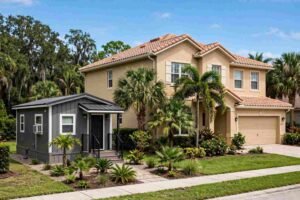
Park models and traditional stick-built homes behave as fundamentally different asset classes at resale, with opposite trajectories for value, buyer pools, and sales timelines.
Traditional homes appreciate because they’re tied to land, financed by 30-year mortgages, and valued by appraisers against comparable real estate. Park models depreciate because they’re treated as manufactured goods on leased or shared land, financed by shorter-term chattel or RV loans, and valued by what the next buyer will pay in cash or near-cash.
| Attribute | Park Model Home | Traditional Site-Built Home |
| Typical value trajectory | Depreciates 3–5% / year | Appreciates 3–5% / year |
| Primary financing | Chattel, RV, or cash | 15–30-year mortgage |
| Buyer pool size | Narrower (retirees, seasonal) | Broad (all homebuyer segments) |
| Typical sale timeline | 60–180 days | 30–90 days |
| Land relationship | Often leased or shared | Owned outright |
| Appraisal basis | Comparable unit sales | Comparable real estate sales |
The lead-in: the table above compares the structural differences that cause park models and stick-built homes to behave as separate asset classes at resale.
Appreciation vs. Depreciation Dynamics
Site-built homes gain value as surrounding land appreciates. Park models lose value as the structure ages, unless land ownership is bundled into the sale.
Financing and Buyer Pool Differences
A smaller qualified buyer pool means longer time on market and tighter pricing leverage, which is why pricing accuracy matters more here than in traditional real estate.
Resale Timeline Expectations
I tell owners to budget four to six months for a realistic park model sale in Florida, longer outside peak buyer season.
The Role of Land Ownership in Resale Value

Land ownership is the single largest multiplier on park model resale value, often doubling the final sale price compared to an identical unit on a leased lot.
A park model on owned land is sold as real property with the land bundled in. A park model on a leased lot is sold as personal property, and the buyer inherits the lot lease, which they must qualify for separately with the park.
Owned Land vs. Leased Lot Resale Impact
When you own the land, buyers can often secure traditional financing against the combined parcel, which widens the buyer pool dramatically. On leased land, you’re selling only the structure to a narrower audience.
Deeded Communities and Association Rules
Deeded park model communities (where owners hold title to their lot) preserve value far better than lease-based parks. HOA rules, lot-transfer fees, and age restrictions all shape what a buyer is willing to pay.
Location Factors That Protect Florida Resale Value
Florida park model resale value holds strongest in locations with stable climate exposure, strong retiree demand, and proximity to year-round amenities.
Not every Florida market treats park models equally. Here’s what protects value:
- Hurricane zone rating: units in lower-risk inland zones carry lower insurance costs and attract more buyers
- Deeded community status: owned-lot parks consistently outperform lease-only parks
- Age-restricted (55+) parks: steadier demand, longer average ownership tenure
- Proximity to healthcare, shopping, and recreation: critical for the retiree buyer segment
- Established park reputation: parks with waitlists support stronger pricing than those actively recruiting
Climate, Hurricane Zones, and Insurance
Insurance costs have become a decisive factor in Florida. Units in Wind Zone 3 regions face premiums that can scare off buyers entirely, which depresses offers even on well-maintained homes.
Proximity to Amenities and Retiree Markets
Retirees drive most park model purchases in Florida. Locations within short drives of medical facilities and recreation hold their value through market cycles that would otherwise punish them.
Construction Quality and Its Long-Term Resale Impact
Construction quality is the factor most owners underestimate and the one that most clearly separates park models that retain value from those that collapse in price after year ten.
Construction quality in a park model refers to the standard of framing, roofing, insulation, finish materials, and factory workmanship used during manufacture, measured against ANSI A119.5 requirements and reinforced by builder reputation and warranty terms. Higher-quality builds slow depreciation measurably because buyers inspecting a used unit can see and feel the difference within minutes of walking through the door.
I’ve walked buyers through two-year-old units that already feel tired and twelve-year-old units that still feel solid. The gap is almost always traceable to decisions made at the factory, not during ownership.
Frame, Roof, and Exterior Durability
A park model’s frame, roof pitch, and exterior cladding determine how it ages under Florida sun and storm exposure. Steel frames, true-pitch shingle roofs, and higher-gauge siding command better resale pricing than their minimum-spec equivalents.
Materials and Finish Quality
Solid-wood cabinets, upgraded flooring, residential-grade appliances, and real countertops all survive a decade of use. Builder-grade finishes don’t, and buyers notice.
Builder Reputation and Warranty Transfers
Units from recognized builders with transferable warranties sell faster and for more. Buyers are willing to pay a premium for provenance they can verify and warranty coverage they can continue.
Maintenance and Upgrades That Preserve Value

Strategic maintenance and targeted upgrades preserve park model resale value far more reliably than cosmetic renovations, and the highest-return upgrades usually cost under $5,000.
The lead-in: the list below ranks the six highest-return investments for park model owners planning a future sale.
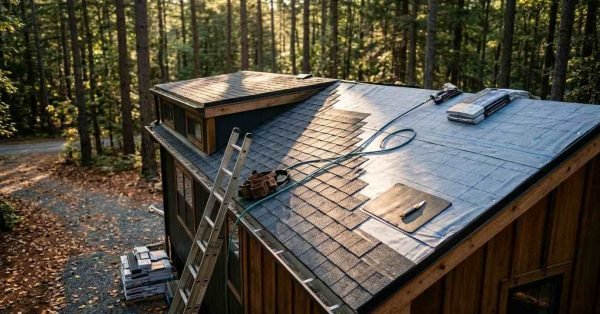
- Roof resealing or replacement – buyers inspect the roof first
- HVAC system servicing or replacement – a failing system kills offers
- Skirting and underbelly repair – signals the home has been cared for
- Deck or Florida room additions – adds livable square footage perception
- Updated kitchen fixtures and appliances – strong visual return
- Fresh exterior paint or siding refresh – curb appeal drives first impressions
High-Return Upgrades
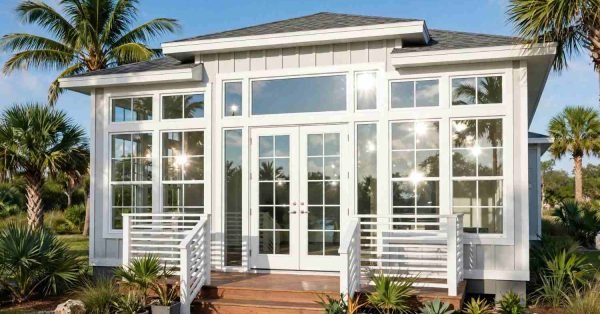
Florida rooms (enclosed porches) and expanded decks consistently deliver the strongest resale return in Florida parks because they expand the perceived living footprint of a small home.
Maintenance Routines That Protect Value
Annual roof inspection, HVAC servicing, caulk and seal checks, and underbelly monitoring protect the frame and systems that buyers actually inspect. Document everything; maintenance records close deals.
Upgrades to Avoid Before Selling
Over-personalized renovations, premium flooring in high-wear areas, and major layout changes rarely recover their cost. Spend on function and condition, not personal taste.
How to Price a Park Model Home for Sale
Pricing a park model for sale starts with pulling comparable sales from the last six months, adjusting for condition and inclusions, and setting a listing price 5–10% above target.
The lead-in: the five steps below produce an accurate asking price for a Florida park model.
- Pull 3–5 recent sales of similar units in the same park or nearby parks
- Adjust for age, square footage, upgrades, and lot type (owned vs. leased)
- Account for what’s included (furniture, appliances, golf cart, shed)
- Research current park waitlist status and demand indicators
- Set listing price 5–10% above the expected sale price to allow negotiation room
Comparing Recent Sales
Park-specific comps matter more than regional comps. A unit in a waitlist park is worth more than an identical unit three miles away in a half-empty park.
Adjusting for Condition and Inclusions
Furnished sales command premiums with retiree buyers who want turnkey. Golf carts, sheds, and premium appliances all add measurable value when documented in the listing.
Preparing a Park Model Home for Resale

Preparing a park model for resale means completing a pre-listing inspection, resolving deferred maintenance, cleaning thoroughly, and staging to highlight the unit’s livable square footage.
Buyers decide within the first five minutes whether they’re serious. Give them nothing to flag.
Pre-Listing Inspection and Repairs
A pre-listing inspection by a park model specialist costs 200–400 and surfaces issues before a buyer’s inspector does. Fix what you can, disclose what you can’t.
Staging and Curb Appeal
Clean the exterior, pressure wash the deck and skirting, add simple landscaping, and declutter the interior. Park model buyers respond strongly to units that feel spacious and ready to move into.
Where and How to Sell a Park Model Home
The best sales channel for a park model depends on urgency, pricing goals, and whether land is included, with private sale typically delivering the highest return and dealer trade-in the fastest exit.
Four main channels exist for selling a park model home, each with distinct trade-offs:
- Private sale – highest return, longest timeline, most owner effort
- Dealer trade-in – fastest, lowest return, used mainly when buying a replacement
- Park model broker – balance of speed and return, requires commission (typically 6–10%)
- Online marketplaces – broad reach, mixed buyer quality, requires vetting
Private Sale vs. Dealer Trade-In
Private sales recover full market value but demand time, marketing effort, and the ability to screen unqualified buyers. Dealer trade-ins recover 60–75% of market value in exchange for speed.
Online Marketplaces and Specialty Listings
Facebook Marketplace, park-model-specific listing sites, and park community bulletin boards all reach distinct buyer segments. The park bulletin board often produces the best buyers because they already know the community.
Working With a Park Model Broker
Specialized brokers understand park model titling, financing, and buyer qualification nuances that general real estate agents often miss. Their commission is usually earned on the first transaction they close for you.
Legal, Title, and Transfer Considerations
Legal transfer of a park model home requires clear title, resolution of any liens, completion of a bill of sale, and compliance with Florida DMV titling rules when the unit is classified as personal property.
Park model title transfer is the legal process of conveying ownership from seller to buyer, documented through a certificate of title, bill of sale, and (where applicable) land deed, filed with the appropriate state agency.
Titling as Personal vs. Real Property
Florida titles park models as personal property through the DHSMV unless the unit has been permanently affixed to owned land and formally converted to real property. The classification determines what paperwork, taxes, and financing options apply.
Core transfer requirements:
- Original title in seller’s name, free of liens
- Bill of sale with full identification details
- Odometer or ID verification (varies by county)
- Transfer fees and sales tax (where applicable)
Taxes, Fees, and Disclosure Requirements
Florida requires sales tax on park model transfers titled as personal property. Disclosure of known defects, prior damage, and park-specific rules protects you from post-sale disputes.
Financing and Buyer Qualification Challenges
Financing is the hidden bottleneck in park model resale most buyers can’t use a traditional mortgage, which shrinks the qualified buyer pool significantly.
Park models on leased land don’t qualify for conventional mortgages because they’re treated as personal property. That alone eliminates roughly 80% of typical home-buyer financing options.
Why Traditional Mortgages Rarely Apply
Lenders require the loan to be secured against real property. A park model on a leased lot isn’t real property under lender rules, so mortgage programs decline the application regardless of buyer credit.
Chattel Loans, RV Loans, and Cash Buyers
Chattel loans and RV loans fill the gap but carry higher rates (typically 8–12%) and shorter terms (10–20 years). Cash buyers are common in the retiree segment, close fastest, and often negotiate hardest on price.
Timing the Sale for Maximum Return

The best time to sell a park model home in Florida is October through March, when snowbird and retiree buyers are physically in the state and actively shopping for seasonal housing.
Timing can swing final sale price by 8–15% in Florida’s park model market because the buyer base is heavily seasonal.
Seasonal Buyer Patterns in Florida
Peak buyer activity runs from October to early April. Listing in September positions you ahead of the season. Listing in May starts an uphill climb with limited buyer traffic until fall.
Market Cycle Timing
Beyond seasonality, broader interest rate movements affect chattel and RV loan affordability, which ripples through buyer qualification. Watch rate trends and avoid listing during tightening cycles when possible.
Common Mistakes That Reduce Park Model Resale Value
The most costly park model resale mistakes are over-pricing at launch, hiding deferred maintenance, missing documentation, and selling in the wrong season.
The lead-in: the seven mistakes below are the ones I see repeatedly erode the final sale price in Florida park model transactions.
- Pricing above comparable sales and refusing to adjust early
- Skipping the pre-listing inspection
- Hiding or minimizing known defects
- Missing title, warranty, or maintenance documentation
- Listing during off-season without strategic reason
- Over-staging with personal taste rather than neutral appeal
- Refusing to negotiate within reasonable market ranges
Pricing and Negotiation Mistakes
Overpriced listings sit, and sitting listings signal problems to buyers. Price accurately on day one and adjust within two weeks if traffic is weak.
Documentation and Condition Mistakes
Missing title paperwork delays closings and sinks deals. Keep a dedicated folder with title, warranty transfers, inspection reports, maintenance receipts, and park documentation ready before listing.
Long-Term Value Strategies for Park Model Owners
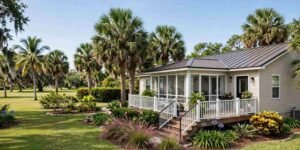
Long-term park model value protection comes from a few steady habits practiced over years, not from last-minute pre-sale fixes.
The owners I see sell well consistently share these behaviors:
- Buy a quality build from a reputable manufacturer at purchase
- Keep documented annual maintenance records
- Prioritize structural and system upkeep over cosmetic updates
- Monitor park reputation and lot ownership opportunities
- Plan the sale timeline 12–18 months before actually listing
Protective Ownership Habits
Treating a park model like a long-term asset, not a disposable one, produces measurably better resale outcomes. Document everything, protect the roof and systems, and review condition annually.
Choosing a Builder Who Supports Resale Value
The builder decision at purchase shapes resale value a decade later. Reputable builders with proven construction standards, transferable warranties, and strong secondary-market reputations produce units that hold value far better than lowest-cost alternatives.
Conclusion
Park model resale value sits at the intersection of construction quality, land arrangement, location, maintenance history, and sale-day execution; every factor compounds the others.
Owners who treat their park model as a long-term asset, maintain it well, and plan their sale strategically consistently recover far more value than those who don’t.
At Tiny Home Builders Florida, we build park models engineered for lasting value, backed by craftsmanship and construction standards that protect your investment for decades.
Frequently Asked Questions
Do park model homes hold their value?
Park model homes depreciate rather than appreciate, typically losing 15–25% in year one and 3–5% annually after. Quality construction, owned land, and a strong location slow the curve substantially.
How much do park model homes depreciate per year?
Park models depreciate roughly 3–5% per year after the initial first-year drop, flattening to 1–2% after year fifteen with consistent maintenance. Location and build quality drive the actual rate.
Can you sell a park model home with land?
Yes, and selling with owned land often doubles the final price. Bundling land converts the sale to real property, widening buyer financing options and attracting a larger qualified buyer pool.
Are park model homes harder to sell than RVs?
Park models sell more slowly than RVs but hold value better. Expect 60–180 days on the market in Florida versus 30–60 days for comparable RVs, with higher final prices offsetting the longer timeline.
What paperwork do I need to sell a park model home?
Required paperwork includes the original title, bill of sale, maintenance records, warranty transfer documents, and park transfer paperwork if the unit stays on a leased lot. Missing documents delay or kill sales.
Should I sell my park model privately or through a dealer?
Private sale recovers full market value but takes longer. Dealer trade-in recovers 60–75% quickly, best used when buying a replacement unit through the same dealer.
Does adding a Florida room increase resale value?
Yes, Florida rooms consistently return strong resale value in Florida parks because they expand perceived living space. Expect to recover 70–90% of the installation cost at sale.