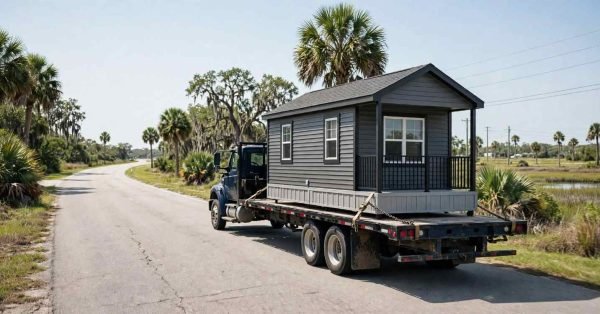
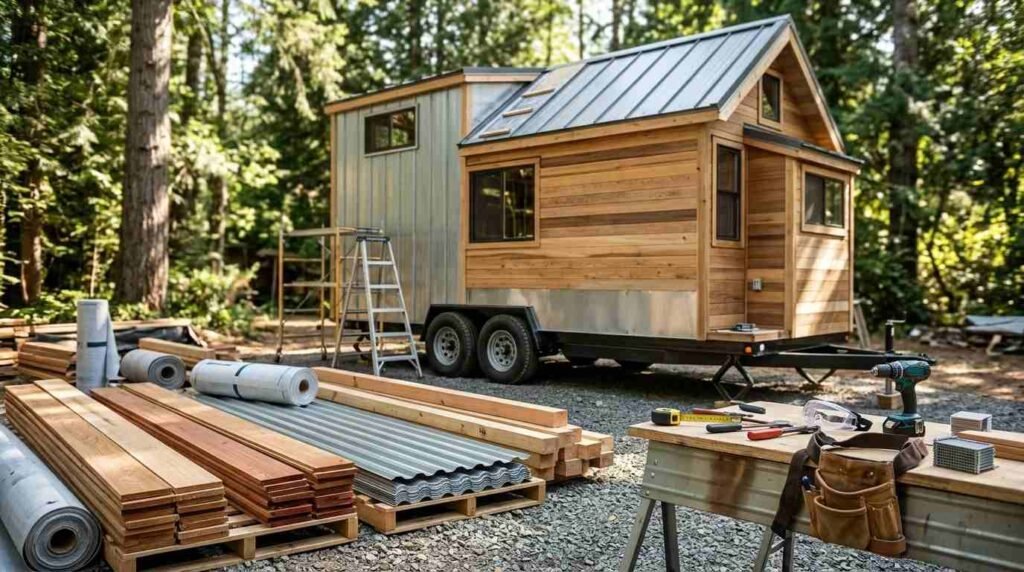
A tiny home on wheels is a compact, towable dwelling built on a trailer chassis that has to survive repeated vibration, road stress, and weather exposure most fixed-foundation homes never face. The best materials for a tiny home on wheels combine high strength-to-weight ratios, flex tolerance, and moisture resistance, which is why steel framing, metal siding, and closed-cell spray foam consistently outperform standard residential materials in Florida’s climate. I have walked through dozens of builds where the difference between a home that lasts fifteen years and one that lasts fifty came down to material choices made before the first wall went up.
Material selection matters more here than in traditional construction. A trailer flexes on every pothole, and Florida adds humidity, UV exposure, and hurricane-force wind to the equation.
This guide covers how to evaluate materials for weight and flex tolerance, how framing and chassis choices compare, what siding, roofing, and insulation hold up best in Florida’s climate, how costs stack up by material category, and the questions worth asking any builder before signing a contract.
What Makes a Material “Right” for a Tiny Home on Wheels
A material is right for a tiny home on wheels when it balances three things at once: it stays light enough to keep the trailer within legal towing weight, it flexes without cracking under road vibration, and it resists moisture without rotting or corroding. I look at these three factors before I look at anything else, because a beautiful finish material that fails one of them will cause problems within a year or two.
Weight-to-Strength Ratio
Every pound added to a tiny home reduces what the trailer can legally carry, so weight-to-strength ratio becomes the first filter for any material choice. Steel and aluminum framing systems deliver more structural strength per pound than standard dimensional lumber, which is why so many builders have shifted toward metal-based structural systems for wheeled builds.
Flex and Vibration Tolerance
A house on a foundation never moves, but a house on a trailer absorbs thousands of small shocks over its lifetime, and rigid materials that can’t flex tend to crack at the joints first. I’ve seen drywall seams split within the first year of towing simply because the material behind them had no give.
Moisture and Climate Resistance
Florida humidity finds every weak point in a tiny home’s envelope faster than almost any other climate in the country. Materials that resist mold, rot, and corrosion under sustained humidity are not optional here; they are the baseline requirement for a structure meant to last.
Framing Materials Wood vs. Steel vs. Aluminum

Framing is the skeleton of a tiny home on wheels, and the three dominant options are dimensional lumber, steel, and aluminum, each with a different balance of weight, cost, and durability. The framing choice affects almost every other material decision that follows it, from how siding attaches to how much insulation fits inside the wall cavity.
Dimensional Lumber Framing
Dimensional lumber is kiln-dried wood cut to standard sizes and used as the structural frame of a building. Wood framing costs less upfront and is easier for most contractors to work with, but it absorbs moisture more readily than metal and needs careful sealing in a humid climate like Florida’s.
Steel Chassis and Steel Stud Framing
Steel framing uses cold-formed steel studs in place of wood, offering higher strength-to-weight performance and natural resistance to rot, pests, and warping. The tradeoff is cost and the need for specialized fastening techniques, since standard wood screws don’t work the same way on steel studs.
Aluminum Framing Systems
Aluminum framing shows up most often in travel-trailer-style builds because it’s roughly a third lighter than steel while still resisting corrosion well in humid environments. It costs more than wood and requires specific welding or riveting expertise, which narrows the pool of builders who can install it correctly.
| Framing Material | Weight | Cost Range | Moisture Resistance | Best For |
| Dimensional Lumber | Heaviest | $ | Moderate (needs sealing) | Budget builds, traditional aesthetic |
| Steel Studs | Moderate | $$$ | High | Long-term durability, pest resistance |
| Aluminum | Lightest | $$$ | High | Weight-sensitive builds, coastal exposure |
Trailer Chassis Materials and Load Ratings
The trailer chassis is the steel foundation the entire home sits on, and its load rating determines how much structure, insulation, and finish material the build can safely support. I treat chassis selection as a structural engineering decision first and a cost decision second, because a chassis that’s undersized for the home built on top of it creates problems no amount of good framing can fix.
Steel Trailer Frames
Steel trailer frames dominate the tiny home industry because steel offers the load capacity needed to carry a full structure across thousands of highway miles. Galvanized steel resists corrosion significantly better than untreated steel, which matters even more in Florida given the salt air along coastal routes.
Axle and Suspension Material Considerations
Axle and suspension components need to match the gross vehicle weight rating the finished home will reach once fully built and furnished. Builders who underspec the axle setup to save money upfront often create tow-safety and long-term wear problems that surface only after the home is already loaded with appliances and furniture.
Exterior Siding Materials for Durability
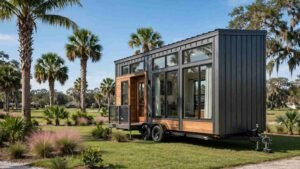
Exterior siding is the home’s first line of defense against sun, rain, and road debris, and in a wheeled tiny home it also has to tolerate vibration without cracking at the seams. I evaluate siding on three fronts: weight, impact resistance, and how it performs under sustained Florida humidity.
Metal Siding (Steel/Aluminum)
Metal siding resists impact, UV degradation, and moisture better than almost any other exterior material available for tiny homes. It costs more than wood or vinyl, but the maintenance savings over a ten-year span often make up the difference.
Wood and Engineered Wood Siding
Wood siding gives a tiny home a traditional, residential look that metal and vinyl struggle to replicate, but it requires more frequent sealing and inspection in humid climates. Engineered wood products reduce some of this risk through factory-applied treatments, though they still need more maintenance than metal.
Vinyl and Composite Siding
Vinyl siding costs less upfront and installs quickly, which makes it a common choice for budget-conscious builds, but it can become brittle under constant UV exposure and extreme heat. Composite siding blends wood fibers with polymers to improve durability over standard vinyl while staying lighter than metal.
Roofing Materials for Mobile Structures
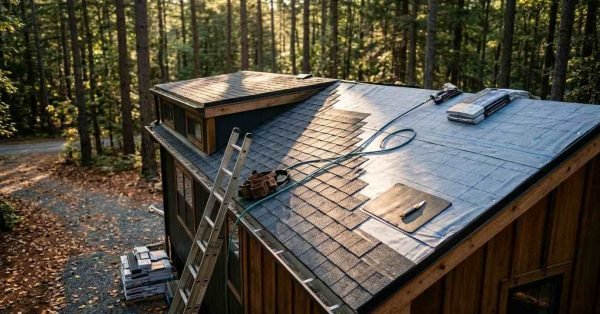
The most durable roofing material for a tiny home on wheels is standing-seam metal roofing, because it handles wind uplift, UV exposure, and towing vibration better than membrane alternatives. Roofing takes the most direct environmental abuse of any surface on the home, so I never treat it as a place to cut costs.
Metal Roofing
Standing-seam metal roofing interlocks panels together to create a continuous, watertight surface that resists wind uplift during storms. It typically outlasts membrane roofing by a decade or more and handles Florida’s intense UV exposure without the surface degradation that plagues some synthetic materials.
Rubber (EPDM) and Membrane Roofing
EPDM rubber roofing is a synthetic membrane material popular for its low upfront cost and flexibility across uneven or curved roof surfaces. It performs well for a shorter lifespan than metal and needs periodic inspection for seam separation, particularly after repeated towing trips.
Insulation Materials and Climate Performance

Closed-cell spray foam insulation performs best in Florida’s climate because it creates an air and moisture barrier in a single application, which matters more in a humid state than raw R-value numbers alone. Insulation choice affects comfort, energy cost, and mold risk all at once, which makes it one of the highest-impact material decisions in the entire build.
Spray Foam Insulation
Closed-cell spray foam expands to fill every gap in the wall cavity, sealing out humid air that would otherwise condense inside the wall and promote mold growth. It costs more than batt insulation but earns that cost back through lower energy bills and a near-zero risk of moisture intrusion.
Rigid Foam Board (XPS/Polyiso)
Rigid foam board insulation comes in pre-cut panels that installers fit between studs or layer across the exterior sheathing for added thermal performance. It resists moisture better than fiberglass batts but leaves small gaps at the seams that need careful taping to match spray foam’s air-sealing performance.
Mineral Wool and Fiberglass
Fiberglass batt insulation remains the least expensive option, but it loses much of its insulating value when it absorbs moisture, which makes it a riskier choice for Florida’s humidity. Mineral wool resists moisture and fire better than fiberglass while costing somewhat less than spray foam.
| Insulation Type | R-Value Range | Moisture Risk | Cost |
| Closed-Cell Spray Foam | R-6 to R-7 per inch | Very Low | $$$ |
| Rigid Foam Board | R-5 to R-6.5 per inch | Low | $$ |
| Mineral Wool | R-3 to R-3.7 per inch | Low-Moderate | $$ |
| Fiberglass Batt | R-3 to R-4 per inch | High | $ |
Interior Wall and Ceiling Materials
Interior finish materials carry less structural weight than framing or siding, but every pound still counts toward the trailer’s total load capacity. I lean toward lightweight paneling options whenever the build is already pushing close to its weight limit.
Plywood and Tongue-and-Groove Paneling
Tongue-and-groove paneling creates a finished wood look while distributing weight more evenly than solid drywall panels. Plywood paneling in thinner profiles cuts weight further while still providing a stable surface for fixtures and trim.
Drywall Alternatives for Weight Reduction
Standard drywall is heavy and prone to cracking under the vibration a tiny home experiences during towing, which pushes most builders toward lighter alternatives. Lightweight gypsum panels and flexible wall systems reduce overall weight while still resisting the cracking that plagues traditional drywall in mobile structures.
Flooring Materials Built for Movement and Moisture
Flooring in a tiny home on wheels needs to handle both the flex of a moving structure and the moisture risk of a humid climate, which rules out several materials common in fixed-foundation homes. I steer most clients toward flooring that locks together rather than floating freely, since a loose floating floor can shift during towing.
Engineered Hardwood
Engineered hardwood layers a hardwood veneer over a more stable plywood core, which reduces the expansion and contraction that solid hardwood experiences in humid conditions. It costs more than vinyl but gives a tiny home a warmer, more residential feel that many buyers specifically request.
Luxury Vinyl Plank (LVP)
Luxury vinyl plank resists water completely, flexes without cracking, and costs significantly less than engineered hardwood, making it the most common flooring choice in tiny homes on wheels. Its click-lock installation system also holds up better under towing vibration than floating or glued-down alternatives.
Fasteners, Adhesives, and Structural Connectors
Standard wood screws and nails loosen faster in a tiny home on wheels than in a fixed-foundation house because road vibration works fasteners out of their holes over time. I consider fastener selection one of the most overlooked material decisions in the entire build process.
Why Standard Fasteners Fail Under Road Vibration
Screws designed for stationary residential construction rely on friction that degrades under repeated vibration, which is exactly what a towed trailer generates on every trip. Builders who understand this shift toward structural adhesives, self-tapping metal screws, and mechanical connectors engineered specifically for mobile and marine applications, since those products are tested against sustained vibration rather than static load alone.
Weatherproofing and Vapor Barrier Materials
A vapor barrier is a material layer installed within a wall assembly that controls how moisture moves through the structure, and it plays an outsized role in Florida’s humid climate. Getting vapor barrier placement wrong can trap moisture inside the wall cavity, which causes rot and mold long before the surface materials show any visible sign of a problem.
Builders who work regularly in humid states typically pair a vapor barrier with careful flashing details around windows, doors, and roof penetrations, since those are the points where water intrusion most often begins.
Material Durability in Florida’s Climate (Heat, Humidity, Storms)
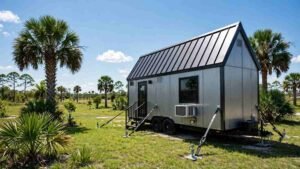
Florida’s combination of intense UV exposure, high humidity, and hurricane-force wind events places more stress on building materials than almost any other climate in the continental United States. Every material decision in this guide gets filtered through this reality before it earns a recommendation.
Hurricane and Wind-Load Considerations
Wind-load ratings measure how much force a material or assembly can withstand before failing, and Florida’s building code reflects some of the strictest wind-load standards in the country. Metal roofing, properly rated siding, and reinforced tie-downs all contribute to a tiny home’s ability to withstand tropical storm conditions.
UV and Heat Degradation
Constant UV exposure breaks down the molecular structure of weaker plastics and some vinyl products over several years, causing fading, brittleness, and eventual cracking. Materials with UV-stabilized formulations or naturally UV-resistant properties, like metal and treated wood, hold their performance far longer under Florida sun.
Cost Comparison by Material Category
The following table shows typical cost ranges and expected lifespans across the major material categories covered in this guide.
| Material Category | Cost Range (relative) | Expected Lifespan | Durability in Florida Climate |
| Wood Framing | $ | 20-30 years | Moderate (needs sealing) |
| Steel Framing | $$$ | 40-50+ years | High |
| Metal Siding | $$$ | 30-40 years | High |
| Vinyl Siding | $ | 15-20 years | Moderate |
| Metal Roofing | $$$ | 30-50 years | High |
| EPDM Roofing | $$ | 15-20 years | Moderate |
| Spray Foam Insulation | $$$ | Life of structure | High |
| Fiberglass Insulation | $ | 15-20 years | Low-Moderate |
Durability vs. Cost How to Prioritize by Use Case
A full-time tiny home on wheels justifies a different material budget than a weekend guest cottage that rarely travels, and I always start this conversation by asking how the home will actually be used. Someone towing the home several times a year needs vibration-tolerant materials far more than someone who parks it permanently on a single piece of land.
Full-time Florida residents should prioritize spray foam insulation, metal roofing, and steel framing even at higher upfront cost, since the climate exposure is constant rather than occasional. A rarely-moved guest unit can lean toward wood framing and vinyl siding without the same long-term risk, since it faces less vibration stress and can be resealed more easily over time.
Questions to Ask a Builder About Materials
A builder’s answers to material-specific questions reveal more about construction quality than almost anything else in the selection process. I encourage every prospective homeowner to ask these questions directly rather than relying on general marketing claims about quality.
Ask what framing material the builder defaults to and why, what insulation type they use and how they handle vapor barriers in humid climates, and what roofing and siding options come standard versus as upgrades. A builder who can explain these choices with specific reasoning, rather than vague reassurances, is generally one who understands construction quality at a deeper level.
Signs of Poor Material Choices in a Tiny Home Build
Certain warning signs point to weak material decisions before a buyer ever moves in. Soft spots in subflooring, visible seam separation in roofing, and drywall used in place of flexible paneling all suggest a builder prioritized cost over long-term durability.
Musty odors, visible mold near windows, or siding that already shows fading and warping within the first year are strong indicators that moisture-resistant materials were skipped somewhere in the build. I advise every prospective buyer to walk a finished unit in person and look specifically for these signs before signing any contract.
Conclusion
Material choice determines whether a tiny home on wheels lasts fifteen years or fifty, far more than floor plan or finish style ever will. Florida’s heat, humidity, and storm exposure make durable framing, siding, roofing, and insulation non-negotiable rather than optional upgrades. We build every home at Tiny Home Builders Florida around these exact standards, and we welcome the chance to show you how.
Frequently Asked Questions
What is the best siding material for a tiny home on wheels in Florida?
Metal siding performs best in Florida because it resists UV degradation, impact, and sustained humidity better than vinyl or untreated wood. It costs more upfront but requires significantly less maintenance over a ten-year period.
Is steel or wood framing better for a tiny home on wheels?
Steel framing offers better strength-to-weight performance and natural resistance to rot and pests compared to wood. Wood costs less initially but requires more careful sealing and maintenance in humid climates.
How much does it cost to build a durable tiny home on wheels?
Costs vary significantly based on material choices, ranging from budget-friendly wood-and-vinyl builds to premium steel-and-metal construction. Higher upfront material costs typically translate to lower maintenance expenses over the home’s lifespan.
What insulation works best in Florida’s heat and humidity?
Closed-cell spray foam insulation performs best because it creates an air and moisture seal in one application. This prevents the condensation risk that batt insulation faces in humid conditions.
How long do tiny home materials typically last?
Lifespan varies by material category, ranging from fifteen years for vinyl siding to over forty years for steel framing and metal roofing. Climate exposure and maintenance quality both affect actual lifespan.
Can standard building materials handle the vibration of towing?
Standard residential fasteners and rigid materials often fail under repeated towing vibration, which is why specialized screws and flexible paneling perform better. Materials engineered for mobile or marine use typically outlast standard residential products in wheeled structures.
What roofing material holds up best against Florida storms?
Standing-seam metal roofing handles wind uplift and UV exposure better than EPDM or membrane alternatives. It typically lasts ten to twenty years longer than rubber roofing in Florida’s climate.