Choosing a park model manufacturer is one of the most consequential decisions you will make before a single wall goes up. The manufacturer sets the ceiling on your home’s structural integrity, energy performance, compliance with Florida’s wind-zone codes, and resale value. Get it right, and you own a durable, well-crafted home built to last decades. Get it wrong, and you are managing warranty disputes, structural deficiencies, and costly retrofits from the moment of delivery.
Understanding what separates a strong manufacturer from a weak one takes more than reading a brochure.
This guide covers what park model homes are and who builds them, the certification and construction standards that define quality, a brand-by-brand overview and side-by-side comparison of the top manufacturers, pricing and Florida-specific cost factors, building code requirements, energy efficiency, customization options, delivery and setup, and how to verify a manufacturer’s reputation before you commit.
What Is a Park Model Home and Who Builds Them?
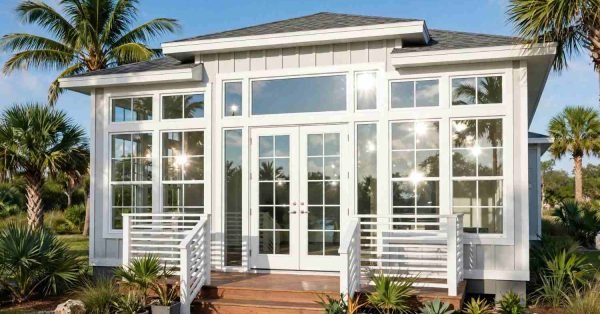
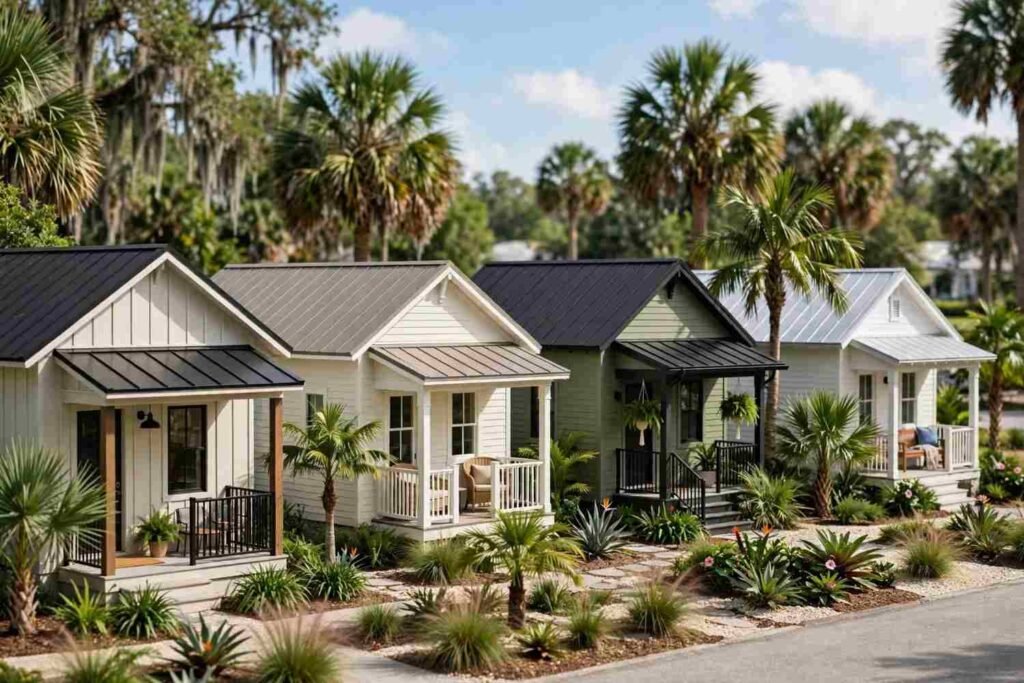
A park model home is a factory-built recreational dwelling constructed to ANSI A119.5 standards and limited to 400 square feet of living space, designed for seasonal or year-round use on a single site. Manufacturers produce them in climate-controlled facilities, then transport the finished unit to a park, resort, or private lot. The result is a compact, livable structure that bridges the gap between a recreational vehicle and a traditional manufactured home.
Park model manufacturers are a distinct segment of the factory-built housing industry. They operate under federal and state oversight, produce units in controlled environments, and are responsible for every structural and mechanical decision before the home leaves the factory floor. That factory-level accountability is fundamentally different from site-built construction, where decisions are made incrementally across months of field work.
How Park Models Differ from Traditional Manufactured Homes
A park model home and a manufactured home are both factory-built, but they are regulated under entirely different federal frameworks. Manufactured homes must comply with the HUD Code and can exceed 400 square feet. Park models fall under ANSI A119.5, which caps living area at 400 square feet and classifies the unit as a recreational vehicle for regulatory purposes. The distinction matters because it determines which building code applies at your site, what utility connections are permitted, and which financing products are available to you.
Why Choosing the Right Park Model Manufacturer Matters
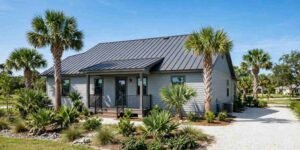
The manufacturer you select determines the quality of every system inside your home: framing, insulation, roofing, plumbing, electrical, and HVAC before your first inspection.
No two manufacturers produce the same unit at the same standard. Material grades, construction tolerances, quality-control processes, and certification compliance vary meaningfully across brands, and those differences compound over the life of the home. A unit built with inferior wall framing or under-specified insulation creates problems that are expensive to correct after delivery, particularly in Florida’s high-humidity, high-wind environment.
The Long-Term Cost of a Poor Manufacturing Choice
Choosing a manufacturer based on the lowest delivered price is the most common and most costly mistake buyers make. Structural remediation, warranty gaps, and non-compliant utility connections can easily push the true cost of a cheaper unit above that of a properly built alternative. In Florida specifically, a unit that does not meet the state’s wind-zone requirements cannot be legally sited in many communities, which means you may be buying a home you cannot legally place.
Key Criteria for Evaluating Park Model Manufacturers
Evaluating a park model manufacturer comes down to five measurable areas: certification compliance, construction quality, customization depth, warranty terms, and post-delivery support. I use all five as a screening framework before I recommend a manufacturer to any buyer, because each one addresses a distinct failure point that marketing materials almost never disclose.
The following criteria are not abstract preferences. They are the observable, documentable standards that separate manufacturers who build homes from manufacturers who build problems.
HUD Code and ANSI A119.5 Certification Compliance
ANSI A119.5 certification is the minimum threshold a park model manufacturer must meet for the unit to be legally classified and sited as a park model. Any manufacturer that cannot produce current third-party certification documentation for every model in its lineup is disqualified from serious consideration. Beyond ANSI, look for units that carry an electrical certification from a recognized testing laboratory. IAPMO R&T and Intertek are the two most common, confirming the electrical system meets NEC standards.
Construction Quality and Materials Standards
Construction quality in a park model home is visible in the framing specification, wall thickness, roof load rating, and the grade of materials used throughout. Steel-frame construction offers superior durability compared to wood framing in high-humidity environments. Exterior sheathing, roofing membrane, and window-frame materials should be specified clearly in the manufacturer’s build documentation, not described in general marketing language. Ask for the structural specification sheet, not the sales brochure.
Customization Options and Floor Plan Flexibility
The best manufacturers offer genuine floor-plan flexibility, not a choice between three pre-set layouts. I look for manufacturers who allow structural modifications (loft additions, slide-out expansions, partition changes) rather than cosmetic-only customization (flooring color, cabinet finish). Structural flexibility at the factory level is far less expensive than post-delivery modification, and it tells you something meaningful about how the manufacturer approaches quality: they are designing homes, not replicating boxes.
Warranty Coverage and Post-Delivery Support
A manufacturer’s warranty structure reveals how confident they are in their own construction. The industry baseline is a one-year structural warranty and a pass-through of appliance and component manufacturer warranties. Manufacturers who offer multi-year structural coverage, particularly on the roof, framing, and weatherproofing, are signaling a higher confidence level in their build quality. Equally important is whether the manufacturer has a serviceable dealer or service network in Florida, because a warranty is only as useful as the support infrastructure behind it.
Top Park Model Manufacturers: Brand Overview and Comparison
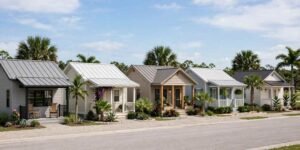
The following manufacturers represent the most widely distributed and most consistently reviewed brands available to Florida buyers. Each has a documented track record in the park model segment, active dealer networks, and verifiable certification records.
Recreation By Design (RBD)
Recreation By Design is one of the most recognized park model manufacturers in the country, producing units under the RBD and Lakeview Cottage brands. Their units are built in Indiana and are available through dealer networks across Florida. RBD is known for high-quality interior finishes, strong floor-plan variety, and consistent ANSI A119.5 compliance across their lineup. Their warranty structure is competitive, and their dealer support in Florida is among the most developed in the segment.
Kropf Tiny Living
Kropf Tiny Living, based in Michigan, produces park models and tiny homes with a strong emphasis on craftsman-style design and customization depth. They offer genuine structural flexibility, including loft configurations and slide-out additions that are engineered at the factory level. Kropf’s construction quality is consistently rated highly by independent inspectors, and their insulation specifications exceed the minimum standards for most of the Florida market.
Athens Park Homes
Athens Park Homes, produced by Legacy Housing in Texas, is one of the most broadly distributed park model brands in the southeastern United States. Athens units are priced competitively and are available through a dense Florida dealer network. Their product range spans from entry-level park models to more feature-rich configurations, making them accessible to a wider range of buyers. Construction quality is solid at the price point, though their customization options are more limited than RBD or Kropf.
Chariot Eagle
Chariot Eagle has manufactured park models in Florida since 1982, which gives them a meaningful advantage in understanding the state’s specific regulatory environment. Their units are built to Florida’s wind-zone requirements and carry documented compliance records for HUD and ANSI standards. The long operating history means their warranty and service infrastructure is well-established within the state. Chariot Eagle is particularly strong for buyers prioritizing hurricane resistance and local service proximity.
Cavco Park Models
Cavco Industries produces park models under several brand names and operates manufacturing facilities across the United States. Their scale gives buyers access to a broad product range and an established national dealer network. Cavco units are consistently certified and competitively priced, and the company’s financial stability as a publicly traded manufacturer adds a layer of long-term warranty confidence that smaller manufacturers cannot always offer.
Park Model Manufacturer Comparison: Side-by-Side Table
The table below compares the five manufacturers across the criteria that matter most to Florida buyers. Use it as a starting point, not a final answer; individual unit specifications vary within each brand’s lineup, and dealer-level service quality can differ significantly from one Florida market to another.
| Manufacturer | ANSI Certified | Wind-Zone Compliance | Customization Depth | Florida Dealer Network | Warranty Baseline | Price Range |
| Recreation By Design | ✅ Yes | Standard | High | Strong | 1-year structural | $65,000–$120,000+ |
| Kropf Tiny Living | ✅ Yes | Standard | Very High | Moderate | 1-year structural | $70,000–$130,000+ |
| Athens Park Homes | ✅ Yes | Standard | Moderate | Very Strong | 1-year structural | $50,000–$95,000+ |
| Chariot Eagle | ✅ Yes | Florida-Specific | Moderate | Strong (FL-based) | 1-year structural | $55,000–$100,000+ |
| Cavco Park Models | ✅ Yes | Standard | Moderate | National/Strong | 1-year structural | $55,000–$110,000+ |
How to Read a Manufacturer Comparison Chart
A comparison chart compresses complex quality decisions into simplified data points, and that compression creates risk if you read it as a ranking rather than a reference. “Strong” dealer network means more dealers are operating in Florida; it does not mean every dealer provides the same service quality. Price ranges reflect base configurations; a fully customized unit from a lower-priced brand can easily exceed the base price of a premium brand. Use the chart to eliminate clearly mismatched manufacturers, then go deeper on the two or three that survive that initial screen.
Understanding Park Model Pricing by Manufacturer
Park model prices in Florida typically range from $50,000 to $130,000+ for a base-to-fully-customized unit, depending on manufacturer, floor plan, specification level, and delivery distance. That range is wide enough to be almost meaningless without context, which is why understanding what drives price variation is more useful than shopping by sticker price alone.
The delivered cost of a park model includes the base unit, customization upgrades, transportation, site preparation, utility connections, and, depending on your site, skirting, decking, and permitting fees. In Florida, those add-on costs frequently add 15–25% to the base unit price, which means a $70,000 base unit can realistically land at $85,000–$90,000 fully installed.
What Drives Price Differences Between Brands
The three primary drivers of price variation between manufacturers are construction specification, customization complexity, and distribution overhead. A manufacturer building with higher-grade framing lumber, thicker insulation batts, and commercial-grade roofing membrane will charge more than one using minimum-spec materials, and the difference is structural; it shows up in the home’s performance over time, not in its appearance on delivery day. Customization adds cost at every decision point: loft structures, slide-out additions, upgraded appliances, and premium exterior finishes each carry a line-item premium.
Florida-Specific Pricing Considerations
Florida buyers carry additional cost exposures that buyers in other states do not. Wind-zone upgrade packages required for siting in many Florida counties add $3,000–$8,000 to the base unit cost. Humidity-resistant material upgrades (pressure-treated framing, vapor barrier specifications, mold-resistant sheathing) are not always standard on units built for northern markets and may need to be specified as upgrades. Delivery distance from the manufacturer’s facility also matters: units shipped from Indiana or Michigan carry significantly higher transport costs than a Chariot Eagle unit built in Florida.
Construction Standards and Building Codes for Park Models in Florida
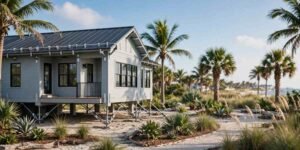
Park model construction in Florida is governed by a layered compliance framework: the ANSI A119.5 federal standard, Florida’s state-adopted building codes, and county-level wind-zone requirements that vary across the state. Understanding all three layers is essential before you select a manufacturer, because a unit that meets federal ANSI standards may not automatically satisfy Florida’s stricter local requirements.
The Florida Building Code adopts and, in some cases, exceeds the national baseline for manufactured and factory-built structures. Counties in South Florida, the Florida Keys, and coastal areas operate under more demanding wind-load requirements than interior counties, and the specific wind-zone designation of your site determines which structural upgrades are required.
Florida Wind Zone and Hurricane Resistance Requirements
Florida is divided into three wind zones under the HUD Manufactured Home Construction and Safety Standards, with Zone III the highest, covering most coastal and South Florida counties. A park model manufacturer who produces units to Zone III standards uses reinforced roof-to-wall connections, heavier anchor systems, and higher-rated sheathing than a manufacturer building to the national minimum. Chariot Eagle is the only manufacturer among the five reviewed here that builds natively to Florida wind-zone specifications as a standard production practice rather than an upgrade option.
HUD vs. Florida State Compliance: What Buyers Must Know
HUD Code compliance and Florida state compliance are not the same thing, and the gap between them matters. HUD regulates the construction of the manufactured home itself. Florida’s Department of Highway Safety and Motor Vehicles regulates park models as recreational vehicles, and the Florida Building Code governs how they are sited, connected to utilities, and anchored. A manufacturer with HUD certification has cleared the federal production standard. Florida siting compliance is a separate layer that your installer, dealer, and local building department enforce independently of the manufacturer.
Energy Efficiency and Insulation in Park Model Homes
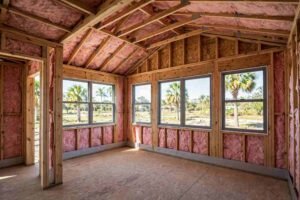
Energy efficiency in a park model home is determined primarily by insulation R-values, window performance ratings, and HVAC system sizing three variables that manufacturers control entirely at the factory level and that affect your utility costs for the life of the home.
In Florida’s climate, the most consequential specification is the insulation performance of the wall and roof assembly. A unit with R-11 wall insulation and R-19 roof insulation will perform very differently from one meeting Energy Star specifications of R-13 walls and R-30 roof, particularly in the summer cooling months that dominate Florida’s annual energy load. I always ask manufacturers for the full insulation specification sheet rather than accepting a general “energy efficient” claim.
What to Ask Manufacturers About Energy Performance
Ask every manufacturer for three specific numbers: the wall R-value, the roof R-value, and the window U-factor. Then ask whether the HVAC system is sized to a Manual J load calculation for Florida’s climate zone or to a generic national specification. A manufacturer who can answer all four questions with documented specifications is building to a measurable standard. One who responds with marketing language about “superior energy performance” without supporting data is not.
Customization and Design Options by Manufacturer
Customization depth varies significantly across manufacturers, and understanding what you can and cannot change at the factory level is essential before you sign a purchase agreement. Factory-level customization is structurally integrated and priced as part of the build. Post-delivery modification is retrofit work, and it costs significantly more.
The most meaningful customization categories are floor-plan configuration (partition placement, loft inclusion, slide-out addition), exterior finish (siding material, roofing style, window placement), and interior specification (cabinetry grade, flooring material, appliance package). Among the manufacturers reviewed here, Kropf offers the deepest structural customization. RBD offers the broadest interior finish selection. Athens and Cavco offer the most standardized builds with limited structural variation.
Loft Designs, Slide-Outs, and Exterior Finish Choices
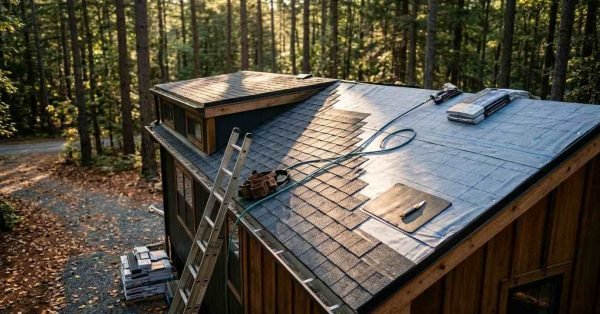
Loft additions are the single most requested structural customization in the park model segment, and not every manufacturer engineers them with equal structural integrity. A properly engineered loft uses a dedicated stair or ladder system with load-bearing framing integrated into the wall structure, not a bolt-on addition. Slide-outs expand the living area beyond the 400-square-foot base footprint and require sealed mechanical systems that must be maintained annually. Exterior finish choices board-and-batten, vinyl lap, cedar shake affect both aesthetics and long-term maintenance cost, and the best manufacturers allow buyers to specify these at the same time as the structural layout.
Delivery, Setup, and Site Preparation: What Each Manufacturer Covers
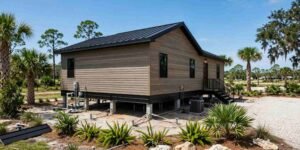
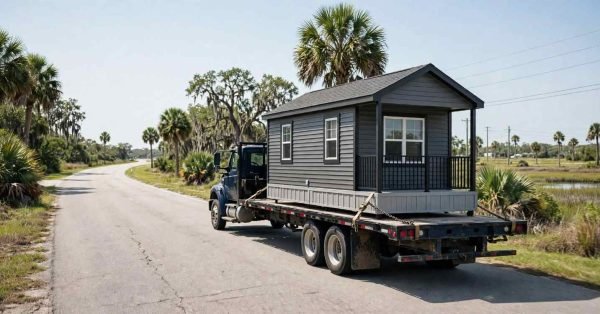
Delivery and setup responsibility varies by manufacturer and dealer, and the boundaries of that responsibility are frequently misunderstood by first-time buyers. Most manufacturers are responsible for transporting the unit from the factory to the delivery site. Site preparation, grading, foundation pad, and utility stub-outs are almost always the buyer’s responsibility, unless a turnkey dealer package explicitly includes it.
The setup process for a park model home involves unloading and positioning the unit, connecting it to utility hookups (water, sewer, electric), anchoring it to the site’s tie-down system, and completing any finish work (skirting, decking, steps) that was not factory-installed. In Florida, the anchoring system must meet the wind-zone requirements of the specific county, which means your dealer or installer needs documented experience with Florida-specific anchor specifications.
Which Manufacturers Offer Florida Delivery and Installation
Chariot Eagle, as a Florida-based manufacturer, offers the most straightforward park model delivery in Florida, with an established network of Florida-licensed installers and direct experience with county-level permitting processes. Athens Park Homes also maintains a strong Florida delivery infrastructure through its Legacy Housing dealer network. RBD and Cavco deliver to Florida through regional dealers, which means delivery and installation quality depends partly on the specific dealer’s capabilities. Kropf, as a smaller Michigan-based manufacturer, has a more limited Florida delivery footprint and may require buyer coordination with a third-party installer.
Dealer Networks vs. Factory-Direct: Which Buying Path Is Better?
Most park model manufacturers sell through independent dealer networks rather than direct to the public. A small number offer factory-direct purchasing for buyers willing to take on more of the coordination responsibility. Each path has genuine advantages, and the right choice depends on your experience level, site location, and how much support you need through the buying process.
| Buying Path | Advantages | Disadvantages |
| Dealer Network | Local support, site coordination, permitting experience | Dealer markup adds cost; quality varies by dealer |
| Factory-Direct | Lower base price, direct manufacturer communication | Buyer coordinates delivery, setup, and permitting independently |
Questions to Ask a Park Model Dealer Before You Buy
Ask the dealer four questions before you proceed: How many park models have you installed in this county? Do you carry Florida contractor licensing for manufactured structure installation? What is your process for handling warranty claims after delivery? Can you provide references from buyers whose units were installed in the past 12 months? A dealer who answers all four with specifics and documentation is operating professionally. One who deflects or answers in generalities is a risk.
How to Verify a Park Model Manufacturer’s Reputation
A manufacturer’s reputation is documented in places that marketing materials will never reference: complaint records, warranty dispute histories, third-party inspection reports, and buyer community forums. Verifying that documentation before you buy is not optional; it is the single most protective step you can take.
The verification process I use covers five sources: the Better Business Bureau complaint record for the manufacturer and any parent company, the MHVillage and Park Advisor buyer forums where park model owners discuss real post-purchase experiences, the manufacturer’s certification body (IAPMO, Intertek, or similar) to confirm current certification status, your state’s consumer protection division for formal complaint history, and direct conversations with two or three recent buyers whose contact information the dealer or manufacturer should be willing to provide.
Red Flags to Watch for When Evaluating Manufacturers
The following patterns consistently signal a manufacturer worth avoiding: inability or unwillingness to provide current third-party certification documentation, warranty terms that exclude structural components or contain broad carve-outs for climate-related damage, no documented Florida dealer or service presence, complaint patterns related to water intrusion or structural movement in the first year, and a sales process that discourages independent inspection before delivery. Any one of these is worth pausing for. More than one is a clear exit signal.
Conclusion
The manufacturer you choose sets the quality ceiling for every system in your park model home, from structural framing to long-term energy performance and Florida code compliance.
Understanding the certification landscape, construction standards, and brand-level differences gives you the framework to evaluate manufacturers on measurable criteria rather than marketing claims.
When you are ready to move forward with confidence, the team at Tiny Home Builders Florida is here to guide you through every step of the process.
Frequently Asked Questions
What is the difference between a park model home and a tiny home?
A park model home is a factory-built dwelling regulated under ANSI A119.5 with a maximum of 400 square feet of living space. A tiny home is a broader category that includes both factory-built and site-built structures with no universal size or code standard governing all types.
How long do park model homes typically last?
A well-built park model home constructed with quality materials and properly maintained can last 30 to 50 years. Longevity depends heavily on the manufacturer’s construction specifications, the quality of the original installation, and the buyer’s maintenance practices over time.
Can I finance a park model home in Florida?
Financing is available for park models in Florida, but options are more limited than for traditional homes. Most buyers use personal property loans, RV financing products, or manufacturer-affiliated lending programs, since park models are classified as recreational vehicles rather than real estate.
Do park model homes appreciate in value?
Park model homes generally do not appreciate the way site-built real estate does. Value is influenced primarily by the unit’s condition, brand reputation, and the quality of the community or park it is located in, rather than land appreciation.
What certifications should I require from a park model manufacturer?
Require current ANSI A119.5 certification for the specific model you are purchasing, an electrical certification from a recognized testing laboratory (IAPMO R&T or Intertek), and documentation of compliance with Florida’s applicable wind-zone standards for the county where the unit will be sited.
How much does site preparation cost for a park model in Florida?
Site preparation costs in Florida typically range from $3,000 to $15,000 depending on grading requirements, the type of foundation pad, utility stub-out distances, and county permitting fees. Coastal and flood-zone sites carry significantly higher preparation costs due to elevation and anchoring requirements.
Can I place a park model on my own private land in Florida?
Placement on private land depends on the county’s zoning ordinances and whether the parcel allows recreational vehicle or factory-built dwelling use. Some Florida counties permit it with proper permitting; others restrict park models to designated RV parks or manufactured home communities. Verify with your county’s zoning department before purchasing a unit.