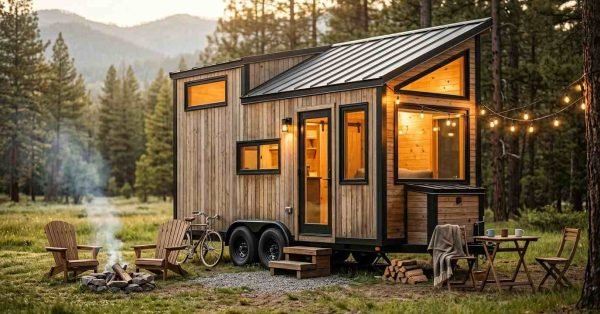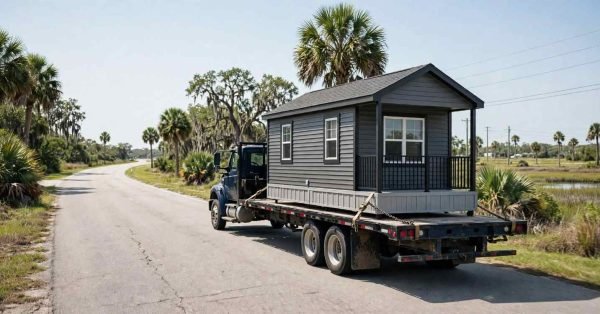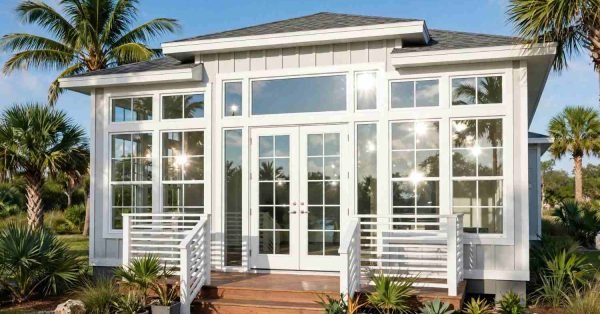

I’ve walked enough homeowners through the permitting maze to know this: a park model home is a factory-built structure under 400 square feet designed for recreational or seasonal use, and in Florida it sits at the intersection of RV law, manufactured housing law, and local zoning code, which creates permitting confusion that catches most buyers off guard. Get the classification wrong at the start, and the permit office will send you back to square one.
This matters right now because Florida’s park model market is growing faster than most county permitting departments can keep up with. We’ve seen buyers lose months and thousands of dollars because they assumed a dealer’s paperwork was the same thing as a county permit.
This guide covers how park models are classified and certified under ANSI and RVIA standards, what Florida state law and county zoning actually require, the specific permits you’ll need before placement, and how to avoid the rejection reasons and delays that trip up most buyers.
What Is a Park Model Home?
A park model home is a transportable structure built on a single chassis, no larger than 400 square feet in setup area, intended primarily for seasonal or recreational occupancy rather than full-time residential use. I explain this distinction constantly because it’s the single most misunderstood part of the entire permitting process. The chassis and size limit are what separate it legally from both a manufactured home and a stick-built house.
Park Model vs. Traditional RV Classification
A traditional RV is built for frequent travel and licensed through the DMV like a vehicle, while a park model is built for long-term placement and rarely moves once sited. I’ve seen county officials treat these two categories very differently at the permit counter, even though both can look similar from the outside.
Park Model vs. Manufactured Home Classification
Manufactured homes fall under the federal HUD Code, which governs structures intended as permanent single-family residences, and park models were deliberately carved out of that code because of their smaller size and recreational use intent. We walk clients through this difference because it determines which certification path their home needs to follow.
Why Park Model Homes Face Unique Regulatory Challenges
Park model homes exist in a regulatory gray zone because no single federal code governs them the way HUD governs manufactured housing. I see this cause real problems when a buyer assumes one agency’s approval automatically satisfies another’s. A unit can pass RVIA certification and still get rejected by a county building department that treats it as a structure requiring a separate review.
This gap is exactly why Florida counties interpret park model rules so differently from one jurisdiction to the next.
The ANSI A119.5 Certification Standard Explained
ANSI A119.5 is the national construction and safety standard developed by the American National Standards Institute specifically for park model recreational vehicles, covering structural design, electrical systems, and plumbing. I check for this certification label before I recommend any unit to a client, because it’s the baseline proof that the home was built to a recognized safety standard.
What ANSI A119.5 Covers
The standard addresses wall construction, roof load capacity, electrical wiring methods, LP-gas systems, and plumbing design specific to park model dimensions and use. We’ve found inspectors rely heavily on this certification label during the approval process because it saves them from evaluating every structural detail individually.
How Certification Differs from HUD Code
HUD Code governs manufactured homes meant for permanent residency and carries stricter requirements around wind resistance and energy performance, while ANSI A119.5 was written for a smaller, recreational-use structure. I’ve had buyers confuse the two standards and assume HUD compliance when their unit only carries ANSI certification, which creates problems the moment a county permit office asks for the wrong paperwork.
RVIA Certification and What It Means for Placement

RVIA certification means the Recreational Vehicle Industry Association has inspected and approved the unit’s compliance with ANSI A119.5 standards, and it’s issued as a physical seal attached to the home. I tell every client to look for this seal before closing on a unit, because its absence is one of the fastest ways to get a permit application rejected outright. Some counties will not even schedule an inspection without it on file.
Florida Statutes Governing Park Model Homes
Florida Statute 320.01 defines a park trailer as a unit built on a single chassis with a gross trailer area not exceeding 400 square feet, designed for seasonal or temporary living quarters. This statute is the legal backbone for how the state treats these homes, and I reference it constantly when clients ask why their park model gets titled differently than a house.
Florida Statute 320.01 Definition
The statute sets the size and chassis requirements that determine whether a unit legally qualifies as a park model rather than a manufactured home or an RV. We use this definition as the starting point for every Florida placement project because county officials check against it directly.
DMV Titling Requirements for Park Models
Florida requires park model homes to be titled through the Department of Highway Safety and Motor Vehicles, similar to an RV, rather than recorded as real property the way a stick-built home would be. I’ve seen this titling step get skipped by buyers who didn’t realize it was separate from the county building permit process entirely.
County-by-County Zoning Variability Across Florida
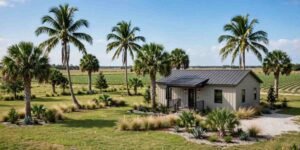
Zoning authority over park model homes rests almost entirely with individual counties rather than the state, which means a placement that’s approved in one jurisdiction can be denied outright in the next. I’ve worked with clients in neighboring counties who faced completely different zoning outcomes for the identical unit. Some counties classify park models as accessory structures, others as temporary dwellings, and a few prohibit them from residential lots entirely outside of designated RV zones.
Permits Required Before Placing a Park Model Home
Placing a park model home in Florida typically requires four to six separate permits depending on the county and site conditions. I walk every client through this sequence before they commit to a property, because missing even one permit can halt a placement after the home has already arrived on site.
- Zoning compliance verification confirming the parcel allows park model placement
- Site plan or setback approval from the county planning department
- Foundation or tie-down permit covering anchoring and wind resistance
- Utility connection permits for water, sewer, and electric
- Final placement and occupancy inspection by the local building department
Site Preparation and Foundation Permit Requirements
Florida’s foundation requirements for park model homes focus heavily on anchoring systems designed to resist hurricane-force wind uplift, which the state takes seriously given its storm exposure. I’ve seen inspectors reject foundation plans that used standard tie-down spacing meant for inland, lower-wind regions. The permit office typically requires engineered anchoring plans stamped by a Florida-licensed engineer before foundation work begins.
Utility Connection Permits (Water, Sewer, Electric)
Yes, park model homes generally need separate utility permits distinct from the structural placement permit, covering water, sewer or septic, and electrical hookups individually. I remind clients that these permits often come from different county departments entirely, so they can’t assume one application covers all three utilities. Septic permits in particular can add weeks to a timeline if the property doesn’t already have an approved system.
Flood Zone and Wind Load Requirements in Florida
Florida’s flood zone designations and wind load requirements directly determine how a park model home must be elevated and anchored before a county will approve placement.
| Flood Zone | Elevation Requirement | Typical Wind Load Standard |
| Zone X (minimal risk) | Standard grade-level placement | 140-150 mph design |
| Zone AE | Elevated above base flood elevation | 150-170 mph design |
| Zone VE (coastal high hazard) | Pile or elevated foundation required | 170-180+ mph design |
I pull the FEMA flood map for every parcel before a client puts down a deposit, because a Zone VE designation can add significant foundation cost that changes the entire budget.
HOA, Deed Restrictions, and Community Approval Issues
Homeowners associations and deed restrictions can block park model placement even when a county would otherwise approve it, since private covenants operate independently of public zoning law. I’ve seen this catch buyers who checked county zoning carefully but never pulled their property’s recorded deed restrictions. Some HOAs prohibit any structure under a certain square footage, which disqualifies most park models regardless of certification status.
RV Park and Land-Lease Community Placement Rules
Placing a park model inside a licensed RV park or land-lease community typically follows a simpler approval path, since these communities are already zoned for this exact use. We still verify the specific community’s internal rules, because individual parks often add their own requirements around skirting, setbacks between units, and maximum unit age.
Common Permit Rejection Reasons and How to Avoid Them
Missing ANSI or RVIA certification documentation is the single most common reason I’ve seen park model permits get rejected at the county level. Incomplete engineered foundation plans and mismatched zoning classifications round out the top three causes. Submitting a complete documentation package upfront, including the certification seal photo and engineer-stamped anchoring plan, prevents most of these denials before they happen.
Working With Inspectors – What They Check and When

County inspectors verify anchoring compliance, utility connections, and certification labeling at distinct stages rather than in a single visit. I schedule the foundation inspection before the home arrives on site, then a separate final inspection after utilities are connected and the unit is fully set. Inspectors commonly check the ANSI or RVIA seal first, since its absence can stop the entire inspection before anything else is reviewed.
Timeline and Cost Expectations for Permitting
Park model permitting in Florida typically takes four to twelve weeks from initial application to final approval, depending on county workload and site complexity. Coastal counties with stricter flood and wind review tend toward the longer end of that range. I budget clients for permit fees between $500 and $2,500 depending on the jurisdiction and required inspections.
Questions to Ask Your Builder About Certification Compliance
Asking the right questions before signing with a builder prevents most of the permitting problems I see later in the process.
- Does this unit carry a current ANSI A119.5 or RVIA certification seal, and can you provide documentation?
- Has this builder completed placements in this specific county before?
- Who handles the engineered foundation and anchoring plan, and is that cost included?
- What utility permits does the builder coordinate versus what falls on the buyer?
- Can the builder provide a realistic permitting timeline based on local department workload?
Conclusion
We’ve covered how classification, ANSI and RVIA certification, and Florida’s layered statutes and county zoning rules all intersect to determine whether a park model home gets approved.
Permitting requirements will keep evolving as Florida counties adapt to growing demand for these homes, so working with an experienced team matters more than ever.
We build park model homes right from day one, and Tiny Home Builders Florida handles certification and permitting coordination so you don’t navigate it alone.
Frequently Asked Questions
Do park model homes need a building permit in Florida?
Yes, Florida counties require permits for park model placement, including zoning approval, foundation permits, and utility connections. Requirements vary by county, so confirming local rules before purchase is essential.
What is the difference between ANSI and RVIA certification?
ANSI A119.5 is the construction safety standard itself, while RVIA certification confirms a third-party inspection verified the unit meets that standard. Both are typically required for permit approval in Florida.
Can a park model home be permanently placed on private land in Florida?
It depends entirely on county zoning and any HOA deed restrictions on the property. Some counties allow permanent placement on residential lots while others restrict park models to designated RV communities.
How long does it take to get a park model home permitted in Florida?
Permitting generally takes four to twelve weeks depending on the county and site conditions. Coastal areas with stricter flood and wind review often take longer than inland counties.
Do park model homes need to be titled like an RV?
Yes, Florida titles park model homes through the DMV similar to recreational vehicles rather than recording them as real property. This differs from how manufactured and site-built homes are legally documented.
What happens if a park model home isn’t properly certified?
An uncertified unit will likely fail county inspection and cannot legally be placed or connected to utilities. Buyers risk costly retrofits or rejection of the entire placement application.
Are park model homes allowed in all Florida counties?
No, zoning rules vary significantly by county, and some jurisdictions restrict park models to RV parks or specific zoning districts only. Checking local zoning before purchasing land is critical.