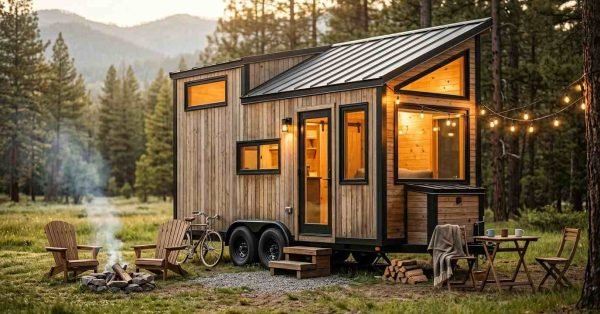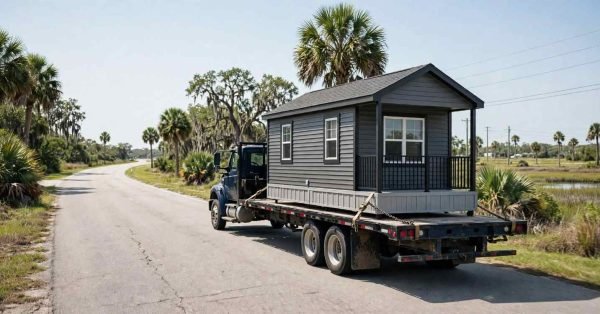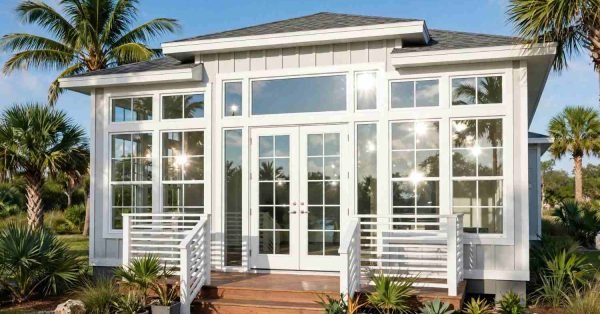
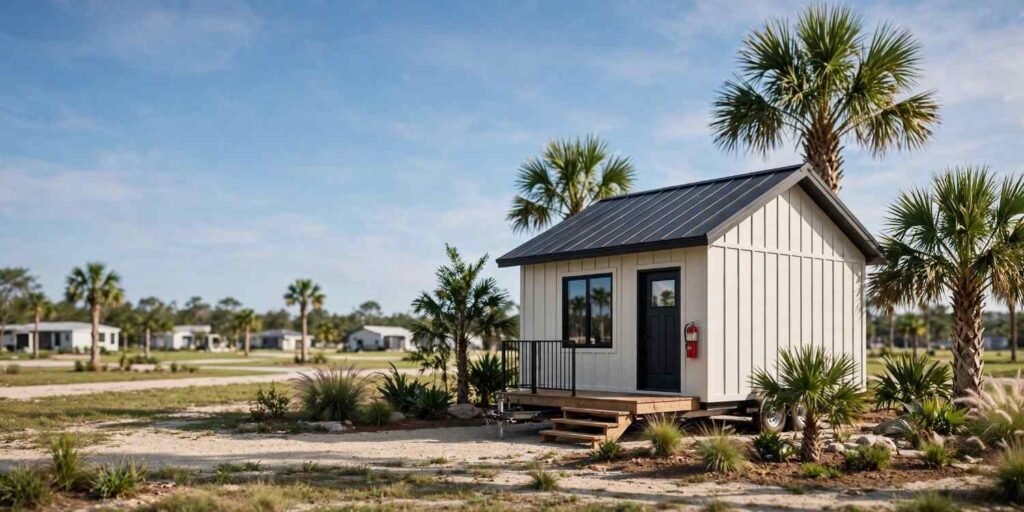
Park model homes follow a different rulebook than site-built houses, and fire safety sits at the center of that rulebook. A park model fire code is the set of construction, material, and safety standards, primarily ANSI A119.5, that governs smoke detection, egress, fire-resistant materials, and separation distances for homes built on a single chassis under 400 square feet. I’ve walked buyers through this distinction more times than I can count, and the confusion almost always starts in the same place.
Florida adds its own layer of amendments on top of the national standard, and those layers change based on wind zone, flood zone, and local jurisdiction. Getting this wrong costs owners real money and real risk.
This guide covers which codes actually apply to a park model in Florida, the fire-resistant materials and detection systems required inside the home, how separation distances and propane rules work in RV communities, and what permits and inspections stand between a delivered home and a legally occupied one.
What Is a Park Model Home, and Why Do Fire Codes Treat It Differently?
A park model home is built to the ANSI A119.5 standard rather than the HUD Code that governs manufactured housing, which means it falls under recreational vehicle classification even though it functions as a dwelling. That single classification decision determines almost everything else in this guide: which inspector signs off on it, which fire code applies, and which county department has jurisdiction.
Park Model vs. Manufactured Home Classification (ANSI A119.5 vs. HUD Code)
I see this mix-up constantly, and it’s an easy one to make. A manufactured home built to the HUD Code follows a federal fire and construction standard enforced nationwide, while a park model under 400 square feet on a single chassis follows the voluntary ANSI A119.5 standard set by the Park Model Manufacturers Association.
The practical difference shows up fast: manufactured homes get a red HUD certification label, and park models get an ANSI compliance label instead. Buyers who assume the two labels mean the same level of fire protection are wrong, and that assumption has caused real compliance headaches for people I’ve worked with.
Why Classification Determines Which Fire Code Applies
Here’s the part that trips people up every time. Because a park model is technically classified as a recreational vehicle, the state treats its placement and occupancy differently than a permanent structure, even when it sits on a foundation year-round.
Florida’s Department of Highway Safety and Motor Vehicles handles the titling side, while the Department of Business and Professional Regulation oversees park and campground placement rules. That split in oversight is exactly why fire code questions for park models don’t have one single answer: it depends on where the unit sits and how it’s being used.
Which Fire Safety Codes and Standards Apply to Park Models in Florida?
Three layers of code apply to a park model sitting in Florida: the ANSI A119.5 manufacturing standard, the Florida Building Code’s local amendments, and whatever additional rules the specific county or municipality enforces. A unit manufactured correctly under ANSI can still fail a local fire inspection if county-level amendments haven’t been addressed.
ANSI A119.5 Fire and Safety Requirements
ANSI A119.5 sets the baseline: smoke detector placement, minimum egress window sizes, fire-resistant wall assembly ratings, and LP-gas system safety. This standard gets updated periodically, and manufacturers building to an older edition can produce units that technically meet code at manufacture but lag behind current best practice.
I always tell people to ask for the specific ANSI edition year on the compliance label, not just confirmation that “it’s ANSI certified.” The edition year tells you which set of fire safety rules the home was actually built to.
Florida-Specific Amendments and Local Authority Having Jurisdiction (AHJ) Rules
Florida layers its own requirements on top of ANSI, largely driven by hurricane risk and population density in manufactured housing communities. The Authority Having Jurisdiction, usually the county building or fire marshal’s office, has the final say on local fire separation and inspection requirements.
This is where the same park model can face different compliance hurdles in two neighboring counties. I’ve seen owners get caught off guard moving a unit from one county to another, assuming compliance would transfer automatically. It doesn’t always.
What Fire-Resistant Materials Are Required in Park Model Construction?

ANSI A119.5 requires specific fire-resistance ratings for wall, ceiling, and floor assemblies based on their proximity to cooking equipment, electrical panels, and heating sources. Interior finish materials near the kitchen and any solid-fuel or LP-gas appliance must meet a flame-spread rating that limits how quickly fire travels across the surface.
Gypsum board remains the standard fire-rated wall material in most park models, particularly around the kitchen and any enclosed furnace space. Owners comparing builders should ask directly what fire-rated assembly is used behind the stove and water heater, since cutting corners here is one of the most common shortcuts in budget-built units.
How Many Smoke Detectors and Where Must They Be Installed?
ANSI A119.5 requires at minimum one smoke detector near each sleeping area and one on every level of the home, with interconnection required when the unit has multiple sleeping zones. A single detector centrally located in an open-concept park model usually isn’t sufficient if the sleeping loft or bedroom sits more than a standard distance away.
Interconnected detectors mean that when one unit senses smoke, every detector in the home sounds, which matters enormously in a space this compact where fire can spread from kitchen to sleeping area in under a minute. I recommend confirming interconnection in writing before closing, not assuming it from a verbal walkthrough.
Are Carbon Monoxide Detectors Required in Park Model Homes?
Yes, carbon monoxide detectors are required in any park model with fuel-burning appliances, attached garages, or LP-gas systems under both ANSI A119.5 and Florida’s adopted fire code amendments. Propane stoves, tankless water heaters, and gas furnaces all trigger this requirement.
Florida’s humidity and sealed-unit construction can actually concentrate carbon monoxide faster than in a drafty older structure, which makes detector placement near sleeping areas especially important here. A detector mounted too close to the kitchen can also trigger nuisance alarms, so placement needs to balance code minimums with real-world livability.
What Are the Egress Window and Exit Door Requirements?

Every sleeping area in a park model must have an egress window meeting minimum clear opening dimensions, and the home must have at least two remote exit points. ANSI A119.5 sets the exact net clear opening measurements, and Florida AHJs enforce them during final inspection.
I’ve walked through units where a decorative window was installed instead of a true egress window, and that single substitution failed inspection and delayed occupancy by weeks. The exit door swing direction and hardware type matter too: panic-style hardware isn’t required in most single-family park models, but the door can’t require a key to exit from inside.
What Fire Separation Distance Rules Apply Between Park Models?
Florida fire codes generally require a minimum separation distance between park model units, with the exact figure depending on roof overhang, exterior wall material, and whether the units face each other or sit side by side. Communities built before current code revisions sometimes carry grandfathered spacing that wouldn’t pass if built today.
| Separation Factor | Typical Minimum Requirement | Why It Matters |
| Unit-to-unit side spacing | 10-20 feet (varies by county) | Limits fire spread between structures |
| Combustible accessory structures | Additional setback required | Sheds and carports add fuel load |
| Roof overhang proximity | Reduced spacing if overhangs are fire-rated | Overhangs can bridge fire between units |
The table above shows why spacing isn’t a single fixed number statewide. I always recommend pulling the specific county fire code before assuming a lot layout is compliant, since density-focused Florida communities often push these numbers to their legal minimum.
What Electrical Code Requirements Reduce Fire Risk in Park Models?
Park model electrical systems must meet NFPA 70 (National Electrical Code) requirements as adopted by ANSI A119.5, including arc-fault circuit interrupters in sleeping areas and ground-fault protection in kitchens and bathrooms. Undersized wiring for the unit’s electrical load is one of the leading causes of park model fires.
I pay close attention to panel capacity when evaluating a park model’s construction quality, because a 30-amp service running a full-size refrigerator, air conditioner, and electric water heater simultaneously is a recipe for overheated wiring. Florida’s AC-heavy climate load makes this check more important here than almost anywhere else in the country.
What Propane and LP Gas Safety Codes Must Be Followed?
LP-gas systems in park models must meet NFPA 58 standards, which govern tank placement, line sizing, shutoff valve accessibility, and leak-detection requirements. The gas tank itself typically must sit a minimum distance from any ignition source, window, or door.
Florida’s heat accelerates pressure buildup in propane tanks compared to cooler climates, so proper tank shading and ventilation aren’t just comfort details; they’re part of the practical safety picture even where they exceed the bare code minimum. I always check for a documented leak test on any propane system before a home changes hands.
Are Fire Extinguishers Required, and What Type Is Recommended?
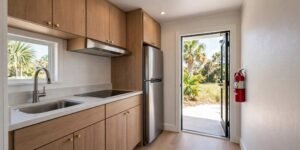
Yes, ANSI A119.5 requires at least one fire extinguisher be provided inside every park model home, typically rated for multi-class fires including grease and electrical sources. A 5-pound ABC-rated extinguisher mounted near the kitchen exit satisfies the requirement in most units.
Mounting location actually matters for usability, not just compliance. I recommend placing it near an exit rather than directly beside the stove, since a kitchen fire can block access to an extinguisher mounted too close to the source.
How Does Skirting and Underbelly Material Affect Fire Risk?
Skirting material choice affects fire risk because combustible skirting installed too close to the ground can trap debris, pests, and heat against the home’s fire-rated underbelly barrier. Florida’s humidity and vegetation growth make this an ongoing maintenance issue rather than a one-time install concern.
Vinyl and metal skirting are the most common fire-conscious choices, and either needs proper ventilation gaps to prevent moisture and heat buildup underneath the unit. I’ve seen overgrown landscaping pressed against skirting act as a literal fuel source during brush fire season, which is a risk unique to Florida’s climate and growing season.
What Fire Safety Rules Apply Inside Florida RV and Park Model Communities?
Florida RV and park model communities governed by DBPR licensing must maintain fire lanes, posted evacuation routes, and community-wide fire extinguisher or hydrant access points in addition to each individual unit’s internal code compliance. Community rules sit on top of, not instead of, the unit-level requirements already covered above.
Some communities also restrict propane tank size, require annual fire inspection documentation from residents, or mandate specific skirting materials precisely because of the separation and fuel-load concerns already discussed. I recommend reading the community’s specific fire safety addendum before purchase, since these rules vary significantly even between parks a few miles apart.
How Do Florida’s Wind and Flood Codes Intersect With Fire Safety Design?
Florida’s wind-zone and flood-zone requirements intersect with fire safety because tie-down anchoring systems, elevated foundations, and impact-rated windows all interact with the same wall assemblies that carry fire-resistance ratings. A home engineered primarily for wind resistance still has to maintain its fire-rated wall and ceiling assemblies underneath that reinforcement.
Elevated park models in flood zones sometimes complicate egress window compliance, since raising the floor height can change what counts as a compliant emergency escape route. I always flag this intersection for buyers in coastal and flood-prone counties, because it’s an area where two separate code systems can create a genuine conflict that needs an engineer’s sign-off.
What Permits and Inspections Are Required Before Occupying a Park Model in Florida?
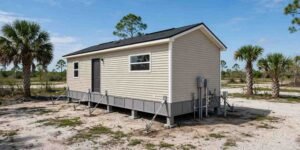
Florida requires a placement permit, an electrical and plumbing hookup inspection, and a final fire and life-safety inspection before a park model can be legally occupied, and the exact sequence depends on the county’s AHJ. Skipping any one of these steps can leave an owner without a certificate of occupancy even after move-in.
- Secure a placement permit from the county building department before the unit arrives on-site.
- Schedule the foundation and tie-down inspection once the home is set and anchored.
- Complete electrical, plumbing, and LP-gas hookup inspections separately in most counties.
- Pass the final fire and life-safety inspection, which checks smoke detectors, egress, and extinguisher placement.
- Receive the certificate of occupancy or equivalent approval before moving in full-time.
Each step above generates paperwork that owners should keep permanently, not just until move-in. I’ve helped people track down missing inspection records years later during a refinance or resale, and it’s a far harder problem to solve retroactively than to avoid upfront.
What Common Code Violations Put Park Model Owners at Risk?
The most common fire code violations I encounter involve missing interconnected smoke detectors, undersized egress windows swapped for standard windows, and propane tanks placed closer to the structure than code allows. Each of these is both a safety risk and a potential obstacle during resale or insurance renewal.
Combustible skirting installed without proper clearance and extension cords used as permanent wiring solutions round out the list of violations I see most often in older or budget-built units. Any one of these can trigger a failed inspection even on a home that otherwise looks well-maintained.
How Should Owners Maintain Fire Safety Compliance Over Time?
Maintaining fire safety compliance means testing smoke and carbon monoxide detectors monthly, replacing extinguishers before their inspection tag expires, and re-checking propane line connections annually for corrosion or wear. Compliance at the time of purchase doesn’t guarantee compliance five years later.
Florida’s humidity accelerates wear on gaskets, seals, and electrical connections faster than drier climates, which means the maintenance interval that works elsewhere may not be frequent enough here. I recommend owners keep a simple annual checklist and a folder of inspection records, since both make future resale and insurance renewal significantly smoother.
Conclusion
Park model fire safety comes down to classification, materials, detection systems, and the permits that tie it all together. Florida’s climate and local amendments add real weight to every one of these layers.
Staying compliant means ongoing attention, not a one-time inspection. Working with a builder who understands these standards from the start prevents problems later.
We build with these codes in mind from day one. Reach out to Tiny Home Builders Florida to discuss a fire-safe, fully compliant build.
Frequently Asked Questions
Do park model homes need a certification label for fire compliance?
Yes, every park model must carry an ANSI A119.5 compliance label verifying it meets fire and safety manufacturing standards. The label includes the manufacturer, model, and standard edition year used during construction.
Can I install my own smoke detectors, or do they need inspection?
Owners can install additional smoke detectors, but any detector required for code compliance must meet ANSI interconnection standards and pass inspection. A non-interconnected detector added after purchase doesn’t satisfy the original code requirement.
What happens if my park model fails a fire safety inspection?
A failed inspection means the owner receives a list of specific violations that must be corrected before a re-inspection can be scheduled. Occupancy or sale can be delayed until every cited item passes.
Are older park model homes grandfathered out of current fire codes?
Some older units are grandfathered under the ANSI edition they were built to, but major renovations or relocations can trigger a requirement to meet current code. Grandfathering rarely applies once a unit changes counties or ownership.
Does homeowners insurance require fire code compliance documentation?
Most Florida insurers request proof of code compliance, including the ANSI label and any inspection certificates, before issuing or renewing a policy. Missing documentation can delay coverage or increase premiums.
How often should fire safety systems be tested in a park model?
Smoke and carbon monoxide detectors should be tested monthly, with batteries replaced at least once a year. Fire extinguishers need a visual pressure check every month and professional inspection annually.
What’s the difference between fire codes for park models and tiny homes on wheels?
Park models built to ANSI A119.5 follow a defined fire and safety standard, while tiny homes on wheels often fall into a regulatory gray area without one consistent national code. This difference makes park models generally more predictable for inspection and insurance purposes.