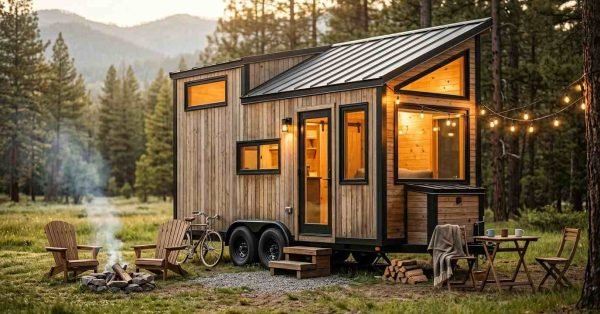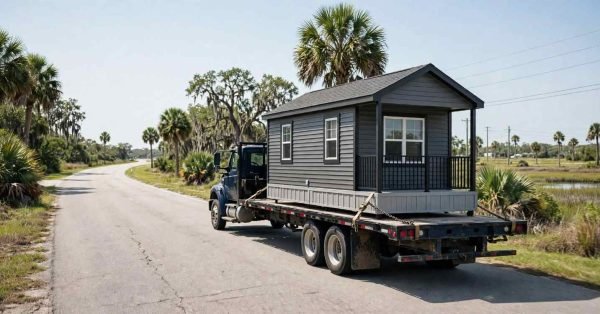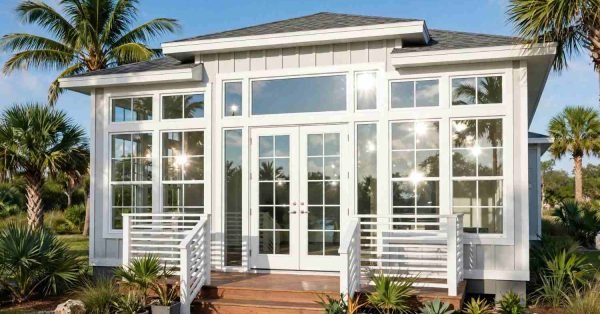

A park model home is a factory-built dwelling under 400 square feet, built to the ANSI A119.5 standard, and its legal placement in Florida depends entirely on local zoning rather than any single statewide rule. Counties and cities each decide where these units can sit, and getting it wrong means fines, forced relocation, or a denied permit. I’ve walked enough clients through this process to know the zoning question trips up more buyers than the home purchase itself.
Florida doesn’t treat park models the same way everywhere, and that inconsistency is exactly why this guide exists. We built this resource to save you the research hours and the costly mistakes.
This guide covers how Florida classifies park models under state law, the zoning differences between counties and cities, your placement options on private land versus licensed communities, the permitting and foundation requirements involved, and how to confirm legality before you ever sign a purchase agreement.
What Counts as a Park Model Home Under Florida Law
A park model home in Florida is a recreational park trailer built on a single chassis, no larger than 400 square feet in the set-up position, and classified separately from both RVs and manufactured homes. That size cap is what separates it legally from a manufactured home, which falls under HUD code and can be significantly larger.
I run into confusion constantly here. People assume “tiny home” and “park model” are interchangeable, but Florida’s regulatory bodies don’t see it that way at all.
Park Model vs. RV vs. Manufactured Home Classification
The classification differences matter because each category answers to a different set of rules. Park models are titled as recreational vehicles in Florida even though many owners use them as permanent housing, which creates the exact zoning tension this guide walks through.
Manufactured homes fall under federal HUD construction standards and are usually permitted as permanent residences more easily than park models. RVs, by contrast, are built for mobility and almost never qualify for permanent placement outside a licensed RV park.
The 400 Square Foot Rule and ANSI A119.5 Standard
Every legitimate park model sold in Florida is built to the ANSI A119.5 construction standard, which caps the unit at 400 square feet and governs everything from wall thickness to electrical systems. The Florida Department of Agriculture and Consumer Services oversees mobile home and park model standards enforcement in the state.
A unit that exceeds this footprint or skips the ANSI certification typically can’t be titled as a park model at all, which changes every zoning rule that follows.
Why Zoning Determines Where You Can Legally Place a Park Model

Zoning, not the home itself, is what makes a park model placement legal or illegal in Florida. The exact same unit can be perfectly legal on one parcel and a code violation 200 feet away, because zoning classifications change at county and even neighborhood lines.
I tell every buyer the same thing before they fall in love with a floor plan: confirm the lot first. A builder can deliver a flawless home, but no amount of craftsmanship fixes a zoning rejection.
Local governments control land use through zoning ordinances that dictate what structures are permitted, how they’re classified, and whether they count as a dwelling or a recreational vehicle on paper.
Florida Statewide Regulations Affecting Park Model Placement
Florida sets a baseline legal framework for park models through state statute, but it leaves placement decisions almost entirely to local jurisdictions. This two-tier system is the single biggest source of buyer confusion I see.
The state defines what a park model legally is. Counties and cities decide where you’re allowed to put one.
Florida Statute 320.01 and Park Model Classification
Florida Statute 320.01 defines a park trailer as a recreational vehicle built on a single chassis, primarily designed as temporary living quarters, and limited to 400 square feet in setup mode. This definition is the legal foundation every county references when writing its own zoning code.
Because the state statute labels park models as RVs rather than permanent dwellings, many residential zoning codes exclude them automatically unless a specific exception exists.
Department of Highway Safety and Motor Vehicles (DHSMV) Titling Rules
Park models in Florida are titled through the DHSMV using the same process as other recreational vehicles, not through the property appraiser’s office like a site-built home. This titling distinction follows the home through resale, financing, and insurance.
A park model titled as an RV can still be denied a residential building permit even on land you own outright, because the title and the zoning classification are two separate legal questions.
County-Level Zoning Codes and How They Vary
County zoning codes are where the real decision-making happens for park model placement, and no two Florida counties handle it identically. Some counties welcome park models on agricultural land with minimal restriction. Others ban them outright from anything but a licensed park.
I’ve seen buyers purchase land in one county assuming the rules mirrored a neighboring county, only to discover a completely different ordinance.
Agricultural Zoning (A-1, A-2) Allowances
Agricultural zoning designations like A-1 and A-2 tend to offer the most flexibility for park model placement across Florida counties, often permitting a park model as a secondary dwelling tied to farm use or caretaker housing. Lot sizes in agricultural zones typically run larger too, which helps clear setback requirements.
Several counties cap the number of park models allowed per agricultural parcel or require the land to maintain active agricultural use to keep the exemption valid.
Residential Zoning (RSF, RMF) Restrictions
Standard residential zoning classifications such as RSF (Residential Single-Family) frequently exclude recreational vehicles, including titled park models, from permanent placement entirely. These codes were written with site-built homes in mind, and park models get caught in the RV exclusion by default.
A handful of counties have added specific park model allowances to their residential codes in recent years, but this remains the exception rather than the rule.
City vs. County Jurisdiction Differences
Cities and counties in Florida don’t always enforce the same zoning rules, and incorporated city limits often carry stricter restrictions than the surrounding unincorporated county. A parcel just outside city limits can allow a park model placement that would be denied one mile closer to downtown.
This jurisdictional overlap confuses even experienced land buyers, because county property records don’t always flag which municipal rules apply.
Annexation is the wildcard here. Land zoned favorably under county rules can later get annexed into a city with stricter codes, which changes the legal status of an existing park model.
RV Parks and Licensed Park Model Communities
Licensed RV parks and dedicated park model communities remain the most straightforward legal placement option in Florida, since these developments are zoned specifically to allow recreational park trailers as a primary use. Placement here sidesteps most of the county-by-county zoning uncertainty entirely.
These communities operate under state licensing through the Department of Business and Professional Regulation, and that licensing already accounts for the density, utility, and safety requirements park models need.
The tradeoff is land ownership. Most park model communities operate on a land-lease or membership model rather than a fee-simple deed, which affects long-term equity and resale.
Manufactured Home Communities and Land-Lease Parks
Some manufactured home communities in Florida accept park models alongside HUD-code manufactured homes, though this varies significantly by community management and the original zoning approval for that development. Not every manufactured home park’s zoning classification extends to recreational park trailers.
Land-lease arrangements in these communities function similarly to RV parks, where you own the structure but lease the pad site, which keeps monthly costs lower than fee-simple land ownership.
Placing a Park Model on Private Land You Own

Private land ownership gives you the most control over a park model placement, but it also puts the full zoning compliance burden on you rather than a park operator. This is the option I get the most questions about, because buyers assume owning the land automatically means they can put anything on it.
That assumption causes more permit denials than any other single factor I encounter.
Minimum Lot Size and Setback Requirements
Florida counties typically require a minimum lot size before any dwelling, including a park model, can be placed, and setback requirements dictate how far the unit must sit from property lines, roads, and water features. These numbers vary widely, with some counties requiring as little as a quarter acre and others requiring several acres in agricultural zones.
Setback violations are one of the most common reasons a park model placement gets flagged during inspection, even when the zoning itself technically allows the unit.
Accessory Dwelling Unit (ADU) Classification Option
Some Florida jurisdictions allow a park model to qualify as an Accessory Dwelling Unit when placed behind or beside an existing primary residence on the same parcel. ADU classification can unlock placement in residential zones that would otherwise exclude a standalone park model entirely.
This path typically requires the primary home to already be legally established and often caps the ADU’s square footage, which usually isn’t an issue given the park model’s existing size limit.
Agricultural Land and Farm Exemption Considerations
Florida’s agricultural classification under the Greenbelt Law can create a legal pathway for park model placement tied to active farm operations, caretaker housing, or seasonal agricultural worker accommodations. This exemption exists because agricultural operations have long relied on temporary or secondary housing for workers and property managers.
Counties verify active agricultural use before granting this exemption, so a parcel labeled agricultural on paper without working farm activity may not qualify.
Flood Zones, Elevation Certificates, and FEMA Requirements
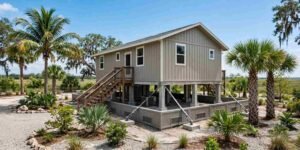
Flood zone designation significantly affects park model placement because FEMA floodplain rules require specific elevation standards that many park model foundations aren’t built to meet without modification. A property sitting in an AE or VE flood zone faces stricter anchoring and elevation requirements than one in a minimal-risk zone.
The FEMA Flood Map Service Center lets you check a specific parcel’s flood zone designation before purchase, which I consider a non-negotiable step for anyone buying land for a park model.
An elevation certificate documents how high the lowest floor sits relative to the base flood elevation, and many counties require this certificate before issuing a placement permit in a mapped flood zone.
Flood insurance costs climb sharply for structures in high-risk zones, and that expense should factor into your decision long before the permit application stage.
HOA and Deed Restriction Conflicts
A parcel can satisfy every county zoning requirement and still prohibit a park model through a private homeowners association covenant or a deed restriction recorded against the property. These private restrictions operate independently from government zoning and are enforced through civil action rather than code enforcement.
I always tell buyers to pull the recorded deed restrictions, not just ask the seller, because verbal assurances about HOA rules don’t hold up when a covenant says otherwise in writing.
Many HOAs explicitly ban recreational vehicles and park trailers regardless of how the county classifies the land, which makes this one of the most overlooked placement obstacles.
Permitting Process for Park Model Placement in Florida
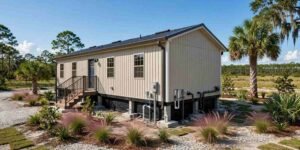
The permitting process for a park model in Florida typically starts with zoning verification, moves through site plan approval, and ends with a series of inspections before the unit can be legally occupied. Skipping any step in this sequence risks a stop-work order even after the home is already delivered.
Most counties require this process to begin before the park model physically arrives on site, not after.
Site Plan Approval and Building Permits
A site plan shows the county exactly where the park model will sit relative to property lines, septic or sewer connections, wells, and existing structures, and this plan must be approved before a building permit is issued. Counties use this review to confirm setback compliance and flood zone requirements simultaneously.
Building permit fees and processing timelines vary by county, with rural counties often moving faster than high-growth metro counties working through permit backlogs.
Utility Hookup Permits (Water, Septic, Electric)
Separate permits are usually required for septic system installation or sewer connection, electrical service hookup, and water supply, and each one is reviewed by a different county department on its own timeline. A park model can pass zoning and site plan review and still stall for weeks waiting on a septic permit.
Electrical permits in particular require inspection before the power company will activate service, which affects your move-in timeline more than buyers typically expect.
Foundation and Anchoring Requirements by Jurisdiction
Florida’s wind load requirements mean park models need engineered anchoring systems, and the specific standard varies by county based on local wind zone maps tied to hurricane risk. Coastal counties generally enforce stricter tie-down and foundation standards than inland counties.
A foundation that meets code in one county isn’t automatically compliant in another, since wind zone classifications shift based on proximity to the coast and historical storm data.
Permanent foundation systems, as opposed to simple tie-downs, can sometimes reclassify a park model for financing or insurance purposes, though this depends on how the specific jurisdiction defines “permanent” in its code.
Counties and Cities Known for Park-Model-Friendly Zoning
Several rural and agricultural Florida counties have built a reputation for more accommodating park model zoning, generally because larger lot sizes and agricultural exemptions create natural placement pathways. These tend to be counties with lower population density and zoning codes written decades ago, before park models became as popular as they are today.
I’d rather a buyer verify current ordinances directly with the county planning department than rely on a reputation that may have shifted after a recent code update.
Growth-heavy coastal counties, by contrast, have generally tightened park model restrictions over the past decade as they’ve worked to distinguish permanent housing stock from recreational vehicle use.
Common Zoning Violations and How to Avoid Them
The most frequent zoning violation I see involves placing a park model on residentially zoned land without confirming the local code first, often based on what a neighboring parcel appears to allow. Visual confirmation of a similar setup nearby isn’t proof of legal compliance.
Unpermitted utility connections rank as the second most common violation, since some buyers connect water or power informally to save time and then face a forced disconnection during a later inspection.
Operating without an active agricultural exemption after letting farm use lapse is a quieter but equally serious violation, since the exemption that originally justified the placement can be revoked retroactively.
How to Confirm Zoning Before You Buy or Place a Park Model
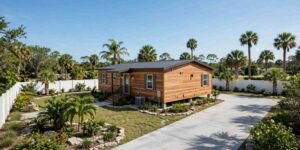
Confirming zoning before purchase means contacting the county planning and zoning department directly, requesting the parcel’s current zoning classification, and asking specifically whether park models or recreational park trailers are permitted as a dwelling. A verbal confirmation should always be followed by a written determination letter whenever the county offers one.
I push every client toward this step before any contract goes hard, because reversing a zoning mistake after purchase costs far more than the hour it takes to call the planning office.
Title searches, flood zone lookups through FEMA, and a review of recorded deed restrictions round out a complete due diligence process, and each one catches a different category of problem the others won’t reveal.
Conclusion
Park model placement in Florida comes down to classification, zoning, and verification working together, not just land ownership alone. Counties, cities, and private covenants each add their own layer of rules.
We’ve seen buyers succeed and stall based entirely on groundwork done before the home ever arrived on site. The right research changes everything.
We help homeowners navigate zoning and placement decisions correctly from day one. Reach out to Tiny Home Builders Florida before you buy land.
Frequently Asked Questions
Can I put a park model home on my own land in Florida?
Owning land doesn’t automatically guarantee you can place a park model on it. Zoning classification, lot size, setbacks, and flood zone rules all determine legality separately from ownership.
Is a park model home considered an RV or a manufactured home in Florida?
Florida titles park models as recreational vehicles, not manufactured homes, under state statute. This classification affects zoning eligibility, financing, and insurance options significantly.
What zoning allows park model homes in Florida?
Agricultural zoning classifications most commonly allow park model placement across Florida counties. Residential zoning typically excludes them unless a specific local exception applies.
Do I need a permit to place a park model home in Florida?
Yes, placement requires a building permit along with separate utility hookup permits. Skipping this process risks stop-work orders and costly removal requirements later.
Can a park model home be used as a permanent residence in Florida?
It depends entirely on local zoning classification and permitting approval. Some counties allow permanent residential use while others restrict park models to recreational or seasonal occupancy only.
What happens if I place a park model home in the wrong zone?
Code enforcement can issue fines, require removal, or deny utility connections. Some violations also affect future resale and financing on the property.
Are park model homes allowed in flood zones in Florida?
They can be, but FEMA elevation and anchoring requirements become stricter. An elevation certificate and flood zone verification are typically required before permitting.