
I’ve walked enough Florida job sites to know that material choices make or break a custom home long before anyone talks about paint colors. The best building materials for a custom home are the ones that balance structural durability, long-term cost efficiency, and the architectural style the homeowner wants, while meeting the specific climate demands of the building site. In Florida, that means materials have to survive humidity, wind-driven rain, and storm pressure on top of everyday wear.
Getting this wrong costs more than money. A home built with the wrong materials ages faster, costs more to maintain, and loses comfort within a decade.
This guide walks through the structural core of a home foundation, framing, and roofing then moves into the exterior envelope, interior finishes, and the energy and durability factors that tie them together. We’ll close with cost tiers and how to evaluate whether a builder is actually using the materials they claim.
What Determines “Best” in Building Materials for a Custom Home?
There’s no single “best” material category, only the best material for a specific combination of climate, budget, and design goals. I look at four factors every time: structural performance, lifespan, maintenance burden, and upfront versus long-term cost.
A material that performs beautifully in a dry, mild climate can fail fast in a coastal, humid one. That’s why context always outranks brand reputation or trend.
Durability vs. Cost vs. Style – The Three-Way Tradeoff
Every material decision pulls against the other two. Premium stone countertops win on style and durability but cost more upfront than laminate. Metal roofing costs more initially than asphalt shingles but often wins on lifetime value.
I tell clients to rank their own priorities before shopping materials, not after. Otherwise, every showroom visit becomes a negotiation with yourself.
How Florida’s Climate Changes Material Priorities
Florida’s combination of high humidity, intense UV exposure, and hurricane-force wind events changes which materials actually perform well here. Materials that work fine in drier states, like certain wood sidings or standard asphalt shingles, need upgraded specifications to hold up along the Gulf or Atlantic coast.
Termite pressure is also a factor most out-of-state buyers underestimate until their framing material choice limits their options later.
Foundation Materials: Concrete Slab vs. Alternatives

A concrete slab-on-grade foundation is the standard foundation type for custom homes in Florida because it resists moisture intrusion, deters termites, and withstands the state’s high water table better than raised wood foundations. Alternatives like crawl spaces or pier-and-beam systems exist, but they’re far less common outside flood-zone-specific requirements.
Monolithic and stem-wall slabs are the two primary slab types, and the choice between them often comes down to soil conditions at the specific lot.
Why Concrete Slabs Dominate Florida Custom Homes
Concrete doesn’t absorb moisture the way wood framing does, and it gives termites nothing to feed on at ground level. That combination is why the vast majority of Florida custom homes start with a slab rather than a crawl space.
Soil testing before the pour matters more than people expect, since expansive or sandy soils change how the slab needs to be engineered.
Structural Framing Materials: Wood, Steel, and Concrete Block

The three primary structural framing materials for custom homes are wood frame, steel frame, and concrete block (CBS) construction, each offering different combinations of cost, wind resistance, and build speed. In Florida specifically, concrete block construction has become the dominant choice for exterior walls because of its storm performance.
| Framing Material | Typical Cost | Wind Resistance | Best Fit |
| Wood Frame | Lowest | Moderate (with proper engineering) | Inland, budget-conscious builds |
| Steel Frame | Mid-to-high | High | Modern design, pest-proof priority |
| Concrete Block (CBS) | Mid-to-high | Highest | Coastal and high-wind zones |
This table reflects general Florida market ranges and performance characteristics rather than a single builder’s pricing.
Wood Frame Construction
Wood framing remains the most affordable structural option and offers the fastest build timeline of the three. It performs well inland, away from the highest wind zones, when properly engineered with hurricane straps and bracing.
Termite-resistant treated lumber is non-negotiable in Florida wood framing; untreated lumber simply doesn’t belong in this climate.
Steel Framing
Steel framing resists termites completely and holds dimensional stability better than wood over decades, which matters in Florida’s humidity swings. It costs more than wood but less than many buyers assume once labor efficiency is factored in.
I see it chosen most often by clients prioritizing a modern aesthetic alongside long-term structural stability.
Concrete Block (CBS) Construction
Concrete block construction, often called CBS, has become the default exterior wall system for Florida coastal and high-wind-zone homes because of its proven storm performance. It’s heavier and slower to build than wood or steel framing, but it holds up to wind loads that would damage lighter systems.
Most Florida Building Code wind zone requirements effectively favor CBS construction for homes near the coast.
Roofing Materials for Durability and Storm Resistance

The three main roofing material categories for Florida custom homes are asphalt shingles, metal roofing, and tile roofing, each rated differently for wind uplift resistance and expected lifespan. Roofing in this state isn’t just an aesthetic decision; it’s directly tied to insurance premiums and storm survivability.
| Roofing Material | Expected Lifespan | Wind Rating Potential | Relative Cost |
| Asphalt Shingles | 15–20 years | Good with proper rating | Lowest |
| Metal Roofing | 40–50 years | Excellent | Mid-to-high |
| Tile Roofing | 50+ years | Excellent | Highest |
Asphalt Shingles
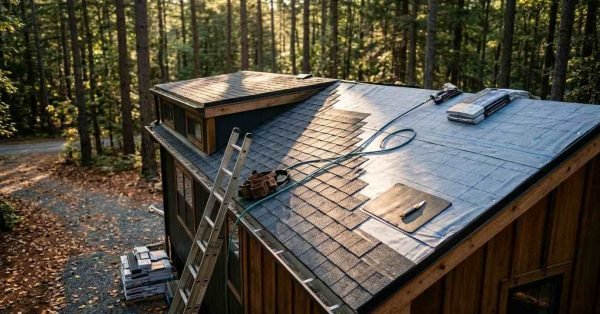
Asphalt shingles remain the most budget-friendly roofing option and are available in wind-rated versions suitable for most inland Florida zones. Their shorter lifespan compared to metal or tile makes them a better fit for buyers prioritizing upfront cost over multi-decade durability.
Architectural shingles, a thicker variant, have become the common upgrade over basic three-tab versions.
Metal Roofing
Metal roofing has gained significant ground in Florida because of its superior wind uplift performance and reflective properties that reduce attic heat gain. It costs more initially than shingles but can outlast two or three shingle roof replacements over a home’s lifetime.
Standing-seam metal panels are the preferred style for custom homes focused on both performance and a clean architectural look.
Tile Roofing
Clay and concrete tile roofing deliver the longest lifespan of the three main categories and are closely associated with Mediterranean and Spanish-style custom home designs common throughout Florida. The tradeoff is weight; the structure beneath must be engineered to support it.
Tile also carries the highest material and installation cost of the three options.
Exterior Wall Cladding and Siding Options
Stucco and fiber cement siding are the two most widely used exterior cladding materials for Florida custom homes, chosen for their moisture resistance and compatibility with the state’s architectural styles. Traditional wood siding is far less common here due to moisture and termite vulnerability.
Stucco
Stucco creates a seamless, monolithic exterior finish that pairs naturally with concrete block construction and resists wind-driven rain intrusion when properly applied. It requires correct control joint placement to avoid cracking as the structure settles.
It remains the most common exterior finish on Florida custom homes for this reason.
Fiber Cement Siding
Fiber cement siding resists moisture, pests, and fire better than traditional wood siding while offering a similar range of design finishes. It costs more than vinyl siding but holds color and shape far longer in high-UV, high-humidity conditions.
I recommend it frequently for homeowners who want a board-and-batten or coastal aesthetic without wood’s maintenance demands.
Windows and Doors: Impact-Rated Material Standards
Impact-rated windows and doors are required or strongly recommended throughout most of Florida’s wind-borne debris zones, and they’re built with laminated glass designed to resist penetration from flying debris during storms. This isn’t a style upgrade; it’s a code-driven structural requirement in many coastal counties.
Impact Glass vs. Hurricane Shutters
Impact glass stays in place permanently and requires no action during a storm event, while hurricane shutters need to be manually or mechanically deployed before weather hits. Impact glass typically costs more upfront but adds daily value through noise reduction and UV protection that shutters don’t provide.
Many Florida custom home buyers choose impact glass specifically to avoid the hassle of shutter installation before every storm warning.
Insulation Materials and Building Envelope Performance

Spray foam and batt insulation are the two primary insulation material categories used in Florida custom homes, with spray foam offering a tighter air seal that matters significantly in the state’s humid climate. A poorly sealed envelope invites moisture infiltration regardless of how good the insulation’s R-value looks on paper.
Spray Foam vs. Batt Insulation
Spray foam insulation expands to fill gaps completely, creating an air seal that reduces humidity infiltration far better than batt insulation’s compressed fiber layers. Batt insulation costs less upfront but leaves more opportunities for air gaps around framing members.
The humidity control difference matters more in Florida than in drier climates, where batt insulation performs acceptably.
Flooring Materials: Durability Meets Design
Tile, engineered wood, and luxury vinyl plank are the three dominant flooring material choices in Florida custom homes because each resists humidity-related warping better than solid hardwood. Solid hardwood flooring, while popular elsewhere, struggles with Florida’s humidity swings without constant climate control.
Tile, Engineered Wood, and Luxury Vinyl Plank
Tile flooring handles moisture and heat better than any other common flooring material, which is why it dominates entryways, bathrooms, and Florida homes overall. Engineered wood offers a genuine wood look with better dimensional stability than solid hardwood, while luxury vinyl plank delivers the most budget-friendly combination of water resistance and style flexibility.
Each of these three options now comes in finishes that closely mimic natural materials at a fraction of the maintenance requirement.
Interior Finish Materials: Drywall, Trim, and Cabinetry
Moisture-resistant drywall, solid or engineered wood trim, and plywood-box cabinetry represent the baseline quality markers for interior finish materials in a well-built Florida custom home. Standard drywall without moisture resistance is a common corner-cutting signal in bathrooms and laundry areas.
Cabinetry construction matters more than door style when evaluating long-term durability. Plywood boxes resist humidity and hold hardware better than particleboard alternatives over a home’s lifespan.
Countertop and Surface Materials
Quartz, granite, and natural stone are the three leading countertop material categories in custom homes, each offering different durability, maintenance, and cost profiles. Laminate remains a budget option but doesn’t match these three in resale value or scratch resistance.
Quartz, Granite, and Natural Stone
Quartz is engineered from crushed stone and resin, giving it a non-porous surface that resists staining without the sealing granite requires. Granite offers natural variation and heat resistance that appeals to buyers wanting a one-of-a-kind surface, while natural stone options like marble bring premium style at the cost of higher maintenance.
Quartz has become the most requested option among Florida custom home buyers specifically because it skips the annual resealing granite and marble need.
Moisture, Mold, and Termite-Resistant Material Choices

Material selections throughout a Florida custom home should specifically account for moisture resistance, mold prevention, and termite deterrence, since all three threats are more aggressive here than in most other states. This isn’t a single material category; it’s a selection criterion that should influence framing, insulation, flooring, and cabinetry choices together.
Treated lumber, concrete block framing, moisture-resistant drywall, and non-organic insulation all reduce mold’s ability to establish itself inside wall cavities. Termite-resistant material choices become especially important below grade and at any wood-to-ground contact point, since Florida’s subterranean termite pressure is among the highest in the country.
A builder who treats these three threats as separate afterthoughts rather than connected material decisions typically produces a home that needs costly remediation work within the first decade.
Energy-Efficient Building Materials and Performance Ratings
Reflective roofing materials, Low-E glass windows, and insulated concrete forms are among the highest-impact energy-efficient material choices for Florida custom homes, directly reducing cooling costs in a climate dominated by air conditioning demand. Energy performance in Florida is almost entirely a cooling-load problem, which changes which materials matter most compared to colder states.
| Material | Energy Benefit | Typical Cost Premium |
| Reflective/Cool Roofing | Reduces attic heat gain | Low to moderate |
| Low-E Glass | Blocks solar heat gain through windows | Moderate |
| Insulated Concrete Forms | Reduces thermal transfer through walls | Higher |
Reflective Roofing, Low-E Glass, and Insulated Concrete
Reflective roofing materials bounce solar radiation away from the structure instead of absorbing it, which measurably reduces attic temperatures during peak summer months. Low-E glass windows use a microscopically thin coating to block infrared heat transfer while still allowing visible light through, cutting cooling demand without darkening the home’s interior.
Insulated concrete forms combine structural strength with built-in insulation value, though the upfront cost premium means they appear more often in premium custom builds than entry-level ones.
Cost Comparison: Material Price Ranges for Custom Homes
Material costs for a Florida custom home typically fall into budget, mid-range, and premium tiers, with the gap between tiers driven primarily by framing system, roofing type, and countertop material choice rather than finish details. Understanding these tiers helps homeowners set realistic expectations before design decisions lock in a budget.
Budget, Mid-Range, and Premium Material Tiers
Budget-tier material packages typically combine wood framing, asphalt shingle roofing, vinyl plank flooring, and laminate countertops to minimize upfront cost. Mid-range packages often step up to steel or concrete block framing, metal roofing, engineered wood flooring, and quartz countertops.
Premium-tier packages add tile roofing, natural stone surfaces, and higher-end cabinetry construction, reflecting both higher material cost and generally longer expected lifespan across the home’s major systems.
How to Evaluate a Builder’s Material Choices and Standards

Evaluating a builder’s material standards starts with requesting a detailed, itemized materials specification sheet rather than relying on general marketing descriptions like “premium finishes” or “quality construction.” A specification sheet names exact brands, grades, and model numbers for every major material category, from framing to flooring.
Ask directly whether quoted materials meet or exceed Florida Building Code wind zone minimums, since “code compliant” and “code minimum” aren’t always the same thing in practice. A builder confident in their material choices will walk through these specifications without hesitation.
Building Codes and Material Requirements in Florida
The Florida Building Code sets minimum material and construction standards that vary by wind-borne debris zone, meaning coastal counties face stricter material requirements than inland areas. These requirements directly shape which roofing, window, and framing materials are permitted or practical in a given location.
Florida Building Code and Wind Zone Requirements
Wind zone maps divide Florida into regions with different minimum wind-load requirements, and homes built in High-Velocity Hurricane Zones along the southeast coast face the strictest material standards in the state. These requirements affect everything from window impact ratings to roof attachment methods.
A permit reviewer will reject material specifications that fall short of the zone’s minimum, which is why confirming zone requirements early in design prevents costly mid-project changes.
Conclusion
Every material in a custom home connects to the next: framing drives roofing options, roofing drives energy performance, and all of it determines decade-long durability.
Florida’s climate makes these decisions higher-stakes than in milder states, which is exactly why specification detail matters more than marketing language.
We build homes at Tiny Home Builders Florida around transparent material standards, and we’d welcome the chance to walk you through exactly what goes into yours.
Frequently Asked Questions
What is the most durable building material for a Florida custom home?
Concrete block (CBS) construction is generally considered the most durable structural material for Florida homes. It resists wind, moisture, and termites better than wood framing in coastal and high-wind zones.
Is metal roofing worth the extra cost in Florida?
Metal roofing typically lasts 40 to 50 years compared to 15 to 20 years for asphalt shingles. The higher upfront cost often pays off through fewer replacements and lower cooling costs over the home’s lifetime.
Does wood frame construction hold up in Florida’s climate?
Wood frame construction can perform well in Florida when properly treated and engineered with hurricane straps. It’s most suitable for inland locations outside the highest wind-borne debris zones.
What flooring material is best for Florida’s humidity?
Tile, engineered wood, and luxury vinyl plank all resist humidity-related warping better than solid hardwood. Tile offers the strongest moisture resistance of the three options.
Why is a concrete slab foundation standard in Florida?
Concrete slab foundations resist moisture intrusion and deter termites better than raised wood foundations. Florida’s high water table also makes slab construction more practical than crawl spaces.
How do I know if a builder is using quality materials?
Request an itemized materials specification sheet listing exact brands, grades, and model numbers. Vague terms like “premium finishes” without specifics are a warning sign.
What’s the difference between quartz and granite countertops?
Quartz is engineered and non-porous, resisting stains without sealing. Granite is natural stone requiring periodic sealing but offers unique natural variation.